
REVIEW · JAPAN BIRDWATCHING TOURS
Kyoto Late Bird Walking Tour
Kyoto looks best after lunch. This private four-hour outing links Fushimi Inari’s red torii gates with Yasaka Pagoda, Yasaka Shrine, and Gion, giving you a useful first look at several major sights without the strain of planning every train and turn yourself. I like the personal guide service, and I like that your group alone takes part, so the pace can feel relaxed rather than mechanical.
I also like the 2:00 pm start. You get a gentle afternoon rather than an early alarm, and the route finishes in the evening when Gion takes on a more atmospheric feel. The main consideration is cost: at $86.49 per person, plus about ¥850 for public transport, this is not the cheapest way to see Kyoto. You are paying for a private guide, local explanations, and a carefully linked route.
Key points to know before booking
- Private group format: Only your party participates, which makes it easier to ask questions, pause for photos, or keep a slower pace.
- Four major Kyoto sights: The route covers Fushimi Inari-taisha, Yasakanoto, Yasaka Shrine, and Gion in roughly four hours.
- Public transport is part of the plan: Bring a loaded IC card if possible. The transport fare is not included and is listed at ¥850 per person.
- Geisha sightings are possible, not promised: Gion offers a chance to see geisha or maiko, but this should be treated as luck rather than a scheduled feature.
- Strong guide feedback: Guides including Kaz, Saori, Key, Mitsue, and Meg have been praised for patience, English ability, warmth, and easy conversation.
- Good for a first Kyoto afternoon: The tour gathers several important areas into one outing, though it does not leave much time for long visits at each place.
Why the 2:00 pm start works well
Many Kyoto sightseeing plans begin at breakfast. This one does not. The afternoon start gives you time to recover from a flight, enjoy a slow lunch, or visit a nearby museum before meeting at Kyoto Station.
That timing also suits Gion. You reach the traditional entertainment district later in the day, when old wooden buildings, narrow lanes, and evening activity make the area feel more atmospheric. The tour ends back at the meeting point, so Kyoto Station remains a useful anchor for your evening plans.
The tradeoff is daylight. Depending on the season, the final part of the walk may take place as the light fades. That can be attractive around Gion, but it means you should not expect a full day of sightseeing or long photo sessions at every stop.
The experience lasts about four hours. That is enough time for a broad introduction, not enough for an in-depth visit to each site. I would think of it as a guided sampler with context, not a replacement for returning to your favorite place later.
More Walking Tours in the world:
- Punta Arenas: Walk with Penguins on Magdalena & Marta Island
★ 4.6 · 611 reviews - Walk alongside Penguins on Magdalene Island and navigate Marta Island
★ 4.5 · 116 reviews - Penguin walk in Ushuaia + navigation option
★ 4.5 · 81 reviews
Starting at Kyoto Station with a private guide
Kyoto Station is a sensible meeting point. It is easy to identify, close to public transport, and well connected to the rest of the city. One useful detail from the guide experiences is that meeting instructions can be precise: Meg, for example, was reported to have waited at the agreed station location exactly on time.
You will use public transport during the outing. The listed fare is ¥850 per person, and it is not included in the tour price. A loaded IC card is a smart move because it can make the train transfers faster and simpler. If you arrive late, contact the operator as soon as possible. Kaz was praised for waiting patiently for a delayed participant, but you should not assume every delay can be absorbed into a short afternoon schedule.
A private format matters here. Kyoto’s stations and popular shrines can be confusing, especially when you are trying to watch the clock, read signs, and keep a group together. Your guide handles the route while you concentrate on the places themselves.
The tour is also listed as suitable for most people, including those with limited mobility and limited eyesight. It is not stroller accessible, however. Animals and pets are allowed according to the supplied details. Because this is a walking tour using trains and shrine grounds, you should still consider your own comfort with walking, steps, and changing surfaces.
Fushimi Inari and its famous red gates
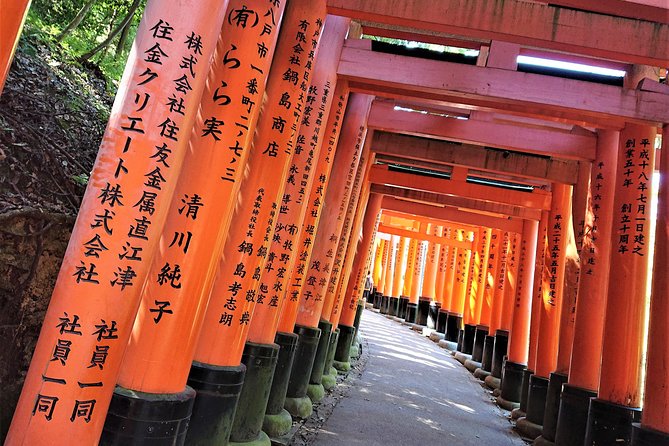
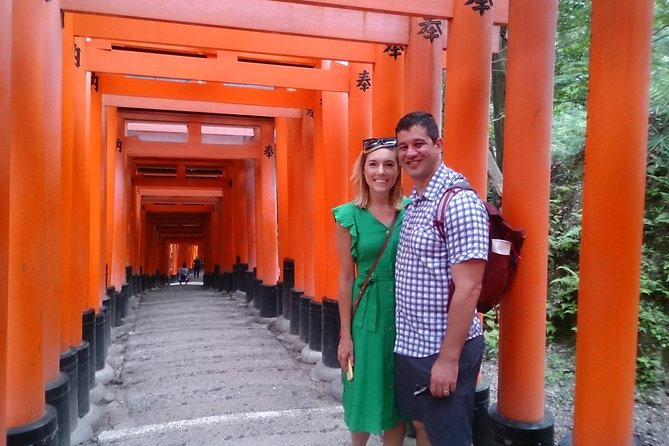
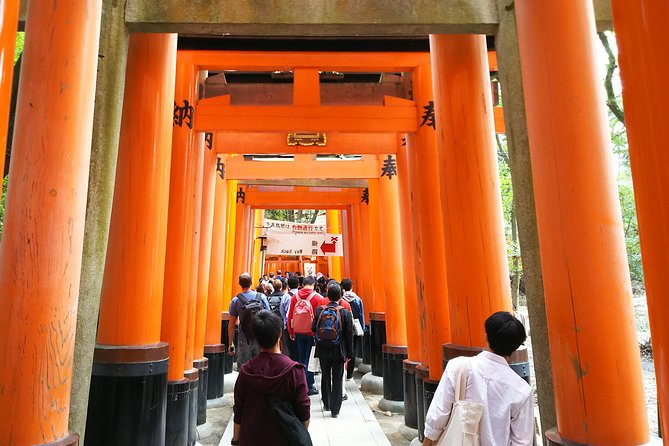
The first major stop is Fushimi Inari-taisha, with about one hour allotted and no admission charge. Its most famous feature is the long tunnel of vermilion torii gates, donated by worshippers in thanks for good fortune connected with the shrine deity.
This is the tour’s most immediately recognizable sight. The gates create a strong visual rhythm, and a guide can help explain why they are there rather than treating them as a simple photo backdrop. You get a sense of how religious practice, donations, and popular travel have shaped this place.
One hour is enough for an introduction and a walk through part of the gate route. It is not enough to cover every section of the mountain paths. That limitation is worth knowing before you book. If Fushimi Inari is your main reason for coming to Kyoto, you may want a separate visit with more time.
The guide’s help is especially useful here because the shrine grounds can pull you in several directions. You can easily spend too long taking photos near the most famous gates, then discover that the rest of the afternoon is slipping away. A private guide keeps the visit focused without making it feel like a race.
The tour data does not promise a particular amount of hiking, so you should not assume that the full torii route is included. Expect a carefully chosen portion of the shrine rather than a complete climb.
Yasakanoto, Kyoto’s five-story photo stop
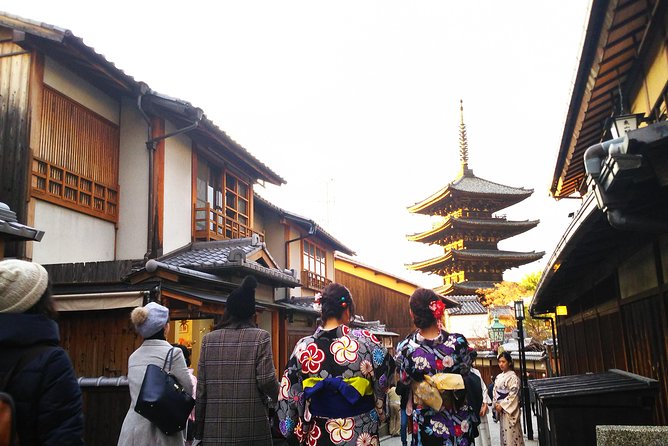
The next stop is Yasakanoto, also called the Yasaka Pagoda, for about 30 minutes. The pagoda was first built in 592 and rebuilt in 1440. From this area, you get one of the classic views associated with old Kyoto.
This is a short stop, but it adds a different kind of appeal after Fushimi Inari. The torii gates give you repetition and color; Yasakanoto gives you a strong architectural image framed by traditional streets. It is a good place to listen to the guide’s explanation, take photographs, and understand how this part of Kyoto connects shrine visits with preserved old-style townscape.
The stop is also a reminder that Kyoto sightseeing often happens from public streets and temple approaches, not only inside ticketed attractions. There is no admission charge listed for the stop.
Photographers may want more than 30 minutes, especially in soft evening light. The private format helps because your guide can explain the best pause points, but the schedule still has to move on to Yasaka Shrine and Gion. If you want a leisurely photography walk, this tour may feel brisk.
A few more birding trips around the world worth a look
- Penguin Parade, & Wildlife Encounters Eco Tour from Melbourne
★ 5.0 · 3,774 reviews - Cape Town: Cape of Good Hope & Penguins Day Tour with Pickup
★ 4.7 · 3,362 reviews - Cape Point and Boulder’s Penguins Full Day Tour
★ 5.0 · 3,118 reviews - Cape of Good Hope & Boulder Penguins Full-Day Tour from Cape Town
★ 5.0 · 2,347 reviews
Yasaka Shrine and the story behind Gion
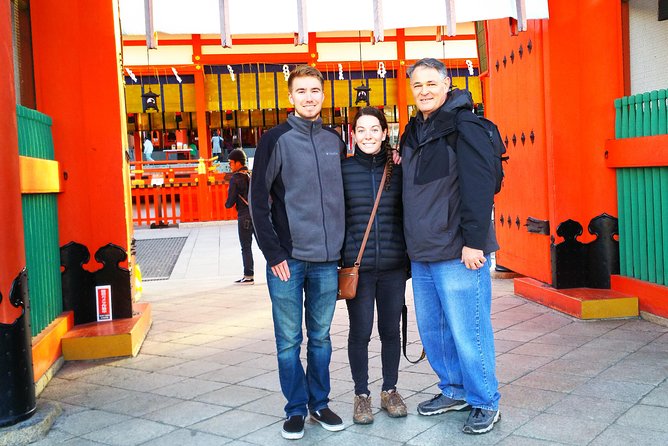
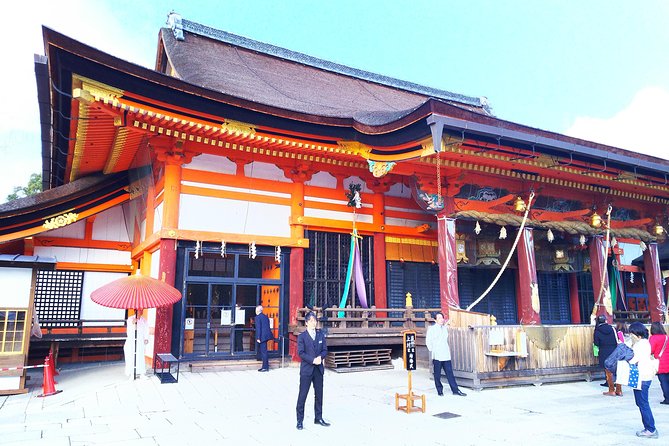
Yasaka Shrine receives about 20 minutes. It was once known as Gion Shrine, and the modern name of the Gion district came from this connection. The main deity is described as powerful, and a beauty deity at the shrine draws its own visitors.
Twenty minutes is a short visit, yet the stop gives the rest of the itinerary more meaning. Gion is not simply a pretty neighborhood added at the end. The shrine helps explain why the area developed its religious and cultural identity.
Your guide can add context that is easy to miss when you walk through alone. The beauty deity also gives you a small, distinctive detail to remember, especially if you are interested in the customs and hopes attached to Japanese shrines.
Do not expect a long ritual visit or extended time at every building. This is a compact introduction. The value comes from placing Yasaka Shrine between the pagoda and Gion, so the afternoon feels like a connected route rather than four unrelated photo stops.
Walking through Gion without chasing a guarantee
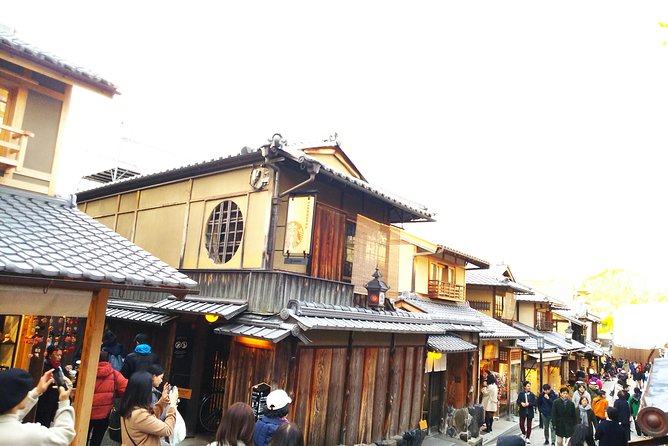
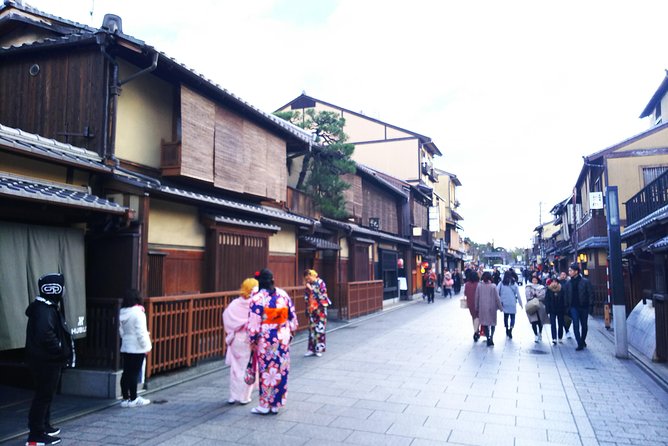
The final major stop is Gion, with roughly 50 minutes for a walk through the district. Traditional wooden houses remain one of its defining features, and the area is closely linked with geisha culture.
You may see a geisha or maiko moving through the streets, but there is no guarantee. That distinction matters. Book this tour for the historic streets and the guide’s explanation first. Treat a geisha sighting as an extra piece of luck.
A guide can also help you approach the district with respect. Geisha and maiko are working professionals, not performers waiting for random photography. The best experience is to observe calmly, keep out of their way, and listen to your guide rather than treating the neighborhood like a stage set.
The supplied guide experiences show how much the person leading the walk can shape this final hour. Saori was praised for enthusiastic English and Japanese conversation, and her background studying in the United States helped her connect naturally with an international group. Her outing also included snacks and lucky sightings of geisha and trainees in Gion, though those details should not be treated as standard inclusions.
Gion is likely to be the most memorable part for you if you enjoy atmosphere over formal monuments. The old-style houses, narrow streets, and cultural associations make it a strong finish. The drawback is that 50 minutes passes quickly, especially if you stop for photographs or want to ask many questions.
The guides are the main value
The sightseeing route is good, but the guide is what makes the price easier to justify. You are not simply being taken to four places. You are paying for explanations, navigation, timing, and the chance to shape the afternoon around your group.
Several guide names appear in the supplied experiences. Kaz was patient when a participant arrived late. Saori was praised for strong English, Japanese, and conversation. Key was described as exceptional, while Mitsue provided a welcoming, easy-paced walk and pointed out a shrine the participant might not otherwise have found.
Meg was noted for being professional, punctual, and clear about the station meeting location. These details matter because a private tour can be disappointing if the guide is hard to find or rushes through the route. Here, the strongest praise centers on patience, communication, and personal attention.
The tour can also become more than the four listed stops. One experience included Yasui Konpira-gu, where Kaz translated a humorous paper wish, along with other local details. Since the formal route names four main stops, you should treat such additions as dependent on time, interest, and the guide rather than guaranteed features.
English ability varies by individual guide, but the available feedback specifically praises English communication for Saori and clear explanations from others. If language support is important to you, confirm the available guide details when booking.
Is $86.49 per person good value?
At $86.49 per person, this is a mid-range private sightseeing experience rather than a budget walk. The listed price covers the guide fee. Food and drinks are not included, and public transport costs about ¥850 per person.
For one person or a couple, the price may feel high compared with joining a larger group or visiting the shrines independently. You can reach these areas on your own for much less, especially if you already understand Kyoto’s train system and have time to plan.
The value improves for a family or small group because the activity is private and group discounts are available. You are splitting the cost of a guide among your own party, while keeping the ability to ask questions and request a comfortable pace.
I would also place a value on the route itself. Fushimi Inari, Yasakanoto, Yasaka Shrine, and Gion are not all next door to one another. A guide saves you from working out the order, checking directions, and guessing how long to spend at each place.
The best reason to pay is not simply convenience. It is the cultural explanation. Kyoto’s shrines and traditional districts can look beautiful without context, but the connections between worship, donations, local names, architecture, and geisha culture are easier to understand with someone explaining them as you go.
Who should book this afternoon tour?
I would recommend it to first-time Kyoto visitors who want a strong introduction in a limited window. It also suits families, couples, and small groups who prefer a personal guide over a large scheduled party.
The tour works well if you enjoy walking but do not want to design a complicated afternoon around train connections. It is a good fit for people who want to see famous places while leaving room for conversation and questions.
You may want a different plan if you need wheelchair or stroller access, want a very slow pace, or hope to spend half a day at Fushimi Inari alone. The itinerary covers a lot, so each stop receives a short visit.
It is also not the right choice if the only thing you want is a guaranteed geisha encounter. Gion offers a chance, not a promise. The cultural district, traditional houses, and guide commentary are the dependable parts.
The tour is free to cancel up to 24 hours before the start time for a full refund. Changes or cancellations inside that period are not accepted for a refund. Since the experience requires good weather, poor conditions may lead to another date or a full refund.
Final verdict: a smart first Kyoto afternoon
I would book the Kyoto Late Bird Walking Tour if I wanted a private introduction to Kyoto and valued a guide’s explanations more than the lowest possible price. The route gives you four important sights, begins at a forgiving hour, and ends with Gion at a time when the district may feel especially atmospheric.
The strongest reason to choose it is the guide service. Accounts of Kaz, Saori, Key, Mitsue, and Meg point to patient, friendly, well-organized leaders who can turn a simple sightseeing route into a more personal afternoon.
I would skip it if I had already explored these areas, wanted extensive shrine time, or needed a stroller-friendly outing. For a first visit, though, it offers a practical balance of famous views, local culture, public transport practice, and private attention.
FAQ
How long is the Kyoto Late Bird Walking Tour?
The tour lasts approximately four hours.
What time does the tour begin?
It begins at 2:00 pm.
Where does the tour start and end?
The tour starts at Kyoto Station in Kyoto and ends back at the meeting point.
Which places are included?
The route includes Fushimi Inari-taisha Shrine, Yasakanoto, Yasaka Shrine, and the Gion district.
Is public transportation included in the price?
No. Public transportation is not included. The listed fare is ¥850 per person.
Can I cancel for a full refund?
Yes. You can cancel at least 24 hours before the experience start time for a full refund. Cancellations or changes made less than 24 hours before the start time are not refunded.
Just added around the world
- Walvis Bay Shore Excursion: Flamingos, Dune 7, Swakopmund★ 5.0 · 3 reviews
- York: Entry to York bird of prey centre★ 5.0 · 7 reviews
- Visit to Madeira Bird Island★ 4.6 · 22 reviews
- Vestmannaeyjar: Puffin, Island, and Volcano Boat Tour★ 4.4 · 7 reviews
- Vila Franca do Campo: Marine Life & Bird Watching & Islet Tour★ 4.4 · 9 reviews
- VIP falconry taster session★ 5.0 · 2 reviews
- Ushuaia: Gable Island and Penguin Colony with Lunch★ 4.8 · 2 reviews
- Ushuaia: Sailing Beagle Channel to the Penguin Colony★ 4.6 · 14 reviews
Walking Tours, compared.

Walk with Penguins on Magdalena & Marta Island
Read our review →
Walk alongside Penguins on Magdalene Island and navigate Marta Island
Read our review →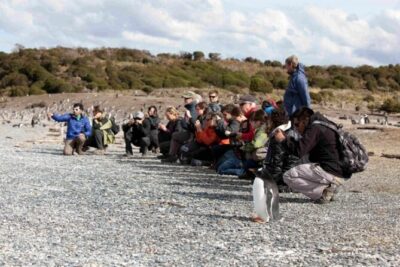


Margaret River: Birds of Prey Encounter and Forest Walk
Read our review →
Monteverde Wildlife Walk & Hummingbird Encounter
Read our review →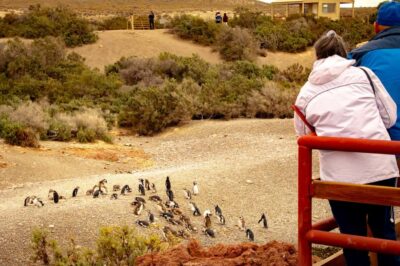

Martillo Island and Walk Among Penguins Full-Day Tour
Read our review →Browse the lists this tour appears in