
REVIEW · MALAYSIA BIRDWATCHING TOURS
Birdwatching Tour in Langkawi
Birds make Langkawi feel wilder.
This four-hour outing with JungleWalla Tours takes you from a village pond and wetland areas toward Langkawi’s highest peak, with a local nature guide helping you spot birds that are easy to miss. I like the small maximum group of eight and the fact that binoculars, bottled water, and hotel transfers are included. I also like the clear conservation rule: the guides do not feed birds, use bait, or play bird calls.
The main consideration is simple: this is a real birdwatching tour, not a fast wildlife ride. You may spend several minutes studying one branch through binoculars, and birds can sit far away. That suits keen birders and patient families best. If you want constant action or close-up photographs, the pace may feel slow.
Key points to know before booking
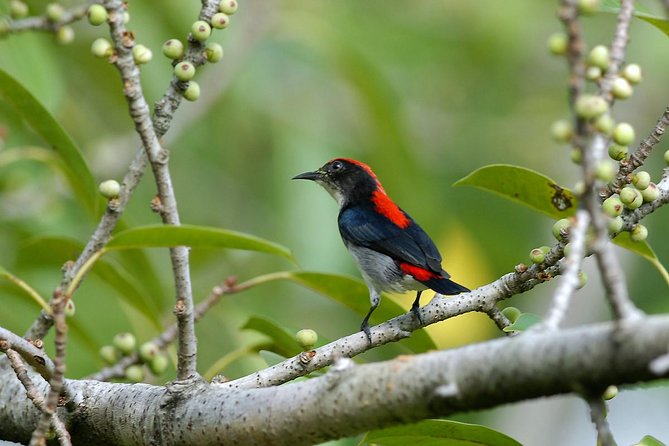
- Great hornbills are a major reward: You may also spot oriental hornbills, pied hornbills, kingfishers, egrets, herons, whistling ducks, and raptors.
- The route covers several habitats: Expect wetland and village-pond birds before moving toward mountain rainforest country.
- A guide makes the difference: Guides such as Sham, Affie, and Ikram have helped people locate birds that were nearly invisible to the untrained eye.
- Morning starts at 7:30 am: An afternoon departure is also offered, but the supplied start time is for the morning outing.
- Hotel pickup is included: Return transport is available from any hotel in Langkawi, which makes this easier than arranging separate taxis.
- Photography takes patience: Birds may be distant, so bring realistic expectations and a camera suited to wildlife at a range.
What the four-hour route is really like
JungleWalla Tours presents this as a four-hour birdwatching experience in Langkawi’s natural surroundings. The route is designed to cover more than one habitat, which matters because wetland birds and mountain forest birds behave very differently.
The outing begins around a village pond or similar wetland setting. This is where you have a good chance of seeing whistling ducks, egrets, pond herons, and other waterbirds. Open water and muddy edges make birds easier to find than in thick forest, although they may still stand well away from the road or viewing point.
From there, the experience moves toward higher ground and rainforest areas. The stated goal is a perch near Langkawi’s highest peak, where the bird list can shift toward hornbills and mountain species. The change in habitat is one of the tour’s best features. You are not simply standing beside one pond for four hours.
The exact order and timing can change. Birds do not follow a timetable, and the guide may stay longer at a productive site or move on when conditions are quiet. That flexibility is useful for serious birdwatching, but it means the outing is less predictable than a standard sightseeing trip.
A few more birding trips around the world worth a look
- Penguin Parade, & Wildlife Encounters Eco Tour from Melbourne
★ 5.0 · 3,774 reviews - Cape Town: Cape of Good Hope & Penguins Day Tour with Pickup
★ 4.7 · 3,362 reviews - Cape Point and Boulder’s Penguins Full Day Tour
★ 5.0 · 3,118 reviews
Starting at 7:30 am, with an afternoon choice
The morning start is 7:30 am. That early hour is worth noting when planning your hotel routine, especially if you have a long drive to the pickup point or young children who dislike early starts.
An afternoon departure is also available. The supplied tour information does not give a separate afternoon start time, so confirm the exact pickup hour when booking. Morning and afternoon options are helpful for fitting birdwatching around other Langkawi plans, but the tour does not promise that both departures offer the same sightings.
Hotel pickup and return transport are included from any hotel in Langkawi. That adds real value. You do not need to locate a village pond, figure out the best forest access, or arrange a separate ride back after four hours outdoors.
The group is limited to eight people. That is small enough for a guide to help several people find the same bird through binoculars or a scope. It also limits the noise and movement that can make birds retreat. A minimum of two people is required per booking, so solo visitors should check availability before paying.
The wetland stop: ducks, egrets, and patient watching
The first part of the route focuses on waterbirds. Whistling ducks, egrets, herons, and pond herons are among the likely targets. These birds may look familiar, but the guide can help you separate similar species and notice behavior that you might otherwise miss.
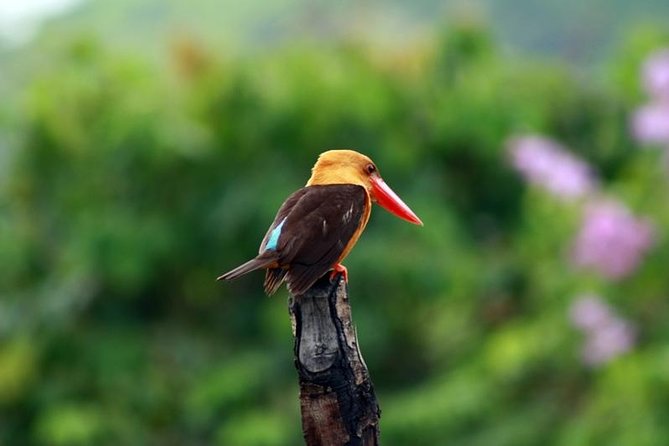
A common kingfisher is another worthwhile target. One sighting included a kingfisher carrying a fish, which shows why patience matters. You are not guaranteed that scene, of course, but the pond and mangrove settings give you a reasonable chance to look for kingfishers.
The wetland section is also useful for families. Children may find it easier to start with larger birds in open areas before trying to locate a small bird under a particular branch. One especially helpful guide, Affie, was praised for pointing out birds by giving precise directions such as looking beneath a certain branch. That kind of help can turn a frustrating search into a satisfying one.
Do not expect every bird to be close. Some sightings will be across water or high in a tree. The binoculars bring the bird closer, but they cannot turn a wild animal into a posed subject.
Toward the mountain forest and Langkawi’s hornbills
The change from low wetland to mountain rainforest is the tour’s main natural story. At higher points, the guide will look and listen for hornbills and other forest species. Great hornbills are a major goal for many people, and sightings have included both great hornbills and oriental hornbills.
Pied hornbills and mountain hawk eagles have also been seen. These are not guaranteed targets, but they show the range of birds possible on the route. Smaller forest birds may be harder to locate, particularly for people who are new to birdwatching.
The highest-peak viewpoint gives you more than birds. You also get views across Langkawi’s natural surroundings, and the raised position can help with larger birds in flight or perched in distant trees. The tradeoff is that distance can make photography difficult.
One practical lesson is to watch the guide rather than scanning randomly. A trained local spotter may see movement or a shape that looks like a leaf to you. Once the guide directs your binoculars, the bird often becomes obvious. Without that help, you could spend a long time looking at the wrong branch.
Same place, a different set of birds:
- Cape of Good Hope & Boulder Penguins Full-Day Tour from Cape Town
★ 5.0 · 2,347 reviews - From Melbourne: Penguin Parade, Koalas & Kangaroos
★ 4.5 · 1,932 reviews - Table Mountain, Penguins & Cape Point Small Group Tour Cape Town
★ 4.5 · 1,797 reviews - Cape Town Tour: Table Mountain, Penguins & Cape Point+Pickup
★ 4.7 · 1,671 reviews
Guides who make the experience work
The guide is the most important part of this tour. Sham has helped explain why mangroves matter and how their protection supports wildlife. That gives the outing more purpose than simply ticking species off a list.
Affie has been praised for finding birds at a distance and for helping people locate kingfishers and hornbills. Ikram has also been noted for explaining local plants, birds, and the surrounding terrain. Names may vary by departure, but the supplied experience identifies the guides as local English-speaking nature guides.
This local knowledge has practical value. A guide can choose where to stop, identify birds, explain the habitat, and help you use binoculars. The guide may also adjust the pace if one part of the route is productive.
The tour follows BirdLife International guidelines for responsible bird tourism. That means no feeding, baiting, or artificial bird calls. I see this as a strong point. You get a better chance of seeing natural behavior, and the animals are not trained to gather around people.
What birdwatching is like for beginners
You do not need to be an expert to join, but you do need some patience. The experience is designed for people who want to look carefully, not for those who want a quick list of attractions.
A beginner may spend the first part learning how to hold binoculars steady and follow a bird in the canopy. The guide can help with this, but your eyes still need time to adjust. Bring your own binoculars if you have them, even though equipment is supplied.
The tour can be rewarding for families. Children often notice movement faster than adults, and one outing produced 23 different bird species. Still, four hours of looking through binoculars may be too long for a child who needs constant activity.
There is also more than birdlife. Sightings have included monkeys and a mangrove viper. These are incidental wildlife encounters, not promised parts of the tour, so treat them as a bonus rather than a target.
Photography: good chances, but not easy shots
The tour gives you opportunities to photograph birds and Langkawi’s scenery, but you should set realistic expectations. Several birds may be high in trees, across water, or partly hidden by branches.
The great hornbill and kingfishers can be exciting subjects, yet they are not always close enough for a phone camera. A long lens will help, though no equipment can guarantee a clear shot when a bird stays distant or moves quickly.
The guide’s spotting skill is especially useful for photography. Once you know where the bird is, you can prepare your camera instead of searching blindly. Bring spare batteries or a charged phone, since the tour lasts around four hours and includes several outdoor stops.
Earth-colored clothing also helps you fit quietly into the setting. Green, brown, and black are recommended. Avoid red, yellow, and white, which can be more noticeable around wildlife.
Price and what the $82 covers
At $82 per person, this is not the cheapest way to spend four hours in Langkawi. The price makes more sense when you count what is included: return hotel transport, an English-speaking nature guide, binoculars to use, and bottled water.
You are paying for access to local knowledge as much as for transport. Without a guide, you might see egrets and ducks, but miss a hornbill hidden high in the canopy or a kingfisher carrying a fish. The guide also saves you the trouble of finding suitable habitats and getting back to your hotel.
The value is strongest if you care about birds, nature, or photography. If your main goal is a general sightseeing trip, the cost may feel high for an outing built around quiet observation.
Food and drinks are not included. Bring anything you need beyond the supplied bottled water, since the tour lasts about four hours. The tour requires a moderate level of physical fitness, and the suggested clothing includes long sleeves, long pants, walking shoes, a hat, and sun protection.
Rain, comfort, and practical preparation
Weather matters. The experience requires good weather, and poor conditions can lead to a new date or a full refund. Even when the tour runs, rain can affect bird activity and visibility.
One outing continued in the rain and still reached several sites, but you should not assume every departure will follow that pattern. Pack light rain protection if appropriate, while keeping your binoculars and camera protected.
Long sleeves and long pants are sensible for outdoor stops. Walking shoes are recommended, and sun protection is important in open wetland areas and at exposed viewpoints. Earth tones are advised to reduce visual disturbance.
You should also expect some standing and walking. The stated fitness requirement is moderate, but the exact walking distance is not provided. If you have concerns about mobility or stamina, ask JungleWalla Tours before booking.
Confirmation is provided at booking. One practical warning is worth taking seriously: contact the operator before the tour to confirm that the booking and pickup details have reached them. A communication mix-up has occurred before, even though the driver was otherwise on time.
Is this tour right for you?
I would choose this tour if I wanted a serious introduction to Langkawi’s birds without bringing my own guide or transport. The combination of wetland birds, mountain forest species, hotel pickup, and a group capped at eight gives you a good structure for a half-day outdoors.
You should book it if great hornbills, kingfishers, egrets, herons, or raptors are on your wish list. It is also a good choice if you want to understand why mangroves and forest habitats matter, not just photograph a few animals.
I would hesitate if you need close, guaranteed wildlife sightings or a fast-moving tour. Birds can be distant, hidden, or absent from a particular stop. The guide can improve your odds, but cannot control wild animals.
With a 97 percent recommendation rate and a 4.9 rating from 116 reviews, the experience has a strong record. Still, the best reason to book is not the score. Book because you are willing to slow down, look carefully, and let a local guide show you what is hiding in plain sight.
Free cancellation is available up to 24 hours before the local start time. Changes or cancellations made later are not refunded, and poor weather may lead to a different date or a full refund.
FAQ
How long is the Langkawi birdwatching tour?
The tour lasts approximately four hours.
What time does the morning tour start?
The stated morning start time is 7:30 am.
Is an afternoon departure available?
Yes, you can choose a morning or afternoon departure. The exact afternoon start time is not provided, so confirm it when booking.
Is hotel pickup included?
Yes. Return transfers are included from any hotel in Langkawi.
What birds might I see?
Possible sightings include whistling ducks, egrets, herons, pond herons, kingfishers, great hornbills, oriental hornbills, pied hornbills, and mountain hawk eagles.
Are binoculars provided?
Yes. Binoculars are provided for use, although bringing your own is advised. A scope is also included according to the tour description.
Is bottled water included?
Yes. Bottled water is included.
Is food included?
No. Food and drinks other than the supplied bottled water are not included.
How many people can join the tour?
The maximum group size is eight people. A minimum of two people per booking is required.
What should I wear?
Wear long sleeves, long pants, walking shoes, a hat, and good sun protection. Earth colors such as green, brown, or black are recommended, while bright colors such as red, yellow, and white should be avoided.
Does the tour use bird calls or feeding?
No. The operator does not use feeding, bait, or bird calls and follows BirdLife International guidelines for responsible bird tourism.
Can I cancel for a full refund?
You can cancel for a full refund at least 24 hours before the experience start time. Late cancellations and changes are not refunded, and cancellation cutoffs use Langkawi local time.
Just added around the world
- Walvis Bay Shore Excursion: Flamingos, Dune 7, Swakopmund★ 5.0 · 3 reviews
- York: Entry to York bird of prey centre★ 5.0 · 7 reviews
- Visit to Madeira Bird Island★ 4.6 · 22 reviews
- Vestmannaeyjar: Puffin, Island, and Volcano Boat Tour★ 4.4 · 7 reviews
- Vila Franca do Campo: Marine Life & Bird Watching & Islet Tour★ 4.4 · 9 reviews
- VIP falconry taster session★ 5.0 · 2 reviews
- Ushuaia: Gable Island and Penguin Colony with Lunch★ 4.8 · 2 reviews
- Ushuaia: Sailing Beagle Channel to the Penguin Colony★ 4.6 · 14 reviews
Malaysia Birdwatching Tours, compared.

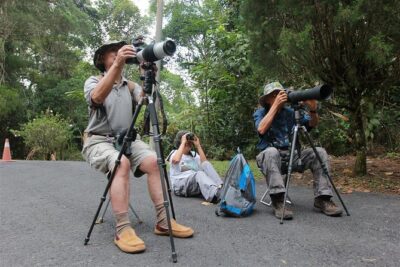
Fraser’s Hill Bird-Watching & Nature Sightseeing Tour from Kuala Lumpur
Read our review →
Bird Park & Butterfly Farm Nature Include All Entrance Tour From Kuala Lumpur
Read our review →
Kuala Lumpur Private Half-Day Family Tour of Nature, Birds and Butterflies
Read our review →
Bird Park & Butterfly Farm Nature Tour From Kuala Lumpur
Read our review →Browse the lists this tour appears in