
REVIEW · NORWAY BIRDWATCHING TOURS
The Bird Safari Tour
Puffins are the stars, but the ride matters too. This three-hour outing from Honningsvåg combines a scenic bus trip across the island with a boat ride around Gjesværstappan Nature Reserve, one of Europe’s largest bird colonies. I like the close look at Arctic wildlife and the beautiful route through fjords and mountains. The main caution is price: at $292 per person, this is a costly half-day, and bird sightings can vary with weather, distance, and animal behavior.
The trip is best during the nesting season, from April through September, when puffins, kittiwakes, guillemots, razorbills, cormorants, fulmars, gannets, and Arctic skuas gather along the cliffs. You may also spot white-tailed eagles and seals. But birds are not trained performers. On one August trip, puffins were hard to see at close range, while eagles were plentiful. That uncertainty is part of the deal.
Key points to know before you book
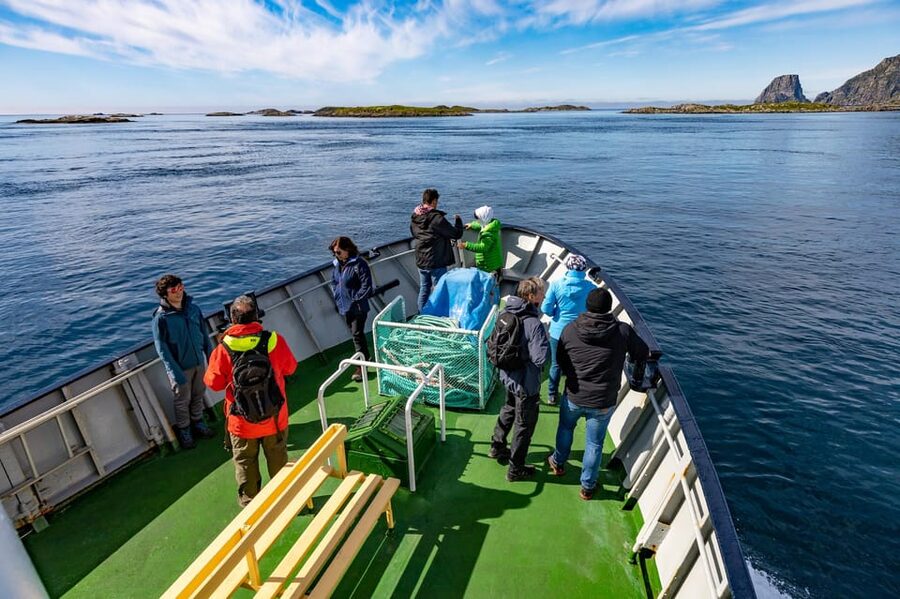
- Gjesværstappan is only about 10 minutes by boat from Gjesvær, so most of the time on the water is spent near the bird cliffs.
- The bus ride is part of the experience, with ocean, fjord, and mountain views across the island to the fishing village of Gjesvær.
- The best wildlife period is April through September, when the cliffs are active with nesting seabirds.
- Arctic suits are available, which matters on an exposed boat even when the day looks pleasant from shore.
- The tour costs $292 per person, a fairer deal for keen bird-watchers than for anyone seeking a general sightseeing ride.
- The trip requires at least four participants, but you can still book alone and receive a refund if the minimum is not reached.
Leaving Honningsvåg for Gjesvær
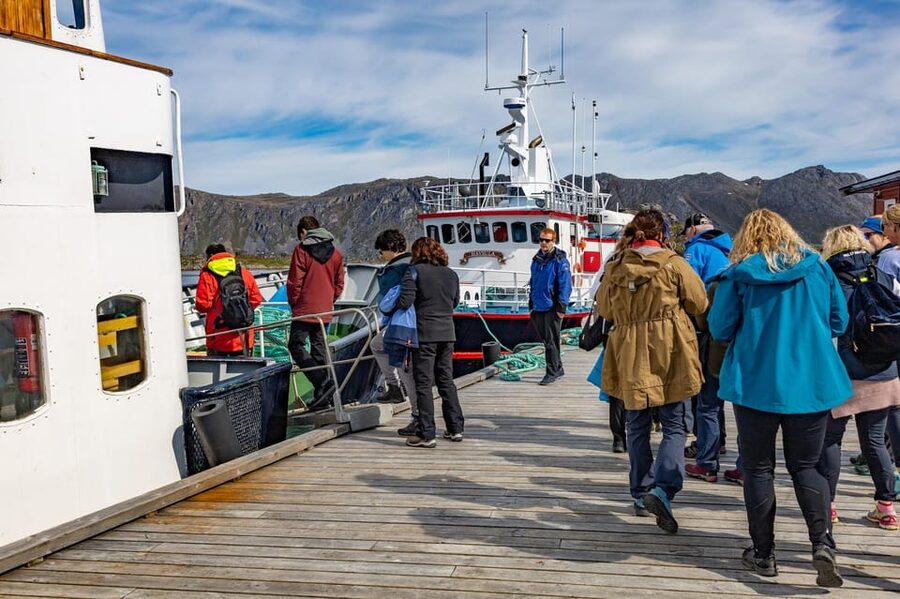
Your day begins beside the cruise pier in Honningsvåg, next to the tourist information office. Look for the coach marked The Birdsafari Tour. This simple meeting point is useful if you are arriving from a cruise ship, but do not wander far from the pier while waiting.
The coach ride to Gjesvær takes about 30 minutes. That sounds like a transfer, but it is really the first scenic section of the outing. You cross an Arctic island with views of open ocean, fjords, and mountains. The scenery gives you a useful sense of the far northern setting before you reach the water.
One particularly strong trip included a smooth ride, humorous recorded narration, and a driver who pointed out reindeer along the road. The narration is not guaranteed to be the same on every departure, but the route itself is the main attraction. If you want photographs, keep your camera ready during the drive instead of waiting for the boat.
Gjesvær is a small fishing village with a history reaching back to the Viking Era. The stop is brief, but it adds character to the tour. You are not simply being shuttled to a pier beside a large port. You reach a quiet settlement tied to fishing and the sea, with the bird reserve just offshore.
More Safaris in the world:
- Húsavík: Original Big Whale Safari & Puffins by Speedboat
★ 4.7 · 1,221 reviews - Original Big Whale Safari & Puffins Speedboat Tour from Húsavík
★ 5.0 · 417 reviews - Morning Falconry & Nature Desert Safari with Transfers from Dubai
★ 5.0 · 254 reviews
Gjesvær, the quiet village before the wildlife
Gjesvær is worth noticing before you board. The village is described as idyllic, and that fits the setting: a compact fishing community surrounded by water, steep ground, and northern weather. The tour does not offer a long village visit, so think of it as a scenic pause and a gateway to the reserve rather than a full cultural stop.
The short timing works well for a three-hour excursion. You get a taste of village life without losing much time on the water. Still, anyone hoping for a detailed history talk or time to explore local streets may find this section too brief.
Once at the pier, you can use one of the provided Arctic suits. This is a practical feature, not a costume for photographs. Open water and boat movement can make the air feel much colder than it does on land. One point to watch is sizing: a passenger found the suits difficult to fit, and the initial handout process confusing. Allow a little patience while you get sorted.
Ten minutes to Gjesværstappan Nature Reserve
The boat reaches the bird cliffs roughly 10 minutes after leaving Gjesvær. That short crossing is a major advantage. You spend less time simply getting somewhere and more time looking at the reserve.
Once near the islands, you can move freely around the boat. The captain and onboard helpers answer questions, and the commentary identifies species as they appear. This makes a real difference. A black shape on a cliff is just a black shape until someone helps you understand whether you are looking at a guillemot, cormorant, or razorbill.
The strongest reports of the trip praised the captain’s narration and the way the staff directed attention to birds. Good wildlife guiding is often about timing. The guide may tell you where to look just before an eagle appears or point out a seal playing near the boat. That turns a broad view of the cliffs into an active search.
The boat has toilets, including two according to one detailed account. There is no food for sale, so bring a snack if you need one. The information provided does not promise a meal or refreshments, and the three-hour schedule can stretch if you are hungry or if the weather makes the ride feel demanding.
Puffins, kittiwakes, and the busy cliffs
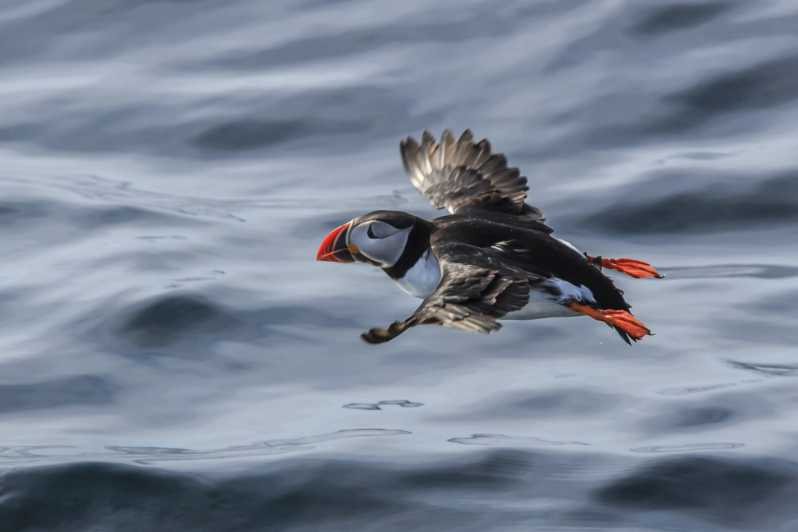
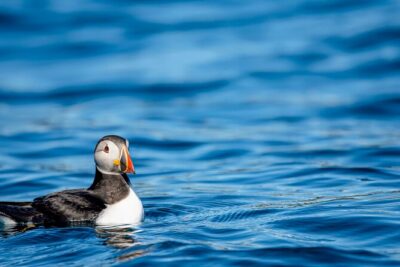
Puffins are the bird most people hope to see. Their colorful bills make them easy to recognize, but they are small, quick, and not always close to the boat. Puffins nest in holes in grassy hills, so you may see them on the water, flying toward the cliffs, or moving in and out of the nesting areas.
The nesting months from April to September offer the best chance for a lively colony. During this period, the air and cliff faces can be full of movement. Even then, sightings are not guaranteed at close range. On one August departure, puffins stayed too far away to photograph well and often disappeared beneath the water or flew off before the boat got near.
That is the key expectation to set. The tour brings you to a strong bird habitat, but it does not promise a puffin perched beside your camera. If you need close puffin photographs, you may feel disappointed. If you enjoy watching natural behavior and scanning the water, the experience is more rewarding.
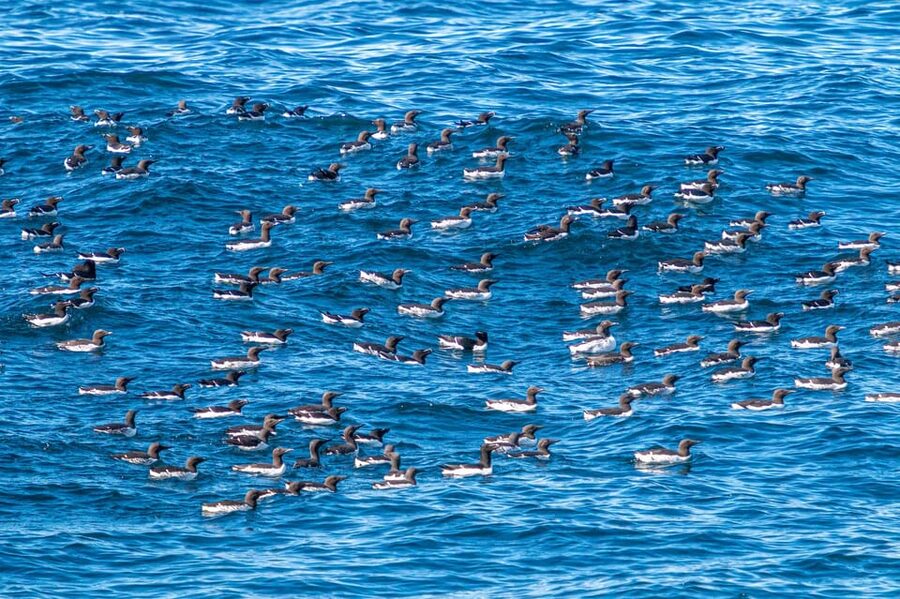
Kittiwakes are another major feature of the colony. You may see them around the cliffs, along with guillemots, razorbills, cormorants, Arctic skuas, fulmars, and gannets. The variety matters because the trip is not dependent on one species. A quiet puffin day can still bring a good range of seabirds.
A few more birding trips around the world worth a look
- Penguin Parade, & Wildlife Encounters Eco Tour from Melbourne
★ 5.0 · 3,774 reviews - Cape Town: Cape of Good Hope & Penguins Day Tour with Pickup
★ 4.7 · 3,362 reviews - Cape Point and Boulder’s Penguins Full Day Tour
★ 5.0 · 3,118 reviews - Cape of Good Hope & Boulder Penguins Full-Day Tour from Cape Town
★ 5.0 · 2,347 reviews
White-tailed eagles and possible seals
White-tailed eagles add drama to the outing. They can hover overhead as they hunt, and several people have had particularly good eagle sightings. In fact, on a less successful puffin outing, the eagles were the clear highlight.
You may also see seals in the water. One especially successful trip included seals playing close to the boat, along with puffins on the surface, several eagles, and other birds. These moments are unpredictable, so keep watching after the boat reaches the main cliffs. The water around the reserve can offer just as much interest as the rock faces.
The boat crew helps you make the most of these brief encounters. A bird may appear for only seconds, and you may miss it if you are looking through the wrong window or adjusting your camera. I recommend watching with your eyes first and taking photographs second. You will often get better pictures after you know where the action is.
Why the boat commentary matters
The quality of the commentary is one of the strongest parts of this trip. The boat guide has been praised for humorous, engaging, and informative explanations, with bird information provided as sightings happen. That style suits a wildlife trip because you learn without being buried under a lecture.
The captain is available for questions, and additional helpers on board can point out birds and respond to queries. You are free to move around, which gives you a better chance of finding a clear view. This is more useful than a fixed sightseeing seat, especially when birds appear on different sides of the boat.
The experience is not only about ticking species off a list. The guide helps explain what you are seeing and where to look. That makes the trip accessible to beginners, while keen bird-watchers can ask more specific questions.
Still, commentary cannot solve every problem. Fog, wind, distance, and fast-moving birds will always limit what you see. A strong guide improves your chances, but does not control the reserve.
Weather, clothing, and the real comfort level
The Arctic suits are an important part of the practical setup. You can use one on the way to the bird cliffs to stay warm and comfortable. Bring sensible clothing anyway, since the suit fitting may take time and personal layers still matter.
Weather has a large effect on the value of the outing. One particularly praised trip took place on a perfect day, with calm conditions, clear views, and excellent wildlife activity. That combination made the water, islands, and birds feel spectacular.
Another departure produced fewer close puffin sightings. The difference may come from bird behavior, conditions, or both. You should book this knowing that the same route can produce very different results from one day to the next.
If you are prone to seasickness, the supplied information does not describe the boat’s motion or provide a specific remedy. You can ask the operator about conditions before departure, but do not assume the water will be calm. The boat does have toilets, which is useful on a short trip but does not replace good preparation.
Is $292 a fair price?
At $292 per person, this is expensive for a three-hour activity. The price includes the coach transfer, the boat excursion, the nature reserve experience, the village visit, onboard guidance, and Arctic suits. It also saves you the trouble of arranging transport from Honningsvåg to Gjesvær on your own.
For a serious bird-watcher or someone with only one day in the North Cape area, the cost may be reasonable. You are paying for access to a remote colony, a captain and guiding team, and a carefully timed return to Honningsvåg. The scenic drive adds value instead of feeling like dead time.
For a casual sightseer, the calculation is harder. A disappointing bird day can make the price feel excessive, especially if puffins remain distant. One person rated the experience only average and felt it was at least 50 percent too expensive after seeing few birds.
My advice is to ask yourself what you are buying. If the answer is a chance to see Arctic seabirds in a wild setting, the price may be acceptable. If the answer is a guaranteed close-up puffin photograph, it is too risky.
Who will enjoy this tour most?
I would choose this trip for anyone who enjoys wildlife, remote scenery, and short guided excursions. It suits first-time bird-watchers because the guides identify species and point out activity. It also works for cruise passengers who want a structured outing beginning and ending beside the Honningsvåg pier.
Photographers should bring patience. The trip offers plenty of photo opportunities, but distance and movement can make sharp images difficult. A zoom lens may help, though the supplied information does not promise that every bird will come within camera range.
Families and mixed-age groups can also use the tour, since it is described as suitable for everyone. The boat has toilet facilities, and the ride is only three hours. The main concerns are weather, clothing, and the need to stand or move around for the best views.
I would hesitate to recommend it to someone who dislikes cold boat rides or needs a fixed schedule with no wildlife uncertainty. I would also think twice if your budget is tight and bird sightings are not a priority.
Booking details that matter
You meet next to the tourist information office by the Honningsvåg cruise pier. The coach is marked The Birdsafari Tour, so it should be easy to identify.
The activity is conducted in English, including the driver and tour information. It lasts three hours, though you should still keep a little flexibility around your broader day plan. The tour requires at least four participants to operate. Solo booking is allowed, and if the minimum is not reached, the operator will contact you and refund the booking.
You can cancel up to 24 hours before departure for a full refund. You can also reserve now and pay later, which helps if your cruise or northern Norway schedule is still changing.
Should you book The Bird Safari Tour?
Book it if you want a well-organized chance to see puffins, eagles, and other seabirds in a remote Arctic setting, and if the $292 price fits your budget. The excellent boat commentary, scenic transfer, quick ride to the cliffs, and possible eagle and seal sightings give the outing real value.
Skip it if you need guaranteed close puffin views or feel the cost is too high for an uncertain wildlife day. The fairest way to judge this tour is to treat it as access to a living nature reserve, not a wildlife show. In good weather, it can be remarkable. On a quieter day, the scenery and guiding may carry the experience.
FAQ
Where does The Bird Safari Tour start?
It starts next to the tourist information office by the cruise pier in Honningsvåg. The coach is marked The Birdsafari Tour.
How long does the tour last?
The tour lasts three hours.
How do you reach the bird reserve?
You travel by coach from Honningsvåg to Gjesvær, then continue by boat to Gjesværstappan Nature Reserve.
How long is the bus ride to Gjesvær?
The coach ride from Honningsvåg to Gjesvær takes about 30 minutes.
How far is Gjesværstappan from Gjesvær?
The bird cliffs are reached about 10 minutes after the boat leaves the pier. The reserve is about 15 kilometers west of the North Cape.
What birds might you see?
Possible sightings include puffins, kittiwakes, white-tailed eagles, guillemots, razorbills, cormorants, Arctic skuas, fulmars, and gannets.
When is the nesting season?
The nesting period runs from April through September.
Are warm clothes provided?
Arctic suits are available for use on the boat. You should still dress suitably for northern weather.
Is there a toilet on the boat?
Yes. Toilet facilities are available, and one account specifies that the boat has two toilets.
Is food sold on the boat?
No food is available to buy on board. You can bring your own snack or food.
Can a solo person book the tour?
Yes. You can book as an individual, but at least four participants are required for the tour to operate. If the minimum is not reached, you will be contacted and refunded.
Just added around the world
- Walvis Bay Shore Excursion: Flamingos, Dune 7, Swakopmund★ 5.0 · 3 reviews
- York: Entry to York bird of prey centre★ 5.0 · 7 reviews
- Visit to Madeira Bird Island★ 4.6 · 22 reviews
- Vestmannaeyjar: Puffin, Island, and Volcano Boat Tour★ 4.4 · 7 reviews
- Vila Franca do Campo: Marine Life & Bird Watching & Islet Tour★ 4.4 · 9 reviews
- VIP falconry taster session★ 5.0 · 2 reviews
- Ushuaia: Gable Island and Penguin Colony with Lunch★ 4.8 · 2 reviews
- Ushuaia: Sailing Beagle Channel to the Penguin Colony★ 4.6 · 14 reviews
Norway Birdwatching Tours, compared.
Bleik: Whale Watching by Speedboat with Puffins and Muffins
Read our review →
Whale safari with Puffins and Muffins (Andøy, Vesterålen)
Read our review →Browse the lists this tour appears in