
REVIEW · GUIDED
Ebony Forest Reserve Chamarel: Endemic Birdwatching Guided Tour
Rare birds reward patience. Ebony Forest Reserve Chamarel offers one of Mauritius’s best chances to look for birds found nowhere else, including the pink pigeon and echo parakeet. I like the small group of nine or fewer and the chance to explore by foot rather than simply view the forest from a vehicle.
I also like that binoculars, snacks, and drinks are included, which keeps the morning simple. The main drawback is that sightings are never guaranteed, and the walk can cover about 6 kilometers, so you need moderate fitness and a willingness to move quietly through the forest.
Key points to know before you book

- Six rare Mauritian birds may be found here: Look for the pink pigeon, echo parakeet, Mauritius paradise flycatcher, Mauritius black bulbul, Mauritius kestrel, and grey-white eye.
- The group is limited to nine people: This gives you a better chance to hear the guide and keep the birding calm.
- Expect a 3 to 4-hour morning: The tour begins at 9:00 am at Ebony Forest Reserve Chamarel and ends at the same place.
- A 6-kilometer walk may be part of the day: You can also use safari jeeps for some sections, but walking gives you more time among the trees.
- The museum and release aviaries add useful context: You learn how the reserve protects native birds before heading into the forest.
- Sublime Point adds scenery and refreshments: Snacks and drinks are served while you look across the rugged south of Mauritius.
Why Ebony Forest is special for birdwatching
Mauritius is famous for beaches and warm water, but its rare birds tell a more unusual story. Several native species survive only on this island, and Ebony Forest Reserve Chamarel protects one of the few remaining areas where you can search for them in their natural setting.
The reserve is listed as an Important Bird Area by BirdLife International. That matters because this is not simply a pleasant woodland walk with a few birds added for decoration. The forest is part of a serious effort to restore native trees and provide safer habitat for endangered species.
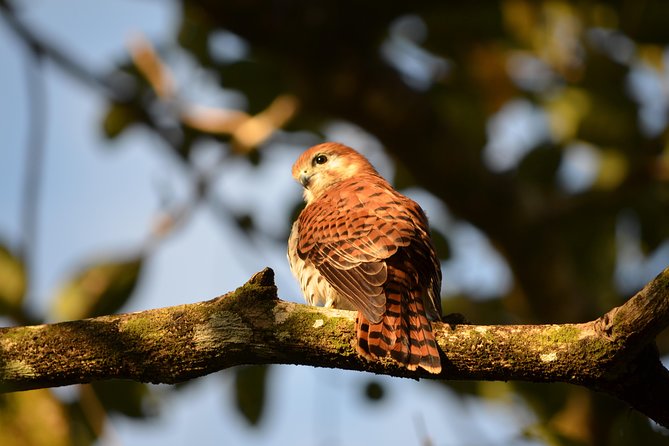
Six of Mauritius’s nine remaining endemic birds may be found in the reserve. The most famous targets are the pink pigeon and echo parakeet, but the Mauritius paradise flycatcher, Mauritius black bulbul, Mauritius kestrel, and grey-white eye are also possible sightings.
You should set your expectations correctly. Even on a good morning, birds can stay high in the canopy, hide among leaves, or move away before you arrive. The goal is not to collect a guaranteed list. It is to learn where and how to look, then enjoy the rare moment when one of these birds appears.
More Guided Tours in the world:
- Puffin Cruise with Expert Tour Guide from Reykjavik
★ 4.5 · 636 reviews - 2 Hours Guided Whale and Bird Boat Tour in Bay Bulls
★ 5.0 · 557 reviews - Guided Evening Penguin Viewing Otago Peninsula, Dunedin, New Zealand
★ 5.0 · 471 reviews
The 9:00 am start and small-group setting
You meet at Ebony Forest Reserve Chamarel at 9:00 am. The activity returns to the same meeting point, which makes planning easier if you are combining it with other visits around Chamarel.
The tour accepts no more than nine participants. That limit is one of the strongest reasons to consider this experience. Birdwatching works best when people can stay quiet, spread out slightly, and hear instructions without a guide competing with a large crowd.
A small group also helps when someone spots movement in the trees. You can share the binoculars and point others toward the bird without creating the commotion that often spoils wildlife sightings.
The activity requires at least two adults to operate. Confirmation is sent within 48 hours of booking, subject to availability, so you should not assume that an individual booking will run without the minimum number.
Starting with the museum and film
The morning begins with a short visit to the museum. This gives you a useful introduction before you set off, especially if you do not know the difference between Mauritius’s native birds and more familiar species found across the island.
A film is also part of the early orientation. I value this kind of start because it gives the walk a purpose. You learn what the reserve is trying to protect, why native forest matters, and what sort of bird behavior to watch for.
The museum is not the main event, so do not book this expecting a long indoor visit. It works as preparation for the forest rather than a separate attraction.
The release aviaries and first bird sightings
Next comes an exclusive visit to the bird release aviaries. These aviaries are linked to conservation work, and they offer an early chance to see the echo parakeet and pink pigeon.
This part is useful for two reasons. First, it gives you a better look at birds that may be hard to find later in the forest. Second, it shows that the reserve is involved in active protection and release efforts, not just guided walks.
Still, the most rewarding sightings are the wild ones. The aviaries can help you learn the birds’ appearance and behavior, but they do not replace the thrill of finding one feeding or moving through the native trees.
Your guide provides binoculars and explains how to use them. That matters if you are new to birdwatching. Finding a small bird in a high canopy is not always easy, and a few clear instructions can save you from staring at the wrong branch for five minutes.
A few more birding trips around the world worth a look
- Penguin Parade, & Wildlife Encounters Eco Tour from Melbourne
★ 5.0 · 3,774 reviews - Cape Town: Cape of Good Hope & Penguins Day Tour with Pickup
★ 4.7 · 3,362 reviews - Cape Point and Boulder’s Penguins Full Day Tour
★ 5.0 · 3,118 reviews - Cape of Good Hope & Boulder Penguins Full-Day Tour from Cape Town
★ 5.0 · 2,347 reviews
Walking through restored ebony forest
The forest walk is the heart of the tour. The reserve is working to recreate large areas of native forest, and you get to see those restoration efforts as part of the route.
A walk of around 6 kilometers is possible. The distance is not extreme for a regular walker, but it changes the character of the experience. This is not a quick roadside stop. You need comfortable shoes, steady energy, and enough patience to pause often.
The guide does more than point out birds. You may learn about plants, butterflies, and the forest itself. That wider focus helps when the birds are quiet. You are still seeing how the local ecosystem fits together rather than waiting for a single species to appear.
I would choose to walk both ways if your fitness allows it. The safari jeeps are available, and they can make the route easier, but walking gives you more time to notice movement and sound. A jeep may be useful if you want to conserve energy or if the full distance feels too demanding.
The correct choice depends on your priorities. If your main goal is birdwatching, walking offers more chances to stop and scan the trees. If your main concern is comfort, the vehicle can reduce the physical effort.
The Flycatcher Raised Walkway
One of the most appealing sections is the Flycatcher Raised Walkway. Boardwalks climb high into the canopy, giving you a different view of the forest from an ordinary trail.
This higher position is valuable for birdwatching. Many birds move above eye level, and a raised path can bring you closer to the parts of the forest where they feed and rest. It also changes the feel of the walk, with views through the treetops rather than only along the forest floor.
Take your time here. The temptation is to keep moving because the walkway feels like a destination, but the best birding moments often come from stopping quietly. Let your guide direct your attention and keep your binoculars ready.
The boardwalk also means you should think about balance and stamina. The tour asks for moderate physical fitness, and the combination of distance, walking, and raised paths may feel tiring if you are not used to longer outings.
Sublime Point and the rugged south
The route continues to Sublime Point, where you can pause for Mauritian snacks and a drink. This break is practical, especially after a long walk, but it is also one of the scenic highlights.
From here, your guide points out the mountains and rugged scenery of southern Mauritius. It gives the morning a welcome change of pace. Instead of keeping your eyes fixed on branches, you can look outward and understand the setting around the forest.
The snacks are included, so you do not need to pack food for a half-day outing. You should still arrive ready for a morning outdoors, since the provided refreshments are meant to support the tour rather than replace all personal preparation.
This stop is also a good time to ask questions. Your guide can connect what you have seen in the forest with the wider conservation work around Chamarel.
The birds you might see
The pink pigeon is one of the headline species. Its name makes it sound almost unreal, but the important point is that it is a wild, native Mauritian bird with a very restricted range. The tour gives you a chance to search for it in protected forest rather than seeing it only in a display.
The echo parakeet is another major target. The reserve’s release aviaries help explain the work behind its protection, while the forest walk gives you the possibility of seeing one outside the aviary.
The Mauritius paradise flycatcher is especially suited to the raised walkway and forest setting. The Mauritius black bulbul, also called the merle, is another possible find. You may also search for the Mauritius kestrel and the grey-white eye.
Do not treat the list as a promise. A strong morning could bring several species, while another outing might produce only one or two. One careful account of the walk recorded five of seven possible endemic species, which is an excellent result, but it also underlines how much patience and luck are involved.
The guide’s role is therefore central. A good guide helps you recognize calls, scan the right areas, and understand how the birds behave. You are not simply being led along a path. You are learning how to look.
What the 4.9 rating means for you
The experience has a 4.9 rating from 39 reviews, with 97 percent recommending it. The praise centers on the forest walk, the raised boardwalks, the scenery, and the guide’s explanations about birds, plants, and butterflies.
That high rating makes sense for the right audience. Birdwatchers get rare species, conservation context, and a small group. Hikers get a well-defined route with resting points and changing views. Nature lovers who know little about birds can still enjoy the forest and the museum.
The rating should not make you overlook the physical side. If you want a short, effortless wildlife stop, this may feel too active. You could use the jeep for parts of the route, but the strongest version of the experience includes walking and waiting quietly.
The tour is also weather dependent. Poor weather can lead to a different date or a full refund, which is sensible for a birding activity where visibility and conditions matter.
Is the $60.58 price good value?
At $60.58 per person, the price is reasonable if you want more than entry to a forest. You are paying for a guided morning, binoculars, conservation interpretation, access to the museum and release aviaries, the forest route, refreshments, and the chance to search for rare birds with a group capped at nine.
The small group improves the value. A large nature tour can leave you struggling to hear instructions or see what the guide has found. Here, the guide can give more direct help and keep the pace suited to the group.
The price is less attractive if you mainly want a general woodland stroll. You may not see your preferred bird, and the full experience takes about four hours. The value comes from the specialist focus and the quality of the setting, not from a guaranteed wildlife checklist.
Binoculars are included, which is helpful. Your camera is not included, and you should not expect photography equipment to be supplied. Bring your own camera only if you already have one suited to distant wildlife, but keep the binoculars as your main tool.
Who should book this Chamarel tour?
I would recommend it most strongly to:
- Birdwatchers who want endemic Mauritian species
- Nature lovers interested in restoration and release work
- Hikers comfortable with a possible 6-kilometer route
- Visitors who prefer a small group over a large coach outing
- People who want a guided forest visit with scenery and refreshments
I would think twice if you dislike walking, dislike waiting quietly, or need guaranteed sightings. The tour is also less suitable for anyone unable to manage moderate physical activity, since the route includes walking through the forest and access to a raised walkway.
The best attitude is simple: hope for the pink pigeon or echo parakeet, but enjoy the forest even if the birds keep their distance.
Practical details before you go
The tour starts daily in the morning at 9:00 am and meets at Ebony Forest Reserve Chamarel, Chamarel MU, 90409, Mauritius. The reserve is near public transportation, according to the supplied details.
Plan on three to four hours. Wear something suitable for walking and arrive ready for changing outdoor conditions. Since the activity needs good weather, keep some flexibility in your schedule.
Free cancellation is available if you cancel at least 24 hours before the start time. Cancellations or changes made within 24 hours are not refunded or accepted. If poor weather cancels the tour, you can choose another date or receive a full refund.
Should you book this birdwatching experience?
Book it if you want a serious look at Mauritius’s rare native birds, not just a quick nature photo stop. The combination of a nine-person maximum, supplied binoculars, conservation work, forest walking, raised boardwalks, and Sublime Point makes the morning feel purposeful and varied.
I would book it early, especially since it is commonly reserved around 22 days ahead. Choose the walking option if you are fit enough, because the forest is best appreciated at a slow pace. Choose the jeep for part of the route if conserving energy matters more.
You may not see every bird on the list. That is the honest bargain. But if you value wild places, patient searching, and a guide who helps you understand what you are seeing, this is one of the better ways to meet the less familiar side of Mauritius.
FAQ
Where does the tour start and end?
The tour starts at Ebony Forest Reserve Chamarel, Chamarel MU, 90409, Mauritius, at 9:00 am. It ends back at the same meeting point.
How long does the birdwatching tour last?
The activity lasts approximately four hours, with the guided birdwatching portion described as three to four hours.
Which birds might I see?
Possible species include the pink pigeon, echo parakeet, Mauritius paradise flycatcher, Mauritius black bulbul, Mauritius kestrel, and grey-white eye.
Are binoculars and refreshments included?
Yes. Binoculars, snacks, and a drink are included. A camera is not included.
How many people can join the tour?
The tour has a maximum of nine travelers, and at least two adults are required for the activity to operate.
Can I cancel for a full refund?
Yes, if you cancel at least 24 hours before the experience start time. Poor weather cancellations offer a different date or a full refund.
Just added around the world
- Walvis Bay Shore Excursion: Flamingos, Dune 7, Swakopmund★ 5.0 · 3 reviews
- York: Entry to York bird of prey centre★ 5.0 · 7 reviews
- Visit to Madeira Bird Island★ 4.6 · 22 reviews
- Vestmannaeyjar: Puffin, Island, and Volcano Boat Tour★ 4.4 · 7 reviews
- Vila Franca do Campo: Marine Life & Bird Watching & Islet Tour★ 4.4 · 9 reviews
- VIP falconry taster session★ 5.0 · 2 reviews
- Ushuaia: Sailing Beagle Channel to the Penguin Colony★ 4.6 · 14 reviews
- Vermont Nature Trail and Bird Watching Tour★ 5.0 · 2 reviews
Guided, compared.
Puffin Cruise with Expert Tour Guide from Reykjavik
Read our review →

Guided Evening Penguin Viewing Otago Peninsula, Dunedin, New Zealand
Read our review →
Cape of Good Hope & Penguins Full-Day Guided Tour
Read our review →
Phillip Island Penguin Parade with Expert Local Guide
Read our review →
Guided Kayak Tour to see ponies, birds, dolphins and more
Read our review →