
REVIEW · AUCKLAND BIRDWATCHING TOURS
Guided Tour at Pukorokoro Shorebird Centre
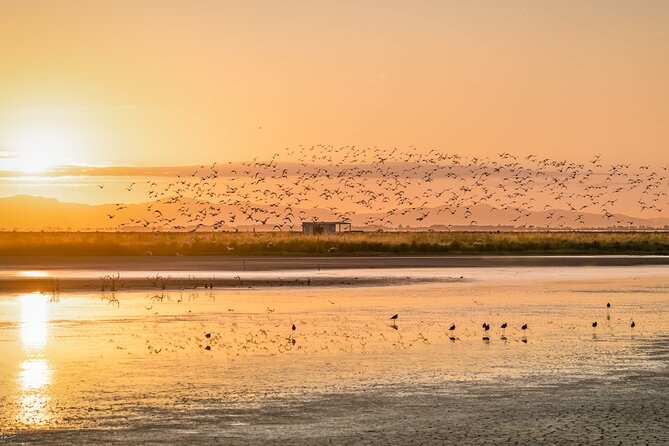
Birds make a long journey here. At Pukorokoro Shorebird Centre, a 90-minute guided walk leads you through the Robert Findlay Wildlife Reserve, where telescopes bring thousands of shorebirds into view. I like the chance to see birds in their natural wetland setting, and I like that your ticket supports an organisation focused on conservation. The main drawback is that the experience depends on good weather and may not suit anyone with very limited mobility.
This is a small, focused outing rather than a broad sightseeing tour. Guides such as Trudy and Chelsea have been praised for clear explanations and friendly answers, while the tide-based timing gives you a better chance of seeing birds gathered in the feeding areas. Bring binoculars if you own a pair, and plan to refill your water bottle at the centre rather than expecting bottled water.
Key points to know before you go
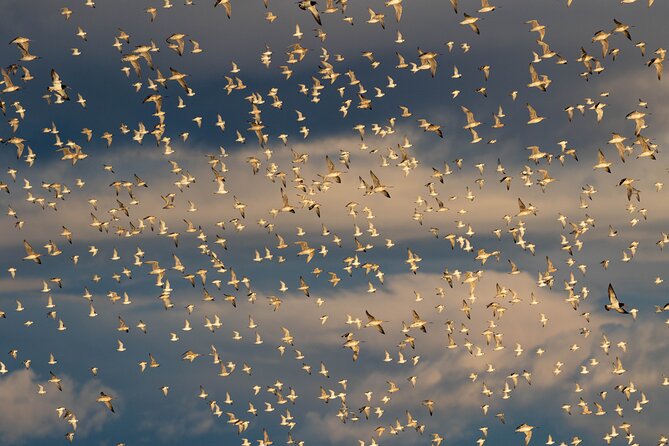
- Thousands of shorebirds: Use the centre’s telescopes to look across the reserve and spot birds in their natural habitat.
- A tide-aware schedule: Tour times are arranged around the tides, when birds are more likely to be present in good numbers.
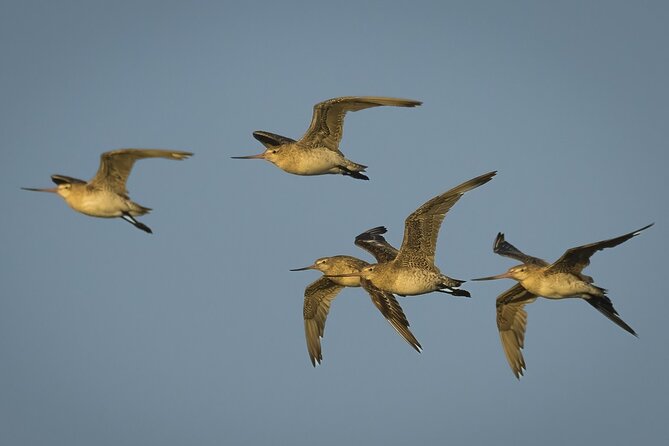
- Migration with a human scale: Learn about the kuaka, or bar-tailed godwit, and the remarkable distances these birds travel.
- A private group experience: Only your own group takes part, giving you room to ask questions.
- A conservation-led visit: Your payment helps support the Shorebird Centre and its work.
- Bring binoculars and water: Binoculars add detail, and you can refill your bottle at the centre.
Why Pukorokoro is worth the trip from Auckland
Pukorokoro Shorebird Centre offers a useful change of pace from Auckland’s museums, shops, and harbour viewpoints. The focus here is one coastal wetland and the birds that depend on it. You are not simply looking at a scenic estuary for a few minutes. You are learning how tides, mudflats, geology, migration, and conservation all connect.
The setting is especially valuable because shorebirds are often easy to miss. From a distance, a flock can look like a dark line on the mud. A telescope changes that. It lets you examine the birds more closely and begin sorting out species that can otherwise blur together.
That identification lesson is one of the strongest reasons to book a guided visit. You may be shown the difference between a wrybill and a godwit, two birds that are not obvious to an untrained eye. You may also see bar-tailed godwits, red knots, and other migratory shorebirds, depending on conditions and the season.
I like the fact that the centre does not treat nature as a backdrop. The birds are the main event, and the guide helps you understand why this particular estuary matters. The result feels more purposeful than a quick stop at a lookout.
More Bird Sanctuaries and Parks in New Zealand:
- Motuara Island Bird Sanctuary and Ship Cove Cruise from Picton
★ 4.0 · 36 reviews - Maleny Botanic Gardens Bird Aviary Experience Ticket
★ 4.5 · 579 reviews - Puerto Iguazu: Iguaza Falls Brazilian Side & Bird Park Tour
★ 4.0 · 260 reviews
Walking through the Robert Findlay Wildlife Reserve
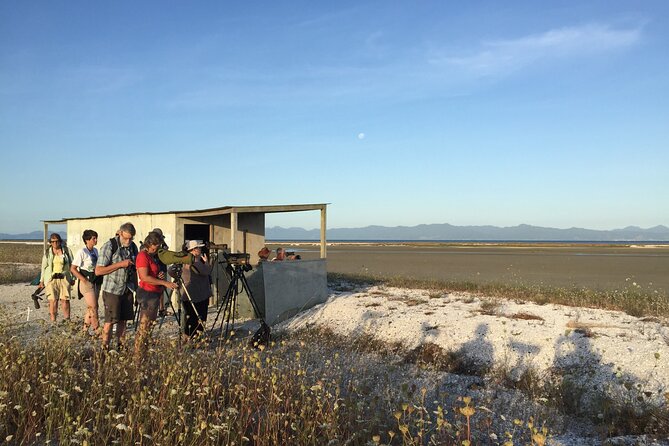
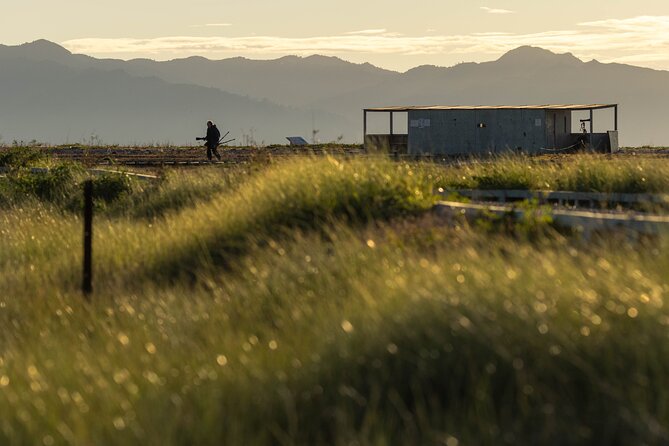
The entire scheduled visit takes place at the Robert Findlay Wildlife Reserve. You walk around the reserve and continue to bird hides, where the viewing is set up for observing shorebirds without disturbing them.
The route is not presented as a strenuous hike. Still, you should expect to spend the full 90 minutes on foot, and the tour is not recommended for people with very limited mobility. If you need a highly accessible activity, this may not be the right choice.
The bird hides give the walk a clear rhythm. You move through the reserve, stop at suitable viewing points, and use the supplied telescopes to scan the wetland. The guide can help direct your attention instead of leaving you to search every patch of mud and water on your own.
That matters because shorebirds do not pose for visitors. A flock may shift, feed, or take flight before you have worked out what you are seeing. An informed guide can help you keep up with the action and explain what makes one species different from another.
The route’s simplicity is also part of its appeal. You do not need an elaborate day of activities to appreciate the place. The reserve, the hides, the telescope, and a good guide provide enough structure for a rewarding hour and a half.
Telescopes turn distant birds into a real lesson
The use of telescopes is included in the price, which makes a difference at this site. Shorebirds often gather at a distance across the estuary, so a telescope gives you a better view than the naked eye.
You should still bring your own binoculars if you have them. One person may be using a telescope while another looks through binoculars, and binoculars are useful for following birds between stops. You do not need specialist equipment to join the tour, but your own pair can make the experience more comfortable.
The guide’s role is just as important as the equipment. The most praised part of the experience is the staff’s passion for the birds and ability to explain what you are seeing. Chelsea, for example, has been singled out for answering questions and sharing interesting facts. Trudy has led a relaxed, informative Saturday tour.
These details suggest the experience works best when you engage with the guide. Ask about identification, migration, or the birds’ behaviour. This is not a silent viewing session where you simply point a scope and move on. The conversation is a large part of what you are paying for.
The telescopes also help younger visitors and first-time birdwatchers. You do not need to arrive with a list of species or a serious interest in ornithology. If you can watch carefully and ask questions, you can get something from the hour and a half.
The kuaka and the scale of migration
The kuaka, or bar-tailed godwit, is a central character in the story told here. The tour explains the bird’s remarkable migration and the challenges shorebirds face along the way.
It is one thing to hear that a bird migrates long distances. It is another to see thousands of birds together and then consider the journey each one has made. That contrast gives the visit its emotional force without needing a dramatic presentation.
You may also see red knots and other migratory species. The exact mix will depend on the conditions, the tide, and what is present during your visit. The centre’s setting allows you to see the birds as part of a working ecosystem, not as isolated entries in a field guide.
The conservation message feels grounded because it comes while you are looking at the wetland itself. You can see why feeding areas matter and why a protected estuary supports so many birds. The experience also makes clear that these species face serious challenges during their migrations.
I find this kind of interpretation more useful than a string of disconnected facts. You learn names, but you also learn why the birds gather here and why the wetland deserves care. That context can change the way you look at other estuaries after the tour.
More Guided Tours in New Zealand:
- Guided Evening Penguin Viewing Otago Peninsula, Dunedin, New Zealand
★ 5.0 · 471 reviews - Dunedin City Highlights, Otago Peninsula Scenery & a Guided Penguin Reserve Tour
★ 4.5 · 77 reviews - Dunedin: Otago Peninsula with Guided Penguin Reserve Tour
★ 4.7 · 66 reviews - Puffin Cruise with Expert Tour Guide from Reykjavik
★ 4.5 · 636 reviews
Why the tides matter so much
The timing of this tour is not arbitrary. Tours are arranged around the tides so the birds are likely to be present in useful numbers. That is a major practical benefit, since a wetland can look very different depending on the water level and feeding conditions.
When you book, pay attention to the start time rather than assuming any hour will offer the same experience. The 90-minute format gives your guide enough time to walk to the hides, set up the telescopes, and explain what you are seeing.
The tide-based planning also means you should avoid treating this as a flexible drop-in stop. Arrive ready for the scheduled time, with your water bottle filled or prepared to refill at the centre. There is no bottled water included, though refills are available.
Snacks are not included either. The centre can recommend local places to eat, so you can plan food around the tour. This is a small detail, but it matters if Pukorokoro is part of a longer outing from Auckland.
What the $31.03 price gives you
At $31.03 per person, the experience is priced as a specialist nature outing rather than a general attraction. Your admission includes the guided walk through the Robert Findlay Wildlife Reserve and use of the telescopes.
The value is strongest if you want interpretation, not just access to a wetland. You could look at birds on your own, but identifying a wrybill or godwit at a distance is much harder without help. The guide also gives you a better understanding of migration and conservation, which adds substance to the view.
The private format improves that value. Only your own group participates, so you can ask questions without competing with a large crowd. A private tour does not guarantee a particular number of birds or perfect viewing conditions, but it does make the guide’s time more relevant to your interests.
The price does not include water or snacks, so budget for those separately. That is hardly a serious flaw, especially since you can refill your bottle at the centre and receive suggestions for local food. Still, it is worth knowing before you arrive.
I would consider the fee fair for anyone who enjoys birdwatching, conservation, or less conventional day trips. If you only want a quick scenic photo, the cost may feel less appealing. This tour rewards attention and curiosity.
The private format and guide style
A private activity can be a good fit for people who dislike large, rushed groups. Your own party takes part, which should make it easier to ask for a repeat explanation or spend extra time looking through the telescope.
The guide’s style appears to be relaxed rather than formal. Trudy’s Saturday walk was described as calm and enlightening, while Chelsea was praised for being friendly and willing to answer questions. Those qualities matter because birdwatching can feel intimidating if you think you need expert knowledge before you begin.
You can arrive with simple questions. What is that bird? Why are so many birds gathered there? How do the tides affect the reserve? The tour is designed to introduce you to shorebirds, not test you.
The private setting may also suit families or groups with different levels of interest. Someone who already knows birds can ask more detailed questions, while a beginner can focus on the basics. The main limit is that the tour still follows the reserve walk and lasts about 90 minutes, so it is not a completely flexible private outing.
Practical planning for an Auckland visit
The experience is listed in Auckland, but you should set aside time for the complete outing rather than squeezing it between tightly timed city activities. The tour itself lasts about 90 minutes, and local travel time will depend on your starting point.
A mobile ticket makes entry simple. Confirmation is provided when you book, so keep the ticket accessible on your phone. Since the start time is linked to the tides, check your schedule carefully before setting off.
Wear something suitable for an outdoor walk and changing conditions. The tour requires good weather, and poor conditions may lead to a different date or a full refund. That policy is helpful, but it also confirms that you should not expect the experience to run in every kind of weather.
Pack:
- Binoculars, if you have them
- A refillable water bottle
- Weather-appropriate clothing
- A small snack if you need food before or after the walk
Accommodation is available at the centre for overnight stays. That could make the visit easier if you want more time at the site or prefer not to rush back after the tour. The supplied information does not specify room types or facilities, so ask the centre for current details before booking an overnight stay.
Free cancellation is available up to 24 hours before the start time. Canceling later does not qualify for a refund, and changes made within that final 24-hour period are not accepted. If poor weather forces the centre to cancel, you can choose another date or receive a full refund.
Who will enjoy this experience most
I would recommend the tour to anyone who enjoys birds, wetlands, conservation, or unusual stops near Auckland. It is also a good introduction for someone who has never used a telescope to watch shorebirds.
Families can benefit from the clear focus and the chance to see thousands of birds at once, though adults should consider the walking requirement and the need to keep children attentive around the viewing areas. The experience is also well suited to photographers and birdwatchers, provided they understand that the tour is guided and the viewing depends on the birds and tides.
You may be less satisfied if you want a fast-paced attraction, a guaranteed species list, or an indoor activity. The tour is weather dependent, and no nature outing can promise that every bird will appear on cue.
The best mindset is simple: arrive ready to watch, listen, and wait a little. Shorebirds reward patience. The guide and telescope make that patience far more productive.
Should you book the Pukorokoro Shorebird Centre tour?
Book it if you want to see shorebirds in a real wetland and understand why the site matters. The combination of thousands of birds, tide-aware timing, included telescopes, and a private guide gives you much more than an unstructured stop at a reserve.
I especially like the chance to learn the difference between species such as wrybills, godwits, and red knots, then connect those sightings with the kuaka’s extraordinary migration. The conservation focus also gives your visit a clear purpose.
Skip it if you have very limited mobility, dislike outdoor activities, or need a guaranteed indoor plan. For everyone else, $31.03 is a sensible price for a focused 90-minute experience, especially when you value expert interpretation and direct support for conservation.
FAQ
How long does the guided tour last?
The tour lasts approximately 1 hour and 30 minutes.
Where does the tour take place?
The guided walk takes place at the Robert Findlay Wildlife Reserve at Pukorokoro Shorebird Centre in Auckland, New Zealand.
Are telescopes included?
Yes. Use of telescopes is included, along with the guided walking tour of the reserve.
Is bottled water provided?
No. Bottled water is not included, but you can refill your bottle at the centre.
Can I cancel for a full refund?
Yes, if you cancel at least 24 hours before the experience start time. Cancellations made less than 24 hours in advance are not refunded.
What happens if bad weather cancels the tour?
You will be offered a different date or a full refund if the experience is canceled because of poor weather.
Just added around New Zealand
- One Day Birding Adventure★ 5.0 · 7 reviews
- Motuara Island Bird Sanctuary and Ship Cove Cruise from Picton★ 4.0 · 36 reviews
- Wildlife and Penguin Tour★ 5.0 · 27 reviews
- Otago Peninsula Scenery & Little Blue Penguin tour★ 5.0 · 5 reviews
- Akaroa: Wildlife Cruise with Dolphins and Penguins★ 5.0 · 27 reviews
- Iconic Wildlife Tour with Yellow Eyed Penguins & Royal Albatross★ 4.5 · 33 reviews
- Clearwater Private Penguin & Wildlife Tour from Port Otago (5hrs)★ 5.0 · 7 reviews
- Private tour from Auckland – Waitomo Glowworm Caves, Zealong Tea & Kiwi Bird★ 5.0 · 20 reviews
Bird Sanctuary & Park Visits, compared.

Maleny Botanic Gardens Bird Aviary Experience Ticket
Read our review →

Niagara Falls, Canada: Bird Kingdom Entry Ticket
Read our review →
Tagus Estuary Nature Reserve Birdwatching Boat Tour
Read our review →

Browse the lists this tour appears in