
REVIEW · CAMBODIA BIRDWATCHING TOURS
Phnom Penh & Kirirom National Park Birds Tour
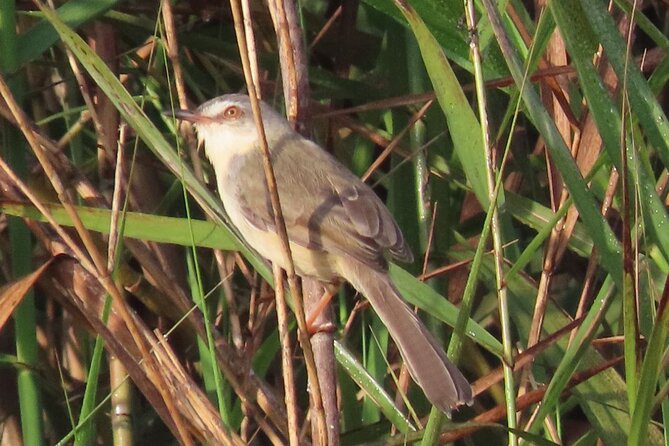
Birds reward an early start. This two-day trip pairs Cambodian countryside birding with a night at a community homestay, taking you from lotus fields and rice paddies to the forest of Kirirom National Park. I like the wide mix of habitats, and I like that local guide Thong can track birds by their calls rather than simply waiting at one fixed spot. The small group limit of eight also gives the outing a personal feel.
The main drawback is the schedule. Pickup begins at 5:30am, each birding day runs about nine hours, and the pace is moderate rather than effortless. Some birds are tricky to locate, so you need patience, comfortable walking shoes, and a willingness to spend time listening before you see anything.
Key points to know before booking
- The trip covers six bird habitats: Expect lotus fields, woodland, cultivation, rice fields, lowland broad-leaved forest, and tropical moist forest.
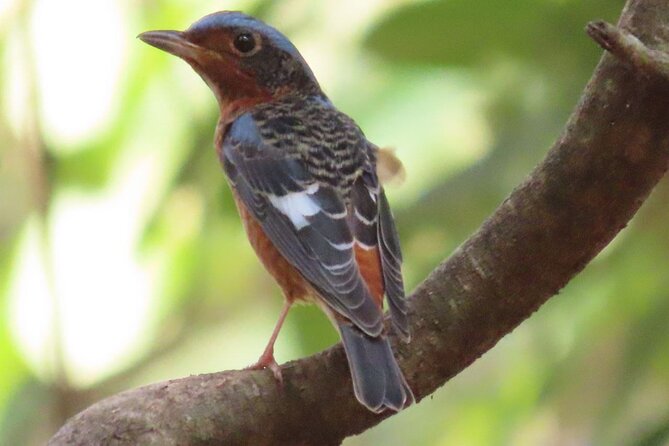
- The species target is broad: Around 50 to 80 species may be possible, including Cambodian Tailorbird, Blue-bearded Bee-eater, White-rumped Shama, and Mountain Imperial-pigeon.
- The birding begins before breakfast: A 5:30am pickup helps you reach active morning habitats while the air is cooler and birds are calling.
- You sleep at Chambok Community-Based Ecotourism: The overnight stay adds a local, rural element and keeps the trip from becoming two long return drives from Phnom Penh.
- Kirirom is the forest day: Sunrise birding there focuses on species such as Greater Racket-tailed Drongo, Forest Wagtail, Puff-throated Babbler, and White-crested Laughingthrush.
- The price includes useful basics: At $350 per person, you get transport, local guides, one night’s homestay, two breakfasts, and two lunches, but not dinner or the Chambok entrance fee.
Why this birding trip is different
Many Phnom Penh excursions keep you near the city or move from one standard sightseeing stop to another. This one uses Phnom Penh as a starting point, then heads toward places where farming, wetlands, woodland, and forest meet. That change in setting is the real point of the trip.
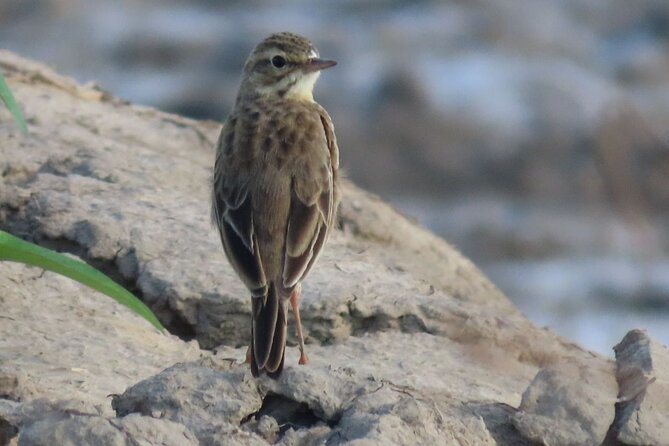
The habitat range gives you a better chance of seeing different types of birds. Lotus fields and rice fields can produce open-country species such as Oriental Pratincole and Brown Shrike. Woodland and cultivation may bring Collared Kingfisher, Green Bee-eater, Ashy Drongo, Black-naped Oriole, and Red-whiskered Bulbul. The forest at Kirirom offers a different set of sounds and shapes, from barbets and babblers to shamas and laughingthrushes.
You should treat the bird count as a target, not a promise. The expected range is 50 to 80 species, but weather, season, bird behavior, and patience all matter. The tour also lists several difficult species, so a good day may include birds heard clearly but seen only briefly.
That uncertainty is normal in birding. It is also why a guide who knows local calls can make a real difference. Thong is praised for his ability to locate birds by sound and for his strong English. That combination is especially useful if you are new to birdwatching and are still learning how to separate one call from another.
More National Park Trips in the world:
- Lisbon: Tagus Estuary Nature Reserve Birdwatching Boat Tour
★ 4.9 · 117 reviews - King Penguin Nature Reserve – Tierra del Fuego Island
★ 4.0 · 73 reviews - Private Birding Hike in Rocky Mountain National Park
★ 5.0 · 58 reviews
A 5:30am start from Phnom Penh
The day begins early, with pickup at 5:30am. That is not a minor detail. Birds are usually most active in the cooler morning hours, and the early departure gives you more useful time in the field before heat and humidity build.
You then cross the Mekong by ferry and continue by air-conditioned vehicle toward the birding areas. The ferry crossing adds a genuine local transport detail to the day, while the vehicle matters after such an early start and during the long transfers between habitats.
The group is capped at eight people. That is a sensible size for birding because large groups can become noisy, spread out, and slow to regroup. A smaller party also gives you a better chance to hear the guide’s directions when a bird appears for only a few seconds.
The climate is expected to be humid in the lowlands, with occasional rain showers. Wear light clothing, bring protection from rain, and keep your camera and binoculars ready for changing conditions. The stated difficulty is moderate, with some very tricky species, so this is not designed as a casual stroll with constant sightings.
Day one at Chambok, lotus fields, and farmland
The first stop is Chambok Community-Based Ecotourism, reached after the Mekong crossing and the drive from Phnom Penh. The birding begins around a natural lake where local farmers grow lotus, paddy rice, and other vegetables.
This setting gives you an open view and a useful introduction to Cambodian lowland birdlife. Lotus fields, wet ground, rice, and cultivation attract species that prefer open spaces rather than thick forest. Oriental Pratincole, Brown Shrike, Green Bee-eater, Ashy Drongo, and Chinese Francolin are among the possible targets listed for the wider experience.
The open habitat can also be better for photography than dense forest. Birds may be easier to spot against water, crops, or sky, although a long lens and patience are still important. The tour describes photographic opportunities as good, but that does not mean every bird will sit still. Small songbirds and shy species may offer only a quick view.
Day one also gives you a chance to look for several named species that can be hard to find elsewhere in Cambodia. The Cambodian Tailorbird and Dark-necked Tailorbird are particularly appealing targets for anyone building a Cambodian bird list. Blue-eared Barbet, Black-naped Monarch, Common Flameback, and Grey-headed Canary-flycatcher add more variety.
The day lasts about nine hours, so the length may feel demanding if you are new to birding. Still, the slow, attentive pace is part of the value. You are not simply ticking off a famous landmark. You are learning how lotus farming, rice production, and small woodland patches support different birds.
Lunch is included, as is breakfast during the two-day experience. Dinner is not included, and the Chambok Ecotourism Community entrance fee is listed separately at $7. You should set aside money for that fee, dinner, personal expenses, and a tip if you feel the guide has served you well.
Overnight at a community homestay
The night is spent at a homestay connected with Chambok Community-Based Ecotourism. This is one of the most appealing parts of the trip because it links the birding to a local rural community instead of sending you back to Phnom Penh after a long day.
A homestay is also practical. It puts you closer to the next morning’s birding and avoids repeating the full city-to-countryside journey. The available information does not describe room arrangements or specific facilities, so you should ask Vana Adventure Travel if you need details about bedding, bathrooms, or what to bring.
Do not expect a hotel-style stop to be the main attraction here. The point is a local overnight stay in a community tourism setting. That suits you if you value contact with rural Cambodia and want the trip to support a smaller ecotourism operation.
A few more birding trips around the world worth a look
- Penguin Parade, & Wildlife Encounters Eco Tour from Melbourne
★ 5.0 · 3,774 reviews - Cape Town: Cape of Good Hope & Penguins Day Tour with Pickup
★ 4.7 · 3,362 reviews - Cape Point and Boulder’s Penguins Full Day Tour
★ 5.0 · 3,118 reviews - Cape of Good Hope & Boulder Penguins Full-Day Tour from Cape Town
★ 5.0 · 2,347 reviews
Sunrise birds in Kirirom National Park
Day two starts with sunrise birdwatching in Kirirom National Park. The walk is described as easy paced, but the overall trip still calls for moderate physical fitness. You will be out for roughly nine hours again, and the forest can be humid, uneven, or tiring even when the walking speed is gentle.
Kirirom changes the experience completely. Instead of scanning open fields and wetlands, you listen for movement in lowland broad-leaved and tropical moist forest. Forest birding often demands more patience because branches, leaves, and changing light can hide the bird you hear.
The listed targets make this morning especially attractive for people who want forest species. Greater Racket-tailed Drongo, Forest Wagtail, White-rumped Shama, Red-whiskered Bulbul, Puff-throated Babbler, and White-crested Laughingthrush are all named as likely forest birds. The Blue-bearded Bee-eater and Mountain Imperial-pigeon add two memorable possibilities.
Kirirom is also where the guide’s call recognition can be most useful. A forest bird may announce itself from somewhere above or behind you, then vanish before you can focus your binoculars. Thong’s experience following calls can help you understand what is nearby, even when the sighting is brief.
You should not judge the forest morning only by the number of photographs you take. Sometimes the best result is learning the difference between a distant call, a movement in the canopy, and a bird that is truly close. If you want guaranteed close portraits, this may frustrate you. If you enjoy the hunt, it can be the strongest part of the two days.
The bird list: what you might see
The advertised list is long, with a total expectation of roughly 50 to 80 species across the different habitats. Named possibilities include:
- Cambodian Tailorbird and Dark-necked Tailorbird
- Oriental Pratincole and Forest Wagtail
- Brown Shrike and Ashy Drongo
- Collared Kingfisher and Black-naped Oriole
- Asian Brown Flycatcher and Grey-headed Canary-flycatcher
- Green Bee-eater and Blue-bearded Bee-eater
- White-throated Rock Thrush and White-rumped Shama
- Chinese Francolin and Common Flameback
- Red-whiskered Bulbul and Blue-eared Barbet
- Puff-throated Babbler and White-crested Laughingthrush
- Black-naped Monarch and Mountain Imperial-pigeon
- Greater Racket-tailed Drongo
The list covers small insect-eaters, open-country birds, forest songbirds, woodpeckers, barbets, raptors, and pigeons. That spread tells you more than a single headline species would. You are visiting several bird communities rather than chasing one rare sighting.
Some names may be unfamiliar, especially if you are beginning birdwatching in Southeast Asia. That is not a problem. A local guide can help you connect calls, habitat, and behavior with each species. The experience is suitable for beginners, but experienced birders will also have worthwhile targets to add to a list.
Is $350 good value?
At $350 per person, the price is not a cheap add-on to a Phnom Penh holiday. It is a specialist two-day outing with an early pickup, ferry crossing, air-conditioned vehicle, local birding guide, local guide, one night at a community homestay, two breakfasts, and two lunches.
The value improves if you would otherwise need to arrange transport, accommodation, local guiding, and access to several separate birding areas yourself. The group limit of eight is also helpful. You are paying for time, transport, local knowledge, and access to habitats that would be difficult to combine neatly on your own.
The price does not cover dinner, the $7 Chambok entrance fee, personal costs, tips, travel insurance, or other entrance charges if applicable. The information supplied does not specify a Kirirom entrance fee, so ask for clarification before departure. These are small additions beside the main cost, but it is better to budget accurately.
I see the strongest value for a beginner, a visiting birder with limited time, or anyone who wants a local guide rather than a self-drive outing. If you already know the Cambodian birding sites and have your own transport, the price may feel less attractive.
Who should book this experience?
You should consider it if you enjoy early mornings, bird calls, countryside travel, and a moderate amount of walking. It is a good match for a first introduction to Cambodian birds because Thong can explain what you are hearing and help you find species without making the day feel like a test.
It also suits photographers who are comfortable with opportunistic images. The open fields may offer cleaner views, while the forest can produce more difficult but rewarding subjects. Bring realistic expectations: good photo chances are available, but many birds will be mobile, distant, or partly hidden.
This is not the right choice if you want a relaxed lie-in, a polished hotel, or a sightseeing route filled with major Phnom Penh attractions. The focus is nature, and the schedule gives priority to the hours when birds are active.
The experience also has a useful conservation angle. One of the strongest reasons to choose a locally guided ecotour is that it directs money toward people who have a reason to protect forest and wildlife. The tour provider is Vana Adventure Travel, and the local community element at Chambok makes the trip feel more connected to rural Cambodia than a standard day excursion.
Booking details and cancellation
Pickup starts at 5:30am, and confirmation is provided when you book. The tour is near public transportation, although the main transport for the experience is an air-conditioned vehicle.
Free cancellation is available if you cancel at least 24 hours before the start time. Cancellations or changes made within 24 hours are not refunded or accepted. The trip requires suitable weather and a minimum number of participants. If poor weather or insufficient bookings cause cancellation, you can choose another date or experience, or receive a full refund.
FAQ
What time does the Phnom Penh birding tour start?
Pickup begins at 5:30am.
How long does the experience last?
The tour lasts approximately two days. Each scheduled birding day is about nine hours.
What habitats does the tour visit?
The experience includes lotus fields, woodland, cultivation, rice fields, lowland broad-leaved forest, and tropical moist forest.
How many bird species might I see?
The expected total is about 50 to 80 species, although sightings depend on weather, conditions, and bird activity.
Is accommodation included?
Yes. One night at Chambok Community-Based Ecotourism is included.
Are meals included?
Two breakfasts and two lunches are included. Dinner is not included.
Is the entrance fee included?
No. The Chambok Ecotourism Community entrance fee is listed separately at $7. Personal expenses, tips, travel insurance, and dinner are also excluded.
Should you book the Phnom Penh and Kirirom bird tour?
Book it if you want a focused nature trip with a small group, a local guide, and a real change of scenery from Phnom Penh. The strongest reasons are the six habitat types, the chance to see up to 80 species, Thong’s skill with bird calls, and the community homestay at Chambok.
Think twice if you dislike early starts, humid weather, long days, or uncertain sightings. Birding rewards attention rather than instant results. For the right person, this is a practical and worthwhile way to meet Cambodia’s countryside birds while putting local knowledge and community ecotourism at the center of the trip.
Just added around the world
- Walvis Bay Shore Excursion: Flamingos, Dune 7, Swakopmund★ 5.0 · 3 reviews
- York: Entry to York bird of prey centre★ 5.0 · 7 reviews
- Visit to Madeira Bird Island★ 4.6 · 22 reviews
- Vestmannaeyjar: Puffin, Island, and Volcano Boat Tour★ 4.4 · 7 reviews
- Vila Franca do Campo: Marine Life & Bird Watching & Islet Tour★ 4.4 · 9 reviews
- VIP falconry taster session★ 5.0 · 2 reviews
- Ushuaia: Gable Island and Penguin Colony with Lunch★ 4.8 · 2 reviews
- Ushuaia: Sailing Beagle Channel to the Penguin Colony★ 4.6 · 14 reviews
National Parks, compared.
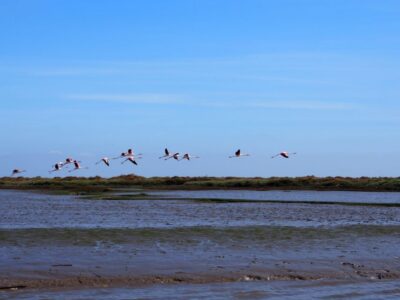
Tagus Estuary Nature Reserve Birdwatching Boat Tour
Read our review →
King Penguin Nature Reserve – Tierra del Fuego Island
Read our review →
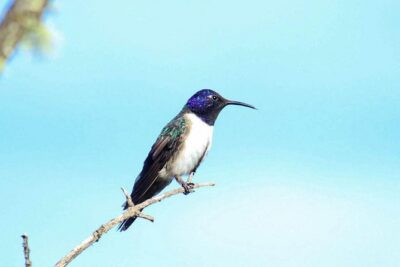
Birdwatching Tour in Cajas National Park from Cuenca
Read our review →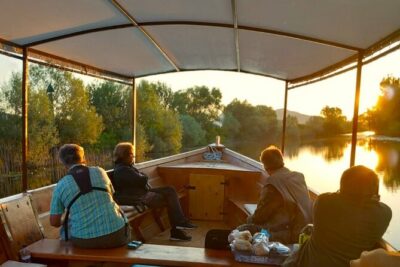
Skadar Lake National Park: Birdwatching & Photography Tour
Read our review →
Boat Tour – Bird Observation in the Tejo Nature Reserve
Read our review →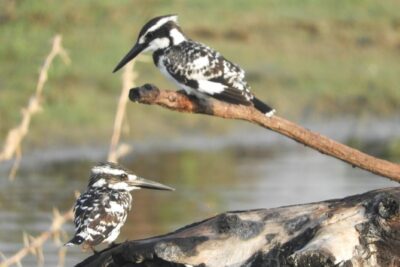
Bundala National Park Birds Watching Safari Tour
Read our review →
Everglades National Park: 2 hour Dolphin & Birding Boat Tour
Read our review →Browse the lists this tour appears in