
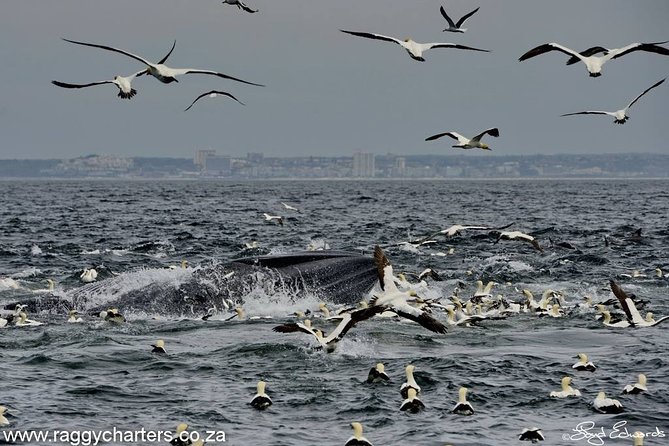
REVIEW · SOUTH AFRICA BIRDWATCHING TOURS
Whale, Dolphin & Penguin Island Cruise
Wildlife rarely follows a schedule. That is part of the fun here. This four-hour cruise from Port Elizabeth, now commonly called Gqeberha, takes you into Algoa Bay aboard a small twin-engine catamaran, with a crew focused on finding whales, dolphins, penguins, seals, and seabirds without rushing the experience. I especially like the small maximum group of 20 and the slow pace, which leave room for questions, good viewing, and a more personal connection with the bay.
The two strongest points are the well-informed conservation guides and skipper, plus the chance to see several species in one outing. Dolphins can approach the bow, whales may surface nearby, and African penguins gather on St. Croix Island. The main consideration is simple: wildlife is wild. You may see a great mix of animals, but no boat can promise every species, and rough weather can affect the trip.
Key points to know before you book
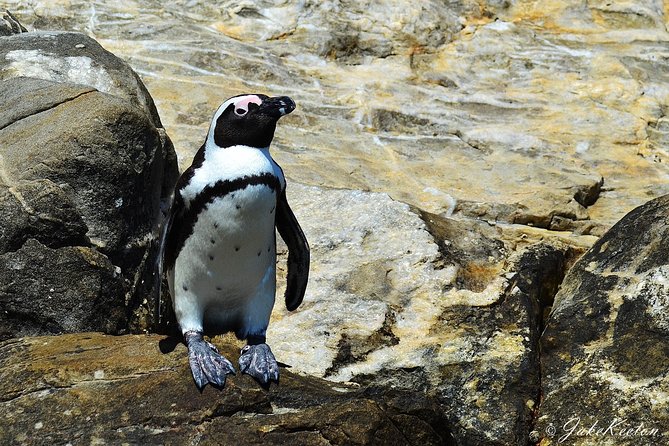
- St. Croix Island is viewed from the boat: You get a close look at African penguins without landing on the island.
- The cruise runs once a day at 8 a.m.: Plan your morning around the fixed departure from Dom Pedro Jetty.
- Whale season runs mainly from June to early December: Southern right whales are most likely from July to September.
- Dolphins are possible year-round: Indo-Pacific bottlenose dolphins often travel in smaller groups, while common dolphins can gather by the thousands.
- The boat carries no more than 20 people: That helps everyone hear the commentary and find a good viewing angle.
- The trip supports tree planting: The operator uses a tree-planting campaign to balance the cruise’s carbon footprint.
Setting out from Port Elizabeth at 8 a.m.
You meet at the Nelson Mandela Bay Yacht Club, at Dom Pedro Jetty in Port Elizabeth Harbour. The cruise begins with a short briefing before you board the twin-engine catamaran and head into Algoa Bay.
An early start makes sense here. Morning light can be good for photographs, and the fixed departure gives the crew a clear block of time to search the bay rather than hurry between several unrelated attractions. Since the cruise lasts about four hours and returns to the same jetty, you still have most of the day available for other plans.
The harbour location is practical if you are staying in central Gqeberha or arriving by local transport. The meeting point is near public transportation, but you should still allow enough time to find the yacht club and jetty before the 8 a.m. briefing.
The boat is clean and well maintained, according to the information provided, and the crew places real attention on safety. Life jackets are available for all ages. People who need assistance boarding can join with help from family members and the crew, though you should make your own decision based on your health, fitness, and ability to board.
More Penguin Tours in South Africa
- Cape Town: Cape of Good Hope & Penguins Day Tour with Pickup
★ 4.7 · 3,362 reviews - Cape Point and Boulder’s Penguins Full Day Tour
★ 5.0 · 3,118 reviews - Cape of Good Hope & Boulder Penguins Full-Day Tour from Cape Town
★ 5.0 · 2,347 reviews
Algoa Bay’s whale season
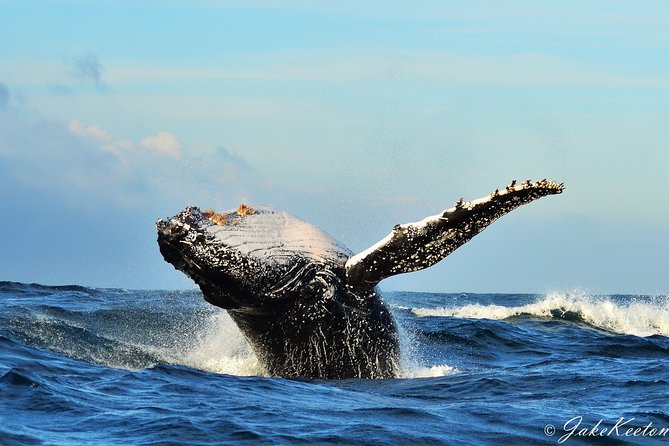
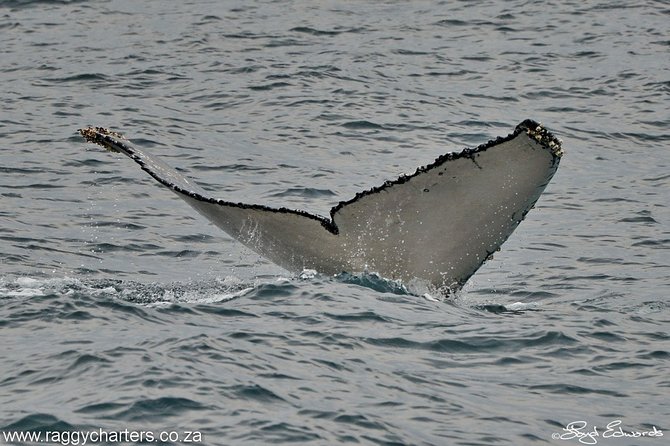
The whale sightings change with the calendar. Humpback whales begin appearing in Algoa Bay around June as they travel along the eastern coast of Africa toward breeding grounds. They can remain in the bay until early December, with their return journey beginning around October.
That later period can bring the chance of seeing females with calves. A mother and young whale together is one of the most memorable sights you might get from the boat, but it is never guaranteed. The crew can search likely areas, yet the animals choose their own route and surfacing time.
Southern right whales are most likely close to shore from July through September. This gives you a useful planning guide: June through September offers the best range of possible whale species, while October and November may still provide humpback sightings, including adults returning with calves.
The cruise is not a staged wildlife show. You may watch a whale surface once and then disappear for several minutes. That slower rhythm is part of the appeal, and the crew’s explanations help turn a brief sighting into something more meaningful.
Dolphins that come to the bow
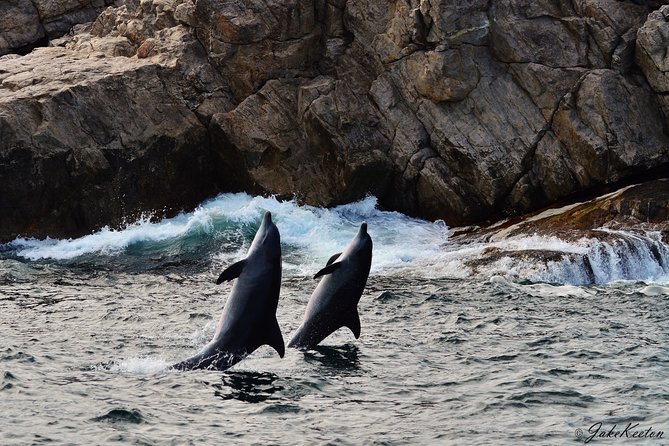
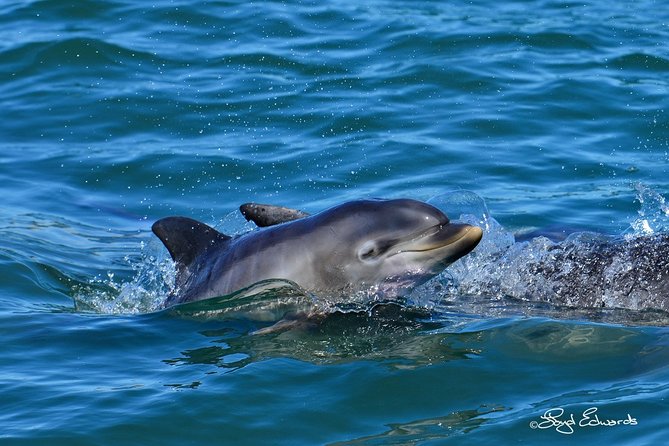
Dolphins are among the most reliable highlights of this outing. Indo-Pacific bottlenose dolphins live in the bay throughout the year, often in groups of 10 to 400. They favor shallow water near beaches and around St. Croix Island, and they may swim right up to the boat to ride the bow wave.
That behavior gives you a better chance of seeing movement close to the vessel rather than only distant fins. Keep your camera ready, but watch with your own eyes too. Dolphins can appear suddenly and change direction quickly.
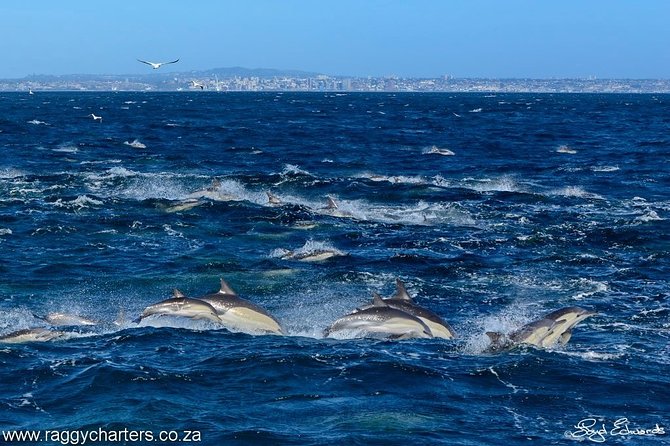
Common dolphins are another possibility. They often travel farther offshore, especially around the Bird Island groups, and can gather in groups of 1,000 to 2,000. When they move together at speed, the sight can be more dramatic than a close encounter with a few bottlenose dolphins.
Algoa Bay also has humpback dolphins, though the supplied information does not give a specific sighting season or typical group size for them. The crew can explain the differences among the species you see, which is useful when several kinds of dolphins are moving through the same stretch of water.
St. Croix Island and its African penguins
St. Croix Island is the cruise’s central wildlife stop, although you view it from the sea rather than walking ashore. The island is associated with a major African penguin breeding colony, described as numbering about 12,000 birds, though the population has lost 70 percent in a decade.
That decline gives the visit more weight. You are not simply looking at amusing birds on rocks. You are seeing an endangered species in a place where food supply and fishing pressure affect survival.
The best period for penguin chicks is the breeding peak from March through May. You might see young birds from the boat during this period, but the number of penguins visible can vary. One experience described fewer birds than expected, with overfishing mentioned as a concern, so it is wise to treat St. Croix as a conservation visit rather than a guaranteed close-up animal encounter.
You may also see African black oystercatchers, white-breasted cormorants, and Cape cormorants around St. Croix and Brenton Island. The island group, along with the Bird Island group, forms part of Addo Elephant National Park, allowing rangers to patrol the area.
The boat does not need to land to make this worthwhile. Staying offshore reduces disturbance and lets you view the island’s wildlife in a more responsible way. Bring patience, since penguins may be resting on shore, swimming, or hunting beyond the clearest viewing angle.
Same place, a different set of birds:
- Table Mountain, Penguins & Cape Point Small Group Tour Cape Town
★ 4.5 · 1,797 reviews - Cape Town Tour: Table Mountain, Penguins & Cape Point+Pickup
★ 4.7 · 1,671 reviews - Cape Town: Table Mountain, Cape Point, & Penguins Group Tour
★ 4.9 · 1,063 reviews - Cape of Good Hope & Penguins Small Group Tour from Cape Town
★ 5.0 · 1,054 reviews
Seals, seabirds, and the less predictable sightings
The cruise can produce a longer wildlife list than its title suggests. Cape fur seals may sun themselves or move through the water, while sharks can sometimes be spotted below the surface. One outing included a hammerhead shark, but that is an occasional bonus, not something you should count on.
Birdlife adds variety when whales and dolphins are quiet. Look for Cape gannets and pelagic birds such as terns, petrels, skuas, shearwaters, and albatrosses. White-breasted and Cape cormorants also occur around the islands.
Bryde’s whales and minke whales are possible as well. These sightings are less predictable than the regular dolphin opportunities, but they are part of what makes a bay cruise more interesting than a single-species excursion. You may spend one stretch watching seabirds and another waiting for a whale’s blow.
The crew’s role matters most during these quieter periods. A good skipper can read the water, while the guides can explain what you are seeing instead of letting the trip become a long stretch of scanning the horizon in silence. The team has been praised for its marine knowledge, safety awareness, and calm handling of choppy conditions.
Why the small boat makes a difference
The maximum group size is 20 people. That is not a private charter, but it is small enough to keep the experience from feeling like a crowded sightseeing platform.
I like this arrangement for two reasons. First, you have a better chance of hearing the guide when a whale or dolphin appears. Second, the crew can respond to questions and help people find a useful viewing position without managing a large crowd.
The twin-engine catamaran offers a stable platform, but you are still on the open sea. Choppy conditions are possible, and even a well-handled boat can move around. If you are prone to seasickness, the four-hour duration deserves serious thought. The provided details do not specify medication, food, or drink arrangements, so you should plan according to your own needs.
The slower pace is another plus. This is not a high-speed chase from one animal to the next. The cruise gives the crew time to watch animal behavior and avoid treating wildlife as a target. That approach also suits photographers who prefer a little breathing room.
A conservation message that feels relevant
The cruise includes more than animal spotting. The guides and skippers explain the bay’s ecosystem and the pressures facing its wildlife, including the decline of African penguins and the importance of protecting island habitats.
The operator also supports a tree-planting campaign intended to balance the cruise’s carbon footprint. That does not erase the environmental cost of running a boat, but it shows an effort to address it. For me, the strongest conservation feature is still the way the trip is conducted: a limited group, a slower approach, and viewing from the water rather than landing on a sensitive breeding island.
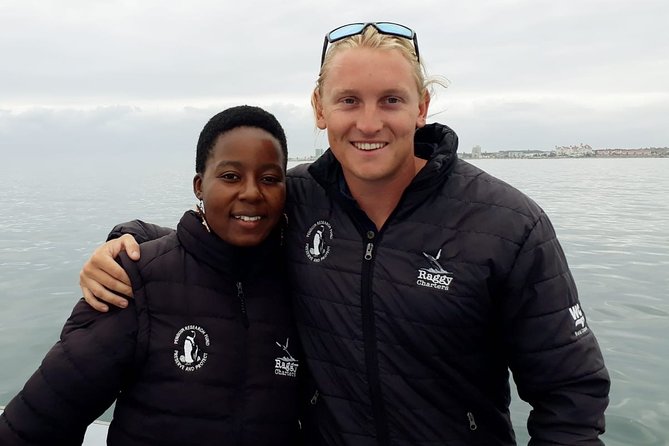
The crew’s enthusiasm also seems to be a real part of the experience. Jake is named as one of the guides, and the team has been praised for sharing local information, explaining animal behavior, and making safety a priority. That combination helps the cruise feel like a small field lesson, not just a four-hour search for photo opportunities.
Is the $185.19 price good value?
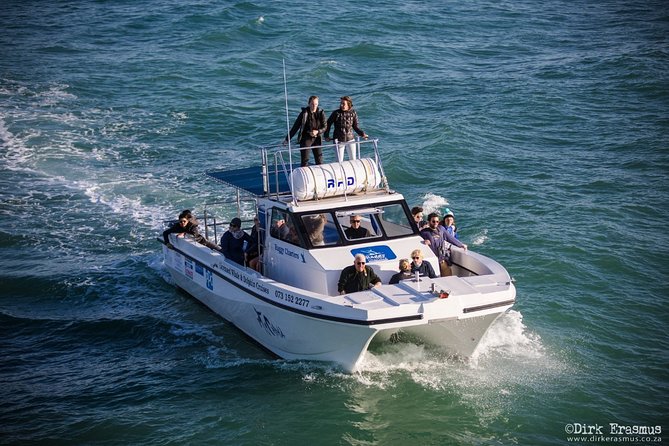
At $185.19 per person, this is not the cheapest way to spend a morning in Port Elizabeth. You are paying for a specialized marine outing, a small group, a four-hour schedule, a dedicated skipper, and guides who focus on the bay’s wildlife and conservation.
The value depends on what you want. If you only need a quick view of penguins, the price may feel high. If you want a serious marine wildlife outing with a chance to see dolphins, whales, seals, penguins, and seabirds in one trip, the cost is easier to justify.
One important detail is that a cruise excursion may use the same boats while costing much more. Booking this experience directly can therefore make financial sense if you are visiting Port Elizabeth from a cruise ship and have enough time to meet the 8 a.m. departure independently. You must check your own ship schedule carefully, since the boat returns to the meeting point after about four hours and the tour runs only once that day.
The 99 percent recommendation rate and 5-star rating from 687 ratings suggest very strong satisfaction, but wildlife luck remains the key variable. The crew can work hard and still return without a whale. I would book this for the quality of the outing and the chance of sightings, not as a guaranteed checklist.
Who should book this Algoa Bay cruise?
I would choose this cruise if you care about animal welfare, prefer a small group, and want guides who explain what you are seeing. It suits photographers, families, couples, and anyone spending a few days around Gqeberha who wants a focused morning on the water.
It is also a good choice for people who enjoy learning. The trip covers species identification, seasonal movement, breeding, conservation, and the effect of fishing pressure on penguins. You get more from it if you listen to the explanations rather than treating the boat as a moving photo platform.
You may want to reconsider if you need guaranteed sightings, dislike boat motion, or cannot comfortably manage a four-hour trip at sea. The outing requires good weather, and poor conditions can lead to a different date or a full refund. If the minimum number of participants is not reached, the same options apply.
Free cancellation is available until 24 hours before the 8 a.m. start time. Changes or cancellations inside that window are not refunded, so keep the local cut-off time in mind.
Should you book it?
Yes, if you want a careful, small-group wildlife cruise and can accept the uncertainty that comes with nature. The best reasons to book are the crew’s strong marine focus, the chance of close dolphin encounters, and the opportunity to see African penguins while learning why their island habitat matters.
I would aim for June through September if whales are a major priority, and March through May if you especially want the possibility of penguin chicks. Still, dolphins and several bird species can be seen year-round, so the cruise remains worthwhile outside those windows.
Book it if you value the experience of searching the bay, not just collecting guaranteed sightings. The sea may give you a whale, a huge dolphin pod, seals, and penguins in one morning. It may also give you a quieter lesson in patience, birds on the water, and a crew working carefully to find what is there.
FAQ
Where does the cruise depart?
It departs from the Nelson Mandela Bay Yacht Club at Dom Pedro Jetty, Port Elizabeth Harbour, Gqeberha Central, Gqeberha, 6001, South Africa.
What time does the cruise begin?
The meeting and departure time is 8 a.m.
How long does the experience last?
The cruise lasts approximately four hours and ends back at the meeting point.
How many people can join the boat?
The maximum group size is 20 people.
Can I see whales all year?
Whale sightings are seasonal. Humpback whales may be seen from June to early December, while southern right whales are most likely close to shore from July through September.
Can I see dolphins throughout the year?
Indo-Pacific bottlenose dolphins and common dolphins can be seen all year, although sightings and group sizes vary.
Will I go onto St. Croix Island?
The experience describes viewing African penguins from the boat. It does not state that you land on St. Croix Island.
What other animals might I see?
Possible sightings include Cape fur seals, Bryde’s whales, minke whales, sharks, Cape gannets, cormorants, African black oystercatchers, and several pelagic bird species.
Is the cruise suitable for people who need boarding assistance?
People who can board with assistance from family and crew are welcome. There is no age restriction, and life jackets are available for all ages.
What happens if bad weather cancels the cruise?
You can choose another date or receive a full refund if the experience is canceled because of poor weather. The same options apply if the minimum number of participants is not reached.
More Dolphin Watching in South Africa
- Marco Island 2 hour Dolphin, Birding and Shelling tour
★ 5.0 · 503 reviews - Dolphin – Whale – Turtle – Bird Watching
★ 5.0 · 350 reviews - Rockingham: Shoalwater Islands, Dolphins, and Sea Lions Tour
★ 4.4 · 288 reviews - 2 Hour Dolphin, Birding and Shelling Tour
★ 5.0 · 247 reviews
More Whale Watching in South Africa
- Hermanus Whale Watching & Penguins Shared Tour from Cape Town
★ 4.0 · 14 reviews - Cape Town: Hermanus Whale Watching Shared Boat & Penguins
★ 3.3 · 6 reviews - Cape Agulhas, Hermanus Whale Watching, Penguins and Wine Tasting
★ 5.0 · 2 reviews - Húsavík: Original Big Whale Safari & Puffins by Speedboat
★ 4.7 · 1,221 reviews
Just added around South Africa
- Port Elizabeth Adventure: Tuk-Tuk, Penguins, & Cape Recife★ 4.5 · 9 reviews
- Birds of Eden Admission Ticket★ 4.5 · 15 reviews
- Hermanus & Overberg Birding★ 5.0 · 3 reviews
- World of Birds, Kirstenbosch and Constantia Wine Private Day Tour★ 5.0 · 2 reviews
- Skip the Line: World of Birds Admission Ticket★ 5.0 · 5 reviews
- Private Full Day Tour To Cape Point, Penguins With Table Mountain.★ 5.0 · 6 reviews
- Cape Of Good Hope and Penguins viewing Private Tour★ 5.0 · 3 reviews
- Cape Peninsula in a Vintage Car (Penguins, Cape Point & Chapman’s Peak drive)★ 5.0 · 6 reviews
Penguin Tours, compared.
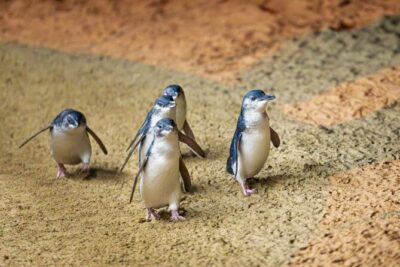
Penguin Parade, & Wildlife Encounters Eco Tour from Melbourne
Read our review →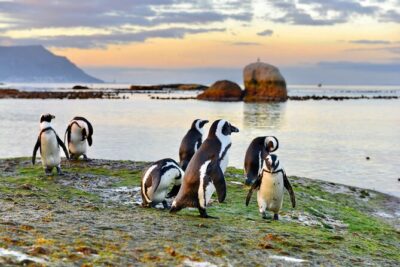
Cape of Good Hope & Penguins Day Tour with Pickup
Read our review →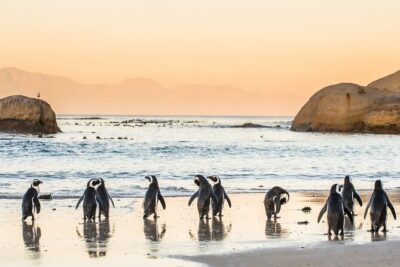
Cape Point and Boulder’s Penguins Full Day Tour
Read our review →
Cape of Good Hope & Boulder Penguins Full-Day Tour from Cape Town
Read our review →
Table Mountain, Penguins & Cape Point Small Group Tour Cape Town
Read our review →Cape Town Tour: Table Mountain, Penguins & Cape Point+Pickup
Read our review →
Browse the lists this tour appears in