
REVIEW · WILDLIFE
7 Days Uganda Birding and Wildlife
Shoebills start this Uganda adventure. This seven-day circuit links Mabamba Wetland, Bwindi, and Queen Elizabeth National Park, giving you rare birds, primates country, savanna wildlife, and strong photography opportunities in one packed trip. I especially like the early visit to Mabamba for shoebills and the time set aside for Albertine Rift specialties in Bwindi. The main drawback is the amount of time spent on the road, with several long transfers and early starts.
The tour costs $2,466 per person and includes transport, park fees, guides, water, and most meals. It is a private trip, so your group is not combined with strangers. Guide and driver Davis Kibuga receives warm praise for his birding eye, driving, humor, and ability to locate endemic species. You should still arrive ready for long birding days and a moderate level of physical activity.
Key points to know before booking
- Mabamba Wetland targets the shoebill, one of Africa’s most sought-after birds, in a community-protected papyrus wetland.
- Bwindi is the birding centerpiece, with about 350 recorded bird species and 23 Albertine Rift endemics.
- Lake Mburo adds variety, including zebra, eland, impala, buffalo, African finfoot, nightjars, and nocturnal mammals.
- Queen Elizabeth brings classic savanna wildlife, from lions and elephants to Uganda kobs, hippos, and a long list of wetland birds.
- The schedule is active, with early breakfasts, full birding days, night driving, and lengthy road transfers.
- Davis Kibuga is a key part of the experience, especially for locating difficult endemic birds and keeping the journey friendly.
Why this seven-day route works for birders
This tour makes sense if you want Uganda’s major western birding sites without building the route yourself. It combines wetland, forest, open grassland, lakeshore, and savanna habitats. That variety matters because the best birding comes from changing habitats, not simply spending a week in one famous park.
You also get more than a bird checklist. Lake Mburo and Queen Elizabeth add large mammals, while Bwindi brings mountain forest and primate country. The result is a good mix for someone who wants serious birding but does not want to give up zebra, lions, elephants, and scenic road travel.
The route begins in Kampala and finishes in Entebbe. Pickup is offered, and the stated meeting window is between 6:00 and 7:00 in the morning. Confirmation is provided at booking. Since the tour is private, you can expect the trip to feel more personal than a large coach outing, though the daily timing still follows the needs of the route and the birds.
More Wildlife Trips in the world:
- Penguin Parade, & Wildlife Encounters Eco Tour from Melbourne
★ 5.0 · 3,774 reviews - Phillip Island Penguins & Wildlife Day Tour from Melbourne
★ 5.0 · 867 reviews - Phillip Island: Penguins and Wildlife Full-Day Tour
★ 4.6 · 642 reviews
Day 1: Shoebills at Mabamba and sunset birding at Lake Mburo
The opening morning begins with an early breakfast and a trip to Mabamba Wetland. This is one of Uganda’s most important remaining wetland areas, protected in part by local communities. Its papyrus channels and lagoons create the kind of habitat where patience pays off.
The main prize is the shoebill. This huge, prehistoric-looking bird is Uganda’s best-known bird species and the only member of its family. Seeing one is never something to treat as automatic, but Mabamba gives you a sensible place to try. You should expect slow, attentive birding rather than a quick roadside stop.
After Mabamba, the route heads toward Lake Mburo National Park. Lunch is planned at the Green Equator stop on the Masaka Road. This is both a meal break and a chance to stand at the Equator, take photographs, and learn about the basic effects associated with the Northern and Southern Hemispheres.
The stop is short, but it breaks up a long transfer. From Mabamba to Lake Mburo, the day includes roughly five hours of travel before the final park birding. You reach Lake Mburo around 5:00 in the afternoon and spend the remaining daylight looking for birds.
This first day asks a lot from you. The reward is a strong start with a specialty wetland bird, an Equator stop, and a first taste of Uganda’s smaller national park. I would keep the evening flexible and avoid planning anything that requires extra energy after arrival.
Day 2: Lake Mburo by boat, road, and night drive
Lake Mburo gets a full day, which is important because its wildlife and birds appear in different places and at different times. The park is known for mammals such as zebra, eland, topi, impala, Cape buffalo, and warthog. That makes it a useful change from the forest birding later in the trip.
The boat ride is one of the day’s key activities. Along the lake, the targets include African finfoot, white-backed night heron, black-crowned night heron, and giant kingfisher. Water-based birding lets you inspect the shoreline from a different angle, and the finfoot alone gives serious birders a good reason to pay attention.
The schedule also includes a night drive. This is where the experience moves beyond standard daytime game viewing. Possible sightings include black-shouldered nightjar, northern Tanzania nightjar, bush babies, and other nocturnal mammals. The exact results depend on timing and luck, but the change in pace makes the day memorable.
With about 11 hours devoted to the park, this is the tour’s longest field day. I like the range of activities, but you should be comfortable with extended time outdoors and a full schedule. The night drive also means you will not have a completely early finish, so pacing yourself matters.
Day 3: The long transfer to Bwindi
After breakfast, you leave Lake Mburo and travel toward Bwindi Impenetrable National Park, with lunch in Ntungamo. The transfer takes about six hours, so this is another road-heavy day. The benefit is that you are moving into the trip’s most important forest birding area.
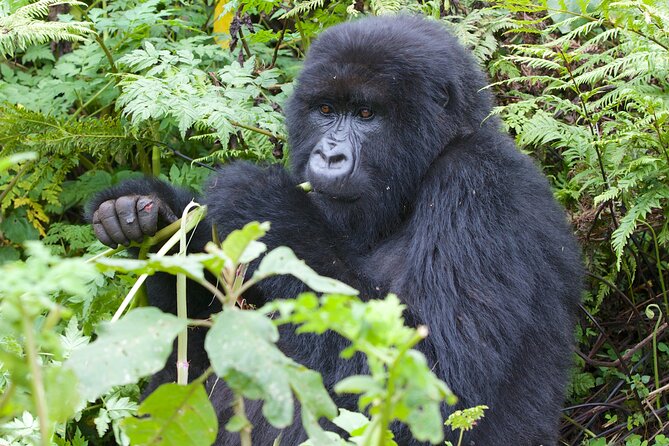
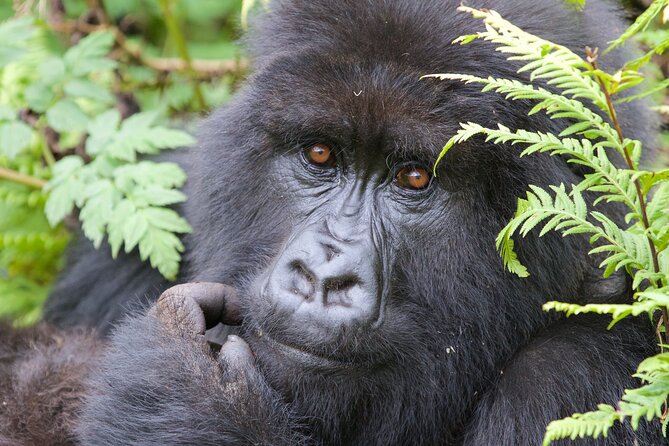
Bwindi is famous for its mountain gorillas, with about 408 recorded in the park area and roughly half of the world population. This particular program is focused on birding rather than a gorilla trek, but the presence of these primates adds to the importance of the forest. Bwindi also has around 350 bird species, including 23 Albertine Rift endemics and at least 14 species found nowhere else in Uganda.
If you arrive early enough, you bird along the school trail before checking into the lodge. The extra two hours can be valuable after the road transfer because it gives you an initial look at the forest rather than treating Bwindi as only an overnight stop.
The school trail option also gives you a chance to begin learning the habitat before the main birding day. Still, arrival time depends on the road, so I would view this as a useful possibility rather than a guarantee.
A few more birding trips around the world worth a look
- 7 Day Golden Triangle Tour with Wildlife-Taj Mahal Tigers & Birds
★ 5.0 · 8 reviews - Laid-back birdwatching week
★ 5.0 · 4 reviews
Day 4: Bwindi’s Albertine Rift specialties
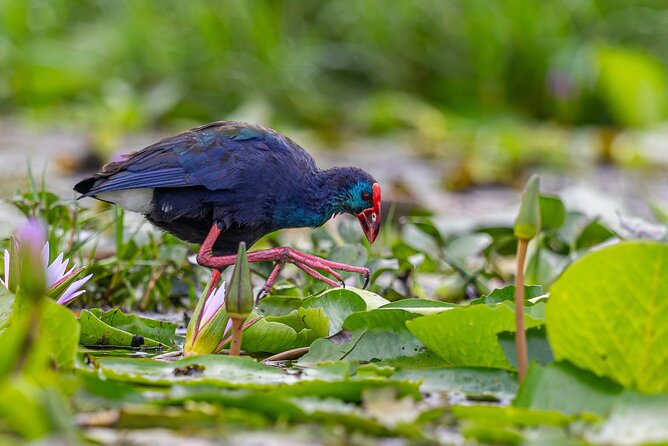
This is the central birding day for anyone focused on regional endemics. The program looks for African green broadbill, Grauer’s warbler, Grauer’s rush warbler, handsome francolin, blue-headed sunbird, blue-throated sunbird, purple-breasted sunbird, and several other forest species.
Other targets include red-throated alethе, mountain illadopsis, collared apalis, mountain masked apalis, and yellow-eyed black flycatcher. Higher-altitude possibilities include bar-tailed trogon, Narina trogon, white-tailed crested flycatcher, Abyssinian hill babbler, and stripe-breasted tit.
The list is impressive, but it also tells you how the day will feel. Forest birding often requires quiet movement, careful listening, and patience. You may not see every listed species, and some birds will give only brief views. That is normal. The value here comes from having a guide who knows the calls, habitat, and likely places to search.
The day runs for about nine hours. This is not a casual walk beside a hotel. You should have moderate physical fitness, comfortable walking shoes, and enough stamina for a long period of forest birding. The reward is access to species that are among the strongest reasons to visit southwestern Uganda.
The tour description also highlights mountain photography and primate-related scenery. Even when a bird stays hidden, Bwindi gives you a very different setting from Mabamba’s papyrus or Lake Mburo’s open plains.
Day 5: Through Kanungu and into Ishasha
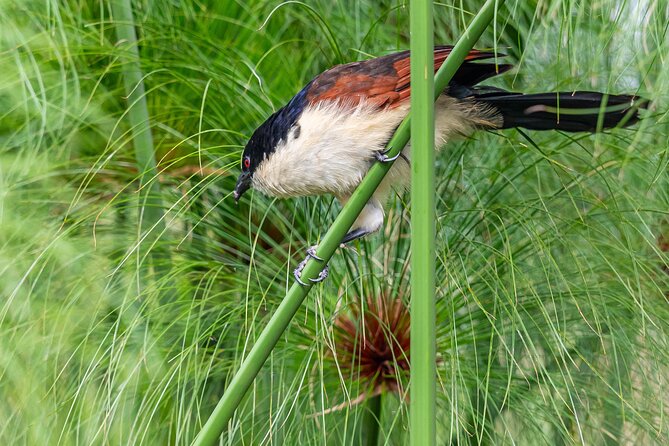
You leave Bwindi and continue toward the Ishasha sector of Queen Elizabeth National Park, passing through the Kanungu area. Birding continues during the transfer, with a chance to look for the uncommon rufous-breasted wryneck.
The route then enters the southern part of Queen Elizabeth. Possible bird targets include whinchats, greater scimitarbill, black kite, superb sunbird, little buttonquail, blue quail, common quail, and harlequin quail. Several of the quails stay low in short grass, so this part of the trip rewards close attention from the vehicle.
Ishasha also changes the mood of the journey. Here you may see Cape buffalo, lions, elephants, Uganda kob, and waterbuck. The combination of birding and mammals makes this a good transition day between Bwindi forest and the more open Kasenyi plains.
The route takes about seven hours. That is enough time to make the transfer feel like part of the wildlife experience, but it also means you should not expect a relaxed sightseeing day with long breaks. Bring water, keep binoculars ready, and use the planned stops to stretch your legs.
Day 6: Full game drive on the Kasenyi plains
The sixth day focuses on the Kasenyi plains in Queen Elizabeth National Park. This is the most traditional safari-style day of the trip, with a game drive and birding across open country and wetland edges.
The bird list is long. It includes striated heron, African spoonbill, water thick-knee, three-banded plover, marsh sandpiper, green sandpiper, wood sandpiper, common sandpiper, gray-headed gull, plain martin, lesser swamp-warbler, white-winged warbler, Verreaux’s eagle-owl, Ovambo sparrowhawk, secretarybird, and African skimmers.
You may also look for Caruther’s cisticola, black-headed gonolek, papyrus gonolek, red-faced cisticola, red-chested cuckoo, and northern puffback. The mix shows why Queen Elizabeth works well for a combined wildlife and birding trip. It is not only about large mammals, and it is not only about forest species.
The stated park time is about five hours. Compared with the 11-hour Lake Mburo day, this should feel more manageable, though the final sightings will still depend on conditions and luck. The park also gives you another chance at mammals after the forest section, which helps keep the trip varied.
Day 7: Returning to Entebbe with birding stops
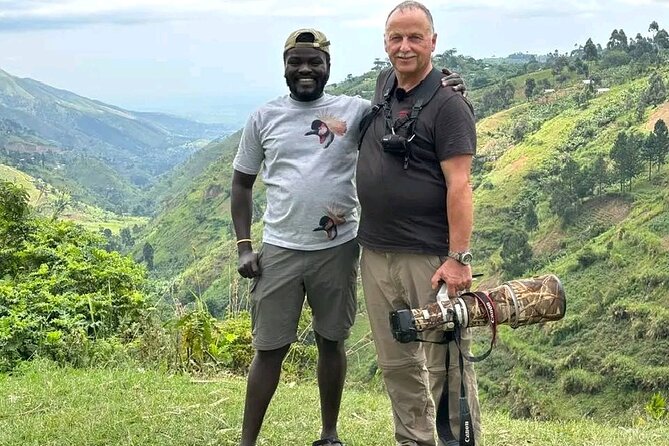
The final day is a long journey to Entebbe, listed at about seven hours. Stops are planned along the way so you can stretch your legs and continue looking for birds.
This is a practical ending rather than a grand final activity. If you have an onward flight, check the timing carefully before booking, since a seven-hour road day can run longer with stops and road conditions. If your schedule allows, the gradual return to Entebbe gives you one last chance to watch Uganda pass from park country back toward the airport area.
What the $2,466 price includes
At $2,466 per person, the cost is easiest to judge by looking at what is bundled. The price includes all transportation during the tour, park entrance fees, activity fees unless marked optional, drinking water, a professional birding guide and driver, and site guides.
Meals include five lunches, six dinners, and six breakfasts. That covers most of the food during the seven-day program, but you should check the final booking details for any meal not included in those totals.
For a private seven-day trip covering several national parks, the price has practical value. You are paying not only for vehicle travel but also for access fees, a specialist birding driver-guide, site support, water, and most meals. The value is strongest if you care about finding difficult species rather than simply passing through the parks.
The price will feel less attractive if you want a slow holiday with long rest periods. This route packs in major sites, and much of its value depends on your interest in birds, wildlife, and photography.
The guide can shape the birding results
Davis Kibuga is worth noting by name. His strongest reported qualities are his birding experience, driving, humor, and friendly manner. That combination matters on a route where many target birds are small, quick, high in the canopy, or hidden in grass.
A good birding guide can also make long road days easier. Davis has been praised for helping locate endemic birds that a less experienced guide might miss. You should still tell him your priority species early, since the route contains enough targets to fill every day.
The private format gives your group more room to focus. It does not guarantee every bird, but it can make it easier to spend extra time on a promising call or move on when a site is quiet.
Who should book this Uganda tour?
I would recommend this trip to a committed birder who wants a compact western Uganda circuit with a strong concentration of special species. It also suits a mixed-interest group where one person wants birds and another wants gorilla country, big mammals, and photography.
It is less suited to anyone seeking a restful holiday or a single-location safari. The route has early mornings, long drives, full park days, and a night drive. Moderate physical fitness is required, and you should be comfortable spending many hours in a vehicle or outdoors.
Free cancellation is available if you cancel at least 24 hours before the start time. International flights, tips, and souvenirs are not included. Public transportation is nearby, but the experience itself is arranged as a private tour with pickup offered.
Should you book it?
Book this tour if Bwindi’s Albertine Rift endemics and Mabamba’s shoebill are high on your list, and you want Uganda’s birding highlights paired with genuine wildlife viewing. Davis Kibuga’s field experience is an important advantage, especially for difficult species.
Think twice if you dislike long transfers or want generous downtime. For the right birder, the packed schedule is the point: shoebills on day one, finfoots and nightjars at Lake Mburo, rare forest birds in Bwindi, then quails, skimmers, lions, and elephants around Queen Elizabeth. That is a lot of Uganda in seven days.
FAQ
How long is the Uganda birding and wildlife tour?
The tour lasts approximately seven days.
Where does the tour begin?
It begins in Kampala, Uganda, with pickup offered. The meeting window is listed between 6:00 and 7:00 in the morning.
Where does the tour finish?
The final day travels to Entebbe.
Is this a private tour?
Yes. Only your group participates in the activity.
Is the shoebill included in the trip?
Yes. Mabamba Wetland is included on the first morning, with shoebills as the main birding target.
Are park entrance fees included?
Yes. Park entrance and activity fees are included unless an activity is specifically labeled optional.
Are meals included?
Yes. The package includes five lunches, six dinners, and six breakfasts, along with drinking water throughout the trip.
What is not included in the price?
International flights, tips, and souvenirs are not included.
What level of fitness is needed?
A moderate level of physical fitness is recommended. The schedule includes long birding days, road transfers, a boat ride, game drives, and a night drive.
Can I cancel for a full refund?
Yes, if you cancel at least 24 hours before the experience start time. Cancellations made less than 24 hours ahead are not refunded.
Just added around the world
- Phillip Island Penguins Private Adventure★ 5.0 · 10 reviews
- Brighton Bath Boxes & Puffing Billy & Penguin Parade 1-Day Tour★ 4.5 · 10 reviews
- Melbourne Puffing Billy Penguin wine choc(16 max) Hotel Pick Up★ 4.5 · 29 reviews
- 3 Day Combo: Great Ocean Road, Penguin Parade and FREE City Tour★ 5.0 · 36 reviews
- Puffing Billy and Penguin Parade Day Tour From Melbourne★ 4.0 · 21 reviews
- Melbourne Private Penguins Koalas TOUR-Melbourne City Tour JEWELS★ 5.0 · 3 reviews
- 1 Day Exclusively Private Tour Of Phillip Island & The Penguin Parade★ 5.0 · 32 reviews
- Puffing Billy Tour and Penguin Parade from Melbourne★ 5.0 · 24 reviews
Wildlife, compared.
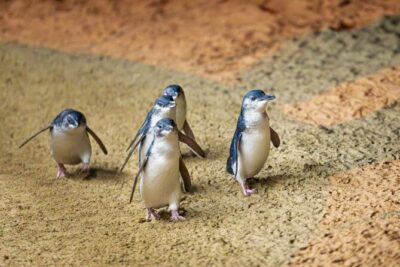
Penguin Parade, & Wildlife Encounters Eco Tour from Melbourne
Read our review →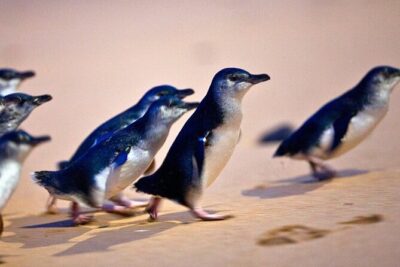
Phillip Island Penguins & Wildlife Day Tour from Melbourne
Read our review →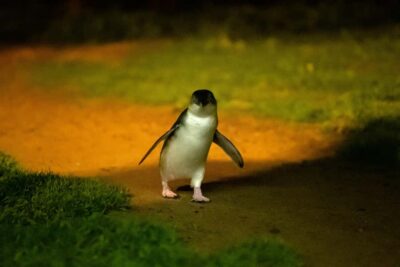
Parrot World Immersive Wildlife Park Entry Ticket next to Paris
Read our review →
Albatross, seals, and sea birds-Wildlife Cruise
Read our review →Browse the lists this tour appears in