
REVIEW · ECUADOR BIRDWATCHING TOURS
Guided Birding Photography Experience
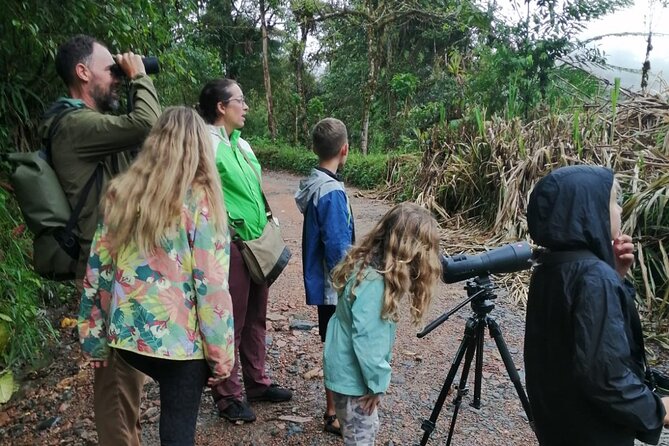
Birds reward early risers. In Mindo, this four-hour private birding experience takes you into the Andean Chocó with a guide, private transport, and strong chances of seeing toucans, tanagers, parrots, hummingbirds, and more. I like the small-group format, which lets you set the pace, and I like that the guide helps you spot birds and arrange your photography equipment. The main catch is that the name may promise more hands-on photography help than you actually receive.
Start at 6:00 a.m., when bird activity is usually the main event. I also like the fair $180 group price for up to five people, especially if you fill the vehicle with friends or family. Still, four hours can pass quickly, and a particular bird is never guaranteed. If you want a quetzal or Andean cock-of-the-rock, you may need a longer or separate outing.
Key points for your Mindo morning
- 6:00 a.m. start: Early timing gives you the best chance of finding active birds.
- $180 per group: The price covers up to five people, not each person individually.
- Private transport included: Useful on Mindo’s rougher rural roads and remote forest routes.
- Birds you may see: Toucans, tanagers, parrots, hummingbirds, quetzals, and other cloud-forest species.
- Guide-led photography: Your guide helps locate birds and set up equipment, but you may need to take the actual pictures yourself.
- Private group format: Only your party participates, giving you more room to ask questions and shape the morning.
Why Mindo is such a strong birding base
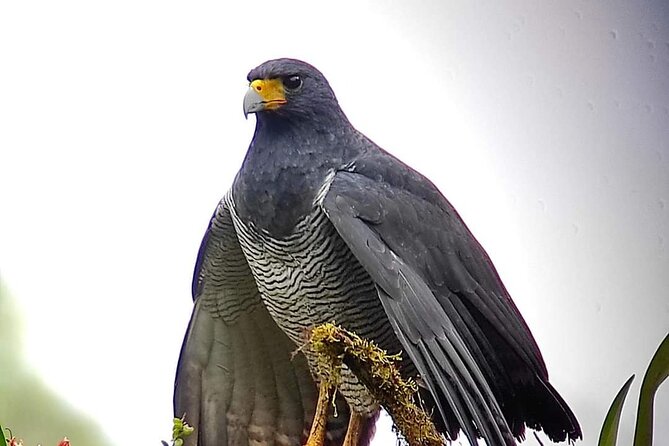
Mindo sits in one of Ecuador’s best-known birding areas, the Andean Chocó. The setting gives you cloud forest, steep ravines, country roads, and many different places where birds feed, call, and move through the trees.
This is not a quick stop beside a city park. You leave the town and head toward forest sites where the scenery is part of the morning. Roads into remote areas can be rough and potholed, so having a driver matters. One past outing used Paul as the driver, and the service was described as careful and safe despite the road conditions.
Mindo is especially appealing if you want colorful birds without joining a large bus group. The private format means you can ask the guide to pause, repeat a sighting, or spend more time with a species that matters to you. That flexibility is worth more to serious bird photographers than a fixed route with a crowded group.
The area is also rewarding for beginners. You do not need an expert bird list to enjoy a hummingbird at close range or a toucan sitting in clear view. A guide can help you notice movement and calls that you would probably miss alone.
More Bird Photography Tours in the world:
- Jaco Birdwatching and Photography with Sergio
★ 5.0 · 65 reviews - Birding & Photography Day Trip to Doñana from Seville
★ 5.0 · 61 reviews - Skadar Lake National Park: Birdwatching & Photography Tour
★ 4.8 · 39 reviews
The 6:00 a.m. start is part of the value
The tour begins at 6:00 a.m., so plan for an early breakfast or a snack you can carry. The timing is not a marketing flourish. Morning is when you are most likely to encounter active birds, and the experience is built around making the most of those first hours.
A guide such as Irman Arias has been praised for recognizing bird calls before the bird appears. That is a major advantage in thick forest. A good ear can turn a quiet patch of trees into a search, and the guide may use calls or mimicry to help bring a bird closer.
You should also tell your guide what matters most to you. If toucans are your main goal, say so at the start. If you care more about hummingbirds, tanagers, or adding species to a life list, make that clear too. Birds follow their own schedule, but your guide can make better choices when your priorities are known.
What the first birding stop may look like
One common pattern is a private property with viewing platforms above a broad ravine. This type of stop is useful because it gives you a fixed place to watch the canopy instead of walking constantly through thick vegetation.
A feeding area may bring tanagers, hummingbirds, and toucans into view. At one such property, visitors were able to watch two toucan species repeatedly and photograph them through a powerful telescope using a phone. The view across the ravine also gives you time to study a bird rather than simply glimpse it as it flies away.
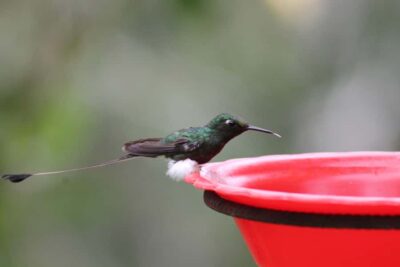
Depending on the day and route, you might see several hummingbird species. One morning produced 14 of the area’s known hummingbird species, along with a total bird list of 48 species. That is an exceptional result, not a promise, but it shows what the area can offer when conditions and timing cooperate.
A private reserve does not always mean complete solitude. Other guides may bring parties to the same viewing platform, and several people may gather around the feeding area. The tour itself remains private, but the most popular bird spots can have a small shared crowd.
Some visits include coffee and snacks at the viewing point. Treat that as a pleasant possibility rather than the main reason to book. The birds and the guide’s skill are the real value.
Walking through the cloud forest after the platforms
After the first viewing area, the outing can continue on foot through the forest. The guide watches for movement, listens for calls, and helps you set up your camera or phone when a bird appears.
This part feels less predictable than the viewing platform. You may find barranquero birds, toucans, hummingbirds, or other forest species, but you may also spend time listening without getting a clear look. That uncertainty is part of birding, not a flaw in the tour.
The walks can include uphill sections. The information provided says most people can participate, but it does not give a detailed accessibility rating or trail description. If uneven ground or walking uphill is a concern, ask for current route details before booking.
The forest section is valuable because it adds species that may not visit a feeding station. It also gives you a better sense of Mindo as a living forest rather than just a place where birds appear at a platform.
More Guided Tours in the world:
- Puffin Cruise with Expert Tour Guide from Reykjavik
★ 4.5 · 636 reviews - 2 Hours Guided Whale and Bird Boat Tour in Bay Bulls
★ 5.0 · 557 reviews - Guided Evening Penguin Viewing Otago Peninsula, Dunedin, New Zealand
★ 5.0 · 471 reviews - Húsavík: Whale-Watching Cruise and Puffins Guided Tour
★ 4.6 · 444 reviews
Photography help is useful, but know the limits
The experience is called a birding photography tour, and the guide helps you locate birds and set up equipment. That does not always mean the guide will take your photographs for you.
One particularly useful telescope was powerful enough for phone photos and video, but an older or less stable scope can make this fiddly. You may spend time holding the phone against the eyepiece, adjusting focus, and trying to keep the image steady. That can pull your attention away from the bird itself.
Some guides may point out the best moment for a photograph, while you handle the camera. If taking pictures is central to your plan, ask before starting exactly what equipment is available and how much hands-on help you can expect.
Bring your own camera or phone, and make sure you know how to use it in advance. A guide can find a bird, but the final image still depends on your settings, patience, and the light. Cloudy weather can make exposure difficult, especially under forest cover.
For pure birdwatching, the equipment is less of a concern. You may be able to use a scope or binoculars supplied by the guide. One outing provided binoculars for each person, though equipment can vary by guide and day.
Guides who make the difference
Mindo’s birds are the reason you book, but the guide often determines how much you see. Irman Arias has received especially strong praise for his sharp eyesight, command of bird calls, calm manner, and clear English.
Those skills matter in practical ways. A guide who recognizes a call can stop you before the bird disappears. A guide who spots movement quickly can point out a bird before you walk past. A patient guide can also help a beginner identify what to look for instead of simply naming species after they vanish.
The level of explanation may vary. Irman has been described as giving concise information unless you ask follow-up questions. That suits people who want to keep watching, but you should ask questions if you want details about behavior, habitat, or identification.
Good communication before the tour is another plus. Irman has handled arrangements well months ahead of a visit, and one memorable example involved trying to find a quetzal that did not appear during the planned outing. He later spent additional time trying to help locate it at no extra charge. That kind of effort is not guaranteed, but it tells you why choosing an engaged local guide matters.
What you may see, and what is not guaranteed
The expected list includes toucans, tanagers, parrots, hummingbirds, and many other species. Quetzals and Andean cock-of-the-rock are also possible in the wider Mindo area, but they should not be treated as standard four-hour sightings.
The cock-of-the-rock usually requires a separate visit to a specific site and an even earlier departure. One outing left at 5:00 a.m. to reach a lek, where several males gathered. That experience was described as excellent, but it was a separate arrangement from the regular morning tour.
A quetzal can also take patience and luck. One group heard a golden-crowned quetzal but did not see it. Another group managed to spot both a male and female with help from a sharp-eyed guide. The lesson is simple: keep your expectations broad. You may see a long list of colorful species, but nature does not take requests.
Weather affects photography too. November can bring frequent cloud and rain, which may reduce light and make exposures harder. A later, drier season may suit photographers better, but the supplied information does not specify exact seasonal guarantees. Ask about current conditions if image quality is your top concern.
Private transport and the four-hour limit
Private transport is included, which makes the experience easier and safer than trying to reach remote sites on your own. Mindo’s rural roads can be little more than rough dirt tracks in places, and a local driver knows how to handle them.
The tour lasts about four hours. That is enough time for a platform stop and a forest walk, but it may not be enough for several distant sites or a long search for one target species. One customized birding day visited three or four areas and ran until about 5:30 p.m., but that was a much longer arrangement, not this standard experience.
If you are traveling from Quito, allow extra time before the tour. One visitor left Quito around 5:30 a.m. and reached Mindo after roughly an hour and a half by taxi. The tour itself starts in Mindo at 6:00 a.m., so this is better suited to someone staying locally or arranging an exceptionally early transfer.
Is $180 good value?
At $180 for a private group of up to five, the price is reasonable if you can share it with companions. Five people would bring the cost to $36 each. Two people would pay more per person, but you still receive private transport, a guide, and a flexible morning in one of Ecuador’s top birding areas.
The value is strongest for birders who would struggle to find forest species alone. A skilled guide can save hours of searching and help you identify birds by call. It is also good value for a mixed group, since a beginner can use the scope while a serious photographer works on images.
The value is weaker if you expect a full-day photography workshop, guaranteed toucans, or a guide who will take every picture. This is guided birdwatching with photography support, not necessarily a formal camera class.
The experience has a 4.9 rating from 47 reviews and is recommended by 98 percent of customers. Those figures suggest a reliable level of satisfaction, but the individual guide, weather, bird activity, and equipment still shape your morning.
Who should book this Mindo birding experience?
I would choose this tour if you want a private introduction to Mindo’s birds, especially if you are new to the area or have limited time. It suits couples, families, and small groups of photographers who want their own vehicle and guide.
It is also a strong choice for serious birders building a list. The possibility of seeing dozens of species, including many hummingbirds, makes the area worthwhile, and a guide with a good ear can add birds you would miss alone.
I would ask more questions before booking if photography is your main purpose. Confirm the camera support, scope condition, binocular availability, and how much help you will receive taking pictures. If a specific bird is essential, ask if the four-hour trip is enough or if you should arrange a separate cock-of-the-rock or quetzal outing.
Free cancellation is available up to 24 hours before the start time. Changes or cancellations made inside that window are not accepted for a refund, so keep the local start time in mind.
Should you book it?
Book it if you want an early, private, guide-led introduction to Mindo’s cloud forest and you value finding birds more than ticking off one guaranteed species. The transport, small group, and price per group make it a sensible choice, especially with four or five people.
Book a longer or separate outing if you are set on the Andean cock-of-the-rock, quetzals, or serious photography instruction. For most visitors, though, this is a practical way to see why Mindo has such a strong name among birders. Get to bed early, tell your guide what you hope to see, and let the forest decide the rest.
FAQ
Where does the experience take place?
The experience takes place in Mindo, Ecuador, in the Andean Chocó and surrounding cloud-forest areas.
What time does the tour start?
The tour starts at 6:00 a.m.
How long does the experience last?
It lasts approximately four hours.
How much does the tour cost?
The cost is $180 per group, for up to five people.
Is the experience private?
Yes. Only your group participates in the activity.
Is private transport included?
Yes. Private transport is included as part of the experience.
What birds might I see?
Possible sightings include toucans, tanagers, parrots, hummingbirds, quetzals, and other local species.
Does the guide help with photography?
Yes. The guide helps you find birds and set up photography equipment. You may still need to take the actual photographs yourself.
Is the Andean cock-of-the-rock included?
It is not described as a standard part of this four-hour experience. A separate, earlier outing may be needed to visit the cock-of-the-rock viewing site.
Can I cancel for a full refund?
Yes, if you cancel at least 24 hours before the experience begins. Cancellations or changes made less than 24 hours before the start time are not eligible for a refund.
Just added around the world
- Walvis Bay Shore Excursion: Flamingos, Dune 7, Swakopmund★ 5.0 · 3 reviews
- York: Entry to York bird of prey centre★ 5.0 · 7 reviews
- Visit to Madeira Bird Island★ 4.6 · 22 reviews
- Vestmannaeyjar: Puffin, Island, and Volcano Boat Tour★ 4.4 · 7 reviews
- Vila Franca do Campo: Marine Life & Bird Watching & Islet Tour★ 4.4 · 9 reviews
- VIP falconry taster session★ 5.0 · 2 reviews
- Ushuaia: Gable Island and Penguin Colony with Lunch★ 4.8 · 2 reviews
- Ushuaia: Sailing Beagle Channel to the Penguin Colony★ 4.6 · 14 reviews
Bird Photography Tours, compared.
Birding & Photography Day Trip to Doñana from Seville
Read our review →
Skadar Lake National Park: Birdwatching & Photography Tour
Read our review →
Everglades: Birding, Wildlife, and Photography Expedition
Read our review →
Kos Wildlife Walks: birdwatching and animal photography
Read our review →
Skadar Lake National Park: Birdwatching & Photography Tour
Read our review →Browse the lists this tour appears in