
REVIEW · QUITO BIRDWATCHING TOURS
Antisana Volcano Birding & Natural History Condor Tour PRIVATE, all included
Watch the high Andes come alive. This private day trip from Quito combines spectacular mountain scenery with serious birdwatching, a good local lunch, and a real chance to see Andean condors. You may also spot hummingbirds, foxes, deer, caracaras, Ecuadorian Hillstars, and, with luck, a Spectacled Bear.
I especially like the private format, which lets your guide adjust the day toward birds, wildlife, photography, or longer walks. I also like that lunch, park fees, transport, coffee, and a bilingual naturalist guide are included. The main caution is the early start and high altitude. One booking also had a late pickup caused by a major traffic accident, so leave some flexibility in your Quito plans.
Quick takeaways for your day in Antisana
- Condor viewing is the main prize: Mirador del Isco and Tambo Condor offer some of the best chances to see these rare Andean birds.
- The bird list can be impressive: Ecuadorian Hillstars, Tawny Antpittas, Tufted Tit-Tyrants, Carunculated Caracaras, hummingbirds, and water birds may all appear.
- Santiago and Gabriel bring strong field skills: Past guests especially praised their quick bird identification, English, spotting scopes, and ability to notice wildlife from the road.
- Lake Mica adds walking and scenery: You can scan the shore for aquatic birds or take a trail for wider views around the high-altitude reserve.
- Lunch is part of the experience: Tambo Condor serves a local meal, including a well-praised locro, with hummingbirds around the garden.
- The $210 price covers nearly everything: For a private vehicle, guide, lunch, admission, and a full day from Quito, the cost is reasonable for a small group.
Why Antisana makes such a good day trip from Quito
Antisana Ecological Reserve gives you a quick change of scenery from Quito. The city disappears behind high Andean slopes, open grasslands, volcanic views, and cold mountain air. This is not a standard sightseeing loop with a rushed photo stop. The point is to slow down and watch for movement.
The reserve is especially appealing because you are not limited to one kind of attraction. The volcano and high country provide the setting, Lake Mica adds water birds, and the gardens at Tambo Condor bring hummingbirds close. The day also has a natural-history angle, so you learn how water, glaciers, plants, and wildlife connect.
At $210 per person, this is not a budget outing. But it includes private transport, a certified bilingual naturalist and birding guide, lunch with a soft drink, coffee or tea, park fees, and hotel pickup and drop-off. If two or more people share the vehicle, the price begins to look fair, especially since you are not paying extra for each small activity.
The tour lasts about eight to ten hours and begins at 7:00 a.m. That timing matters. Early morning usually gives you the best chance for active birds, and it leaves enough daylight for several stops. You should still expect a long day, much of it in a vehicle, with cold conditions at altitude.
More Birds of Prey and Falconry in the world:
- Colorado Springs Hands-On Falconry Class and Demonstration
★ 5.0 · 293 reviews - Morning Falconry & Nature Desert Safari with Transfers from Dubai
★ 5.0 · 254 reviews - Interactive Educational Course on Birds of Prey
★ 5.0 · 230 reviews
Leaving Quito at 7:00 a.m.
Pickup is available from your hotel in Quito or the airport area. The first section of the outing is a short transfer before the mountain roads take over. Your guide can use this time to explain Ecuador’s ecosystems and point out how quickly the surroundings change as you leave the city.
The private vehicle is one of the strongest parts of the arrangement. You are not tied to a large group’s pace, and you can ask to pause for a bird, a viewpoint, or a wildlife sighting. If your main goal is photography, tell the guide at the start. If you prefer natural history and scenery, say so then as well.
There is one practical warning: city traffic can be unpredictable. One party lost about 90 minutes at the start because of a serious traffic accident. That delay was unusual, but it shows why you should avoid scheduling a flight, museum visit, or other fixed activity immediately after the tour.
Mirador del Isco and the Chakana Reserve
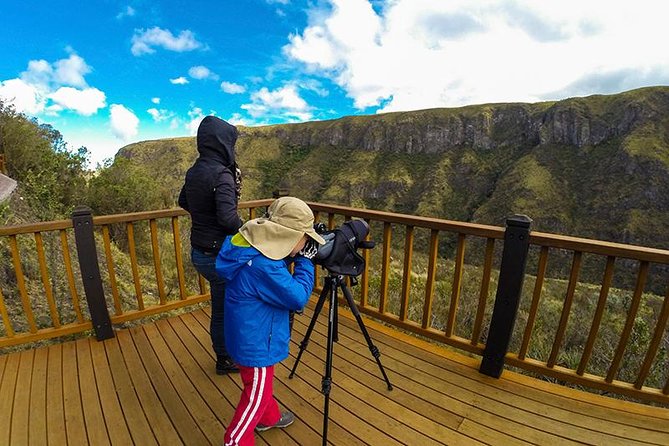
The first main stop is Mirador del Isco, part of the Chakana Reserve. This lookout is known as one of the better places in the area for spotting Andean condors. You may see them as dark shapes circling far overhead, or you may get a much closer view through the guide’s spotting scope.
This is where a good birding guide makes a real difference. Condors can be easy to miss if you do not know where to scan. Experienced guides can recognize a distant shape, watch the wind, and direct your eyes toward the right ridge or patch of sky.
The stop lasts about 35 minutes. That is enough time to look around without turning the morning into a long wait. Bring binoculars if you have them, but a scope is especially helpful. A guide may also carry a high-quality scope, as Santiago did for one group, allowing everyone to take turns viewing birds at a distance.
The view is weather dependent. On a clear day, Antisana can look magnificent, with clean volcanic slopes and broad views across the high Andes. Cloud can move in quickly, so do not judge the outing by the first glimpse. The weather may change several times during the day.
Searching Antisana for birds and mammals
From Mirador del Isco, the route continues to the western entrance of Antisana Ecological Reserve. The reserve is the heart of the outing. Here, you search rather than simply look at a fixed display, which makes each sighting feel earned.
Possible wildlife includes Andean foxes, deer, and the Spectacled Bear. The bear is never guaranteed, of course. It is an especially fortunate sighting, and even a distant animal may be difficult to see without the guide’s sharp eyes and scope.
One guide reportedly noticed an Andean Bear from the road, across a ridge. That kind of sighting shows why you should keep watching between formal stops. Wildlife may appear while you are moving, not only at a viewpoint.
Birds are the more dependable focus. Look for the Ecuadorian Hillstar around Chuquiragua bushes, along with Tawny Antpittas, Tufted Tit-Tyrants, Carunculated Caracaras, and several hummingbird species. You may see more than 30 bird types on a productive day, though exact numbers depend on weather, season, patience, and luck.
Santiago was praised for identifying birds almost instantly and for explaining bird life across Ecuador and South America. Gabriel also received strong praise for answering questions and helping identify a large number of species. If you want a bird-heavy day, request that focus when booking and again at pickup.
The guide may use recorded animal sounds to draw birds closer for photographs. This can be useful, but the real benefit is the guide’s ability to know where to look and when to wait. You do not need to be a dedicated birder to enjoy the stop. The setting, mammals, volcano views, and hummingbirds provide plenty to appreciate.
More History Tours in the world:
- Day Trip From Addis Ababa See Historical Monastery,Stunning Nature,Animals,Birds
★ 5.0 · 303 reviews - 15-Day Bird Watching and Cultural Tour in Bhutan
★ 5.0 · 29 reviews - Historic Arles & the beaches and Pink Flamingoes of the Camargue
★ 5.0 · 5 reviews - Bird watching tours , cultural and historical tours of Ghana.
★ 4.0 · 4 reviews
Lake Mica, high water, and optional walking
Lake Mica is the next major stop. The lake adds a different habitat to the day, so your attention shifts from mountain slopes and shrubs to the shoreline. Scan for aquatic species, then take time to absorb the open high-country setting.
You can walk along a trail if you feel comfortable. Only a small amount of walking is required, but longer hiking trails are available for people who want more exercise. The ground can be uneven, so sturdy shoes are sensible even if you plan to keep the walk short.
Altitude is the main issue here. If you are coming from sea level, the thin air can affect you even on an easy trail. Tell the operator if you are prone to altitude sickness. Coffee or tea is included, and one party found an altitude-adjustment tea at Tambo Condor useful before continuing.
Do not treat the optional walk as a test of fitness. The tour can still work well if you prefer short walks and viewpoints. Ask your guide to adjust the pace. The private format makes that easier than it would be in a large group.
Lunch and hummingbirds at Tambo Condor
Tambo Condor is more than a lunch stop. The reserve has views toward condor nesting sites, and its garden attracts hummingbirds to flowers and feeders. It is a welcome pause after the cold, open conditions around Lake Mica.
Lunch includes a soft drink, and vegetarian food is available if you request it in advance. A local locro received special praise. This traditional potato soup is the kind of warm, filling meal that makes sense after a morning at altitude.
Plan on about 90 minutes here. That gives you time to eat, walk around the property, watch the feeders, and use the viewing area. One of the most memorable possible sightings is a nesting condor with a juvenile nearby. Another is watching pairs of condors in flight before seeing one settle near a nest.
Hummingbirds are often easier to photograph here than out in the open reserve because the flowers and feeders bring them into a smaller viewing area. Keep your camera ready, but do not spend the entire lunch staring through a screen. The birds move quickly, and the garden is best enjoyed with a little patience.
The property also gives you a warmer, more comfortable place to recover from the altitude. If you are not a serious birder, this stop may become the highlight because it combines food, views, birds, and a slower pace.
The guide can make or break the day
A private wildlife trip depends heavily on the guide. The strongest praise here goes to Santiago and Gabriel. Santiago was noted for exceptional English, fast bird identification, strong local knowledge, and a clear passion for Andean bird life. Gabriel was praised for answering questions and helping a group find more than 30 bird species.
Those skills matter more than a long checklist. A guide who can explain Quito’s water supply, glacial melt, local life, and animal behavior gives the scenery meaning. One guide discussed the city’s dependence on glacial water and the likely loss of glaciers in coming decades, linking the day’s mountain views to a real environmental concern.
Your experience will still depend on conditions. Birds fly away, clouds hide volcanoes, and bears do not follow a schedule. The guide can improve your chances, but cannot promise a condor, bear, or clear view.
What to bring for this private Quito tour
Dress for cold, changing weather. Bring warm layers, rain protection, sunscreen, and a hat. The sun can feel strong at altitude even when the air is chilly.
Binoculars are useful, though a guide’s spotting scope may be available. Bring a camera with a long lens if bird photography matters to you, but remember that many sightings will be distant and brief.
Wear shoes with a good grip. The required walking is limited, but trails have irregular ground. Carry water and any personal medication you need, especially if altitude affects you.
Tell the operator about dietary needs when you book. Vegetarian meals are available, but the request should be made ahead of time. Children must be with an adult, and the child rate applies only when sharing with two paying adults.
A copy of one group member’s passport is required for billing and local tax exemption. That is an administrative detail, but it is easy to forget, so prepare it before pickup.
Who should book this Antisana experience?
I would choose this tour if you have one free day in Quito and want wildlife rather than a city-only schedule. It suits birders, photographers, families with older children, couples, and anyone who enjoys nature but does not want to arrange a private vehicle and guide independently.
It is also a good choice for people who want flexibility. You can ask for more birding, more walking, more scenery, or more time at the hummingbird garden. That freedom is the main advantage over a large group excursion.
I would think twice if you dislike early starts, cold weather, winding roads, or uncertain wildlife sightings. You should also avoid stacking another important activity immediately afterward because the day may last ten hours and traffic can delay the return.
The perfect five rating from 39 published ratings reflects the tour’s strongest qualities: excellent guides, impressive bird sightings, good food, and a full day with very little extra cost once you arrive. Still, the late pickup reported by one party is worth remembering. Ask for clear pickup details and keep your morning flexible.
Should you book the Antisana condor tour?
Book it if you want a serious but approachable wildlife day from Quito. The chance to see Andean condors, hummingbirds, Lake Mica, and a high-altitude volcano in one outing is strong value at $210 per person when the included transport, guide, meals, and fees are considered.
The best reason to book is the private guide-led format. Santiago or Gabriel can help you see far more than you would on your own, and they can shift the day toward your interests. If you accept that wildlife is never guaranteed and prepare for altitude, cold, and a long day, this is one of the more rewarding nature trips available from Quito.
FAQ
What time does the tour start?
The tour starts at 7:00 a.m.
How long does the experience last?
It lasts approximately eight to ten hours, including the return to Quito.
Where does pickup take place?
Pickup and drop-off are available at your hotel in Quito or in the airport area.
Is this a private tour?
Yes. Only your group participates.
Is lunch included?
Yes. Lunch with a soft drink is included at Tambo Condor. Coffee or tea is also included.
Are park fees included?
Yes. National Park fees and all listed activities are included.
Can the tour focus more on birdwatching?
Yes. The tour can be adjusted to place more emphasis on birdwatching.
Is much walking required?
Only a small amount of walking is required, along trails with irregular ground. Longer hiking trails are available if you want more walking.
Just added around the world
- Walvis Bay Shore Excursion: Flamingos, Dune 7, Swakopmund★ 5.0 · 3 reviews
- York: Entry to York bird of prey centre★ 5.0 · 7 reviews
- Visit to Madeira Bird Island★ 4.6 · 22 reviews
- Vestmannaeyjar: Puffin, Island, and Volcano Boat Tour★ 4.4 · 7 reviews
- Vila Franca do Campo: Marine Life & Bird Watching & Islet Tour★ 4.4 · 9 reviews
- VIP falconry taster session★ 5.0 · 2 reviews
- Ushuaia: Gable Island and Penguin Colony with Lunch★ 4.8 · 2 reviews
- Ushuaia: Sailing Beagle Channel to the Penguin Colony★ 4.6 · 14 reviews
Birds of Prey & Falconry, compared.
Colorado Springs Hands-On Falconry Class and Demonstration
Read our review →
Morning Falconry & Nature Desert Safari with Transfers from Dubai
Read our review →
Interactive Educational Course on Birds of Prey
Read our review →Dubai Hot Air Balloon Ride with Breakfast, Falconry & Camel Ride
Read our review →

Margaret River: Birds of Prey Encounter and Forest Walk
Read our review →Browse the lists this tour appears in