
REVIEW · PORTUGAL BIRDWATCHING TOURS
Azores Marine Birdwatching Expedition w/ Biologist Guide
Pelagic birds reward patience and a fast boat. This three-hour outing from Vila Franca do Campo gives you a small-group way to search for seabirds around São Miguel, with Opticron binoculars provided and biologists helping locate colonies and open-water species. I like the compact Zodiac boats, which carry no more than nine people, and the chance to see birds that are hard to find from land. The main caution is simple: wild birds do not follow a schedule, so you might not see every species listed.
The early 8:00 a.m. start also works in your favor. You get out before the day becomes busy, and the trip ends around 11:00, leaving the rest of the day free. I also like that the crew gathers field images and data for research, though anyone hoping for a guaranteed close-up of a particular shearwater should keep expectations flexible.
Key points to know before boarding
- Small Zodiac groups: Each RIB boat holds up to nine people, giving you a better chance to hear the guide and see over the sides.
- A working bird expedition: Inland lookouts use VHF radio to help direct the boat toward seabird activity offshore.
- Vila Franca do Campo is the first focus: The boat checks coastal colonies, shorebirds, and wildlife around the famous islet.
- Binoculars are supplied: Opticron 8×42 binoculars are included, though a camera with a zoom lens is still useful.
- Bring warmth and water: Pack your own drinking water, sunscreen, lip balm, and warm layers. Light food is allowed.
- Wildlife comes first: The guide keeps a careful distance and follows conservation standards during approaches.
Why this São Miguel boat trip is different
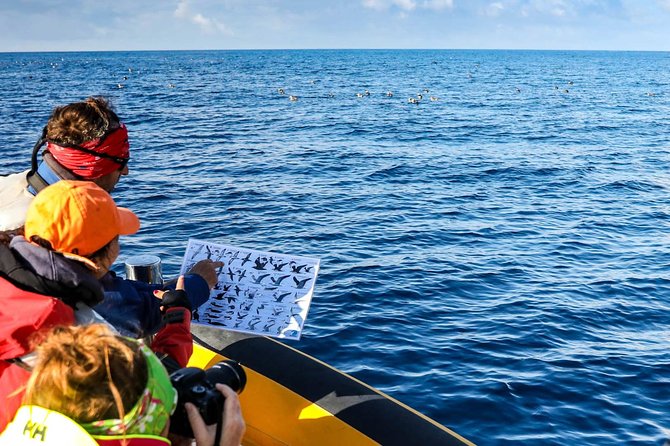
Most birdwatching from shore is a waiting game. You scan cliffs, fields, or a harbor and hope something appears. This trip changes the odds by taking you along the coast and then out into open water, where shearwaters, petrels, terns, and skuas spend much of their time.
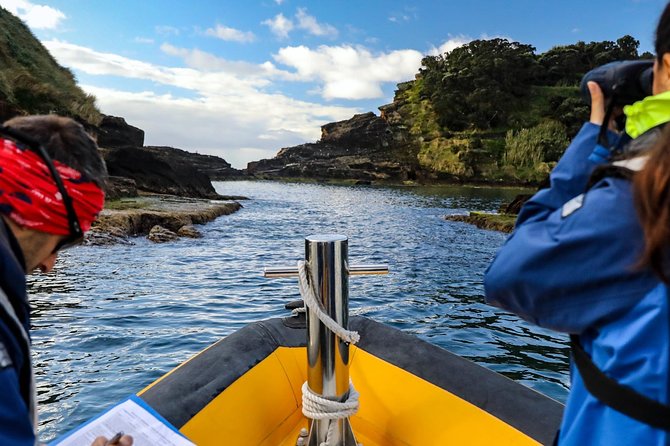
The boat is not simply a sightseeing platform. The guide and skipper work with inland lookouts, who report bird activity over VHF radio. The Zodiac may travel quickly at first to reach the right area, then slow for a more careful approach. That combination of speed and patience is important. Pelagic birds can be scattered, and the best sighting may depend on getting to the right patch of sea before the birds move on.
I also appreciate the research side of the trip. The guide collects field images and data while you watch. That makes the outing feel more useful than a simple ride along the coast, but it also means the crew has to balance photography, research, animal welfare, and passenger viewing. You are joining a wildlife expedition, not a scripted animal show.
The small boat helps. With a maximum of nine people, you are not lost in a large crowd, and the guide can explain what you are seeing. On the other hand, a Zodiac has less shelter and less room than a larger sightseeing boat. If you are prone to seasickness or dislike wind and spray, prepare carefully.
More Guided Tours in Portugal:
- 2-hour Bird Watching Guided Boat Trip in Ria Formosa from Faro Algarve
★ 4.5 · 75 reviews - From Faro: 2-Hour Guided Bird Watching Boat Trip
★ 4.6 · 71 reviews - Azores: Marine Birdwatching & Islet Biologist Guided Tour
★ 4.9 · 19 reviews
Starting at Marina de Vila Franca do Campo
You meet the team at Azores Whale Watching TERRA AZUL at Marina de Vila Franca do Campo. The scheduled start is 8:00 a.m., with the activity ending back at the same meeting point around 11:00.
The outing begins with a short briefing. You learn about birds found locally and receive safety information before following the guide and skipper to your assigned boat. This is a useful opening because the bird list is long, and the briefing helps you understand what to watch for before the boat leaves the marina.
Pickup may be available, but it depends on availability. If you need it, contact the operator to confirm the exact pickup time. Do not assume that a pickup listed as possible is automatically arranged.
The operator provides an impermeable top and life vest. You should still bring warm clothing. Early morning conditions at sea can feel much cooler than conditions on land, and the boat is open to the elements. Sunscreen and lip balm are sensible even on a cloudy morning, since wind and reflected light can catch you by surprise.
Bring your own water. Personal water supply is not included, though light food is permitted. Keep snacks modest and secure. The boat moves quickly at times, and loose items can become a nuisance or get wet.
Stop 1: Islet of Vila Franca do Campo
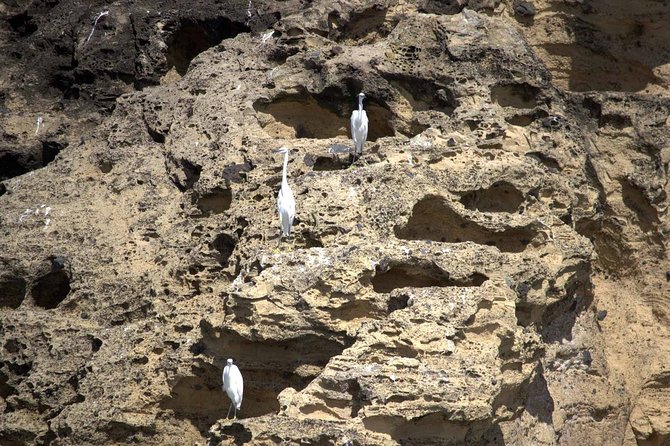
The first area is the Islet of Vila Franca do Campo, a volcanic islet just off the coast. Here the boat looks for marine bird colonies, shorebirds, and other wildlife connected with the coast.
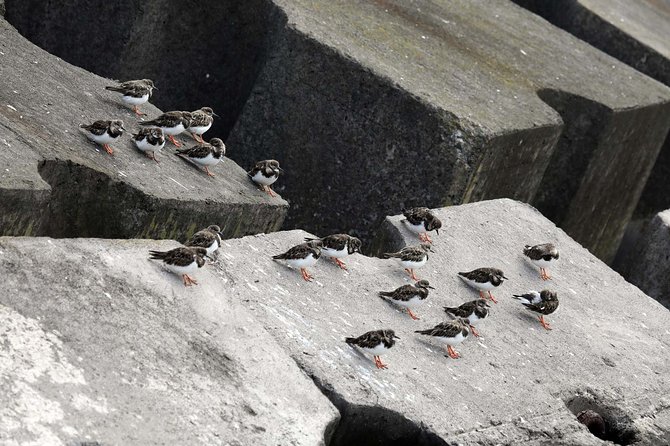
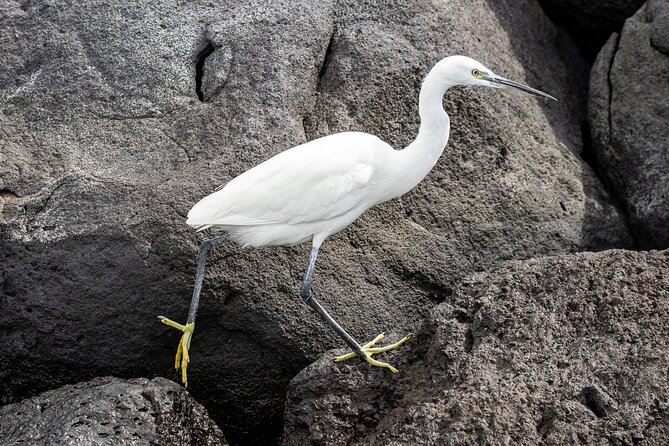
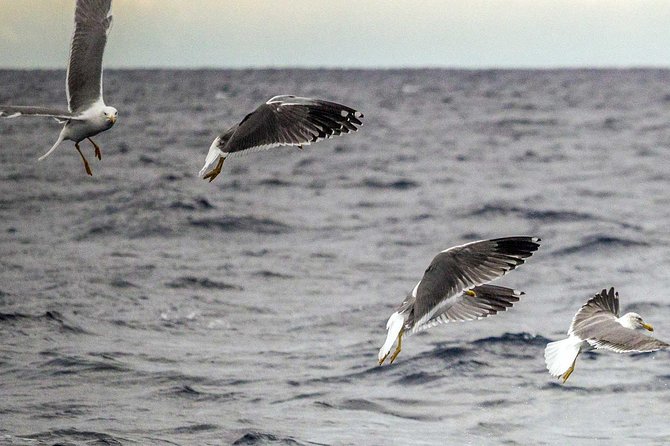
This part of the trip gives you a useful transition from land-based birds to ocean species. You may see Yellow-legged Gulls, terns, Turnstones, Sanderlings, Little Egrets, or Whimbrels. These birds are easier to understand when you can see how they use the coast, rocks, and water together.
The islet is also a practical first stop because the boat can search near known colonies before heading farther offshore. The skipper can position the Zodiac for views while the guide explains the birds and watches for movement.
Still, do not treat this as a guaranteed colony visit. The exact viewing distance depends on conditions, bird behavior, and conservation rules. The crew may keep the boat farther away than you expect. That is a good thing for the wildlife, even if your photographs are less dramatic.
Heading offshore for shearwaters and petrels
After the coastal search, the Zodiac heads out to sea. This is where the trip becomes more specialized. Open-water birds are harder to locate from a beach or lookout, and their appearances can be brief.
The target list includes Cory’s Shearwater, Great Shearwater, Manx Shearwater, and Sooty Shearwater. You may also look for Barolo Shearwater, Bulwer’s Petrel, Wilson’s Storm-petrel, Madeiran Storm-petrel, and Leach’s Storm-petrel.
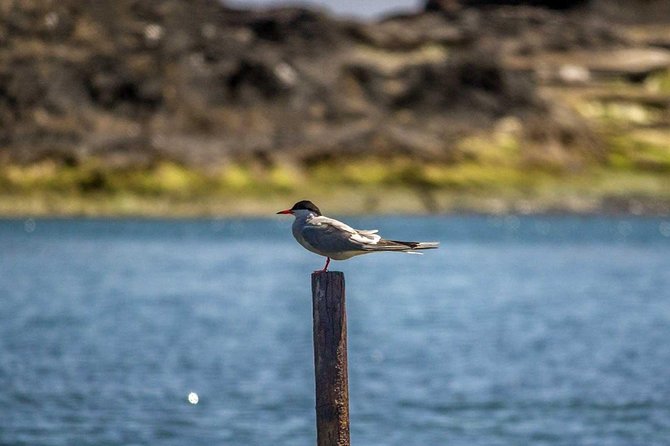
There are terns as well, including Common, Roseate, Bridled, and Sooty Terns. Northern Gannets, Arctic Skuas, and Buzzards are also listed among possible sightings. That list gives you an idea of the range, but it should not be read as a promise. The operator clearly notes that animal behavior cannot be controlled and that no specific species can be guaranteed at a certain time.
The guide’s role matters here. A good guide can help you distinguish a dark shape from a real bird, explain flight patterns, and tell you where to look next. One guide named Sona is praised for being personable and highly informed, especially during sightings of Cory’s Shearwater and other species. Another account notes that a guide gave two incorrect identifications, so you should expect strong enthusiasm and useful help, but not assume every identification will be perfect.
That is a fair warning for serious birders. If you are building a precise species list, bring your own field guide or use a trusted birding app before departure. If you are newer to birdwatching, the guide’s help will still make the trip far more rewarding than trying to identify fast-moving seabirds alone.
A few more birding trips around Portugal worth a look
- Faro: Eco-Friendly Ria Formosa Bird Watching in Solar Boat
★ 4.7 · 359 reviews - Dolphin – Whale – Turtle – Bird Watching
★ 5.0 · 350 reviews - Faro: Ria Formosa Natural Park Segway Tour & Birdwatching
★ 4.9 · 180 reviews - Ria Formosa Natural Park Birdwatching Segway Tour from Faro
★ 5.0 · 164 reviews
How the Zodiac changes the viewing
The RIB boat is one of the strongest reasons to choose this excursion. Its compact shape lets the skipper move along the coast and reach offshore areas more quickly than a slow harbor boat. It also gives the crew flexibility when lookouts report activity in another direction.
The drawback is comfort. You may feel the motion more clearly in a small Zodiac, particularly when the boat travels at speed. Hold onto your equipment and protect cameras, phones, and binoculars from spray. The operator supplies an impermeable top, but you should still use waterproof protection for anything valuable.
The boat’s size also affects viewing manners. You may want to stand or shift position when a bird appears, but follow the skipper’s instructions and avoid sudden movement. The best sighting is not worth an unsafe scramble.
Because the boat holds up to nine people, you get a more personal setting than on a large excursion vessel. You can ask questions without trying to call across a crowded deck. The guide can also keep the group focused when a bird appears for only a few seconds.
What the price of $58.81 really buys
At $58.81 per person, the price is reasonable for a three-hour small-group marine expedition. It includes the Zodiac ride, experienced skipper, wildlife guide, binoculars, life vest, protective top, and insurance.
The value is strongest if you want access to birds that are difficult to find independently. You are paying for the boat, local knowledge, communication with inland lookouts, and the chance to search a much larger area than you could cover from shore.
The price is less compelling if you require guaranteed sightings or a long list of rare species. Wildlife trips always involve uncertainty, and this one makes that especially clear. You might see several excellent species, or you might spend much of the outing scanning water and sky for brief glimpses.
I would view the cost as fair for a focused introduction to Azorean seabirds. Serious birders may want a longer or more specialized outing if available, while casual nature lovers get a manageable morning activity without giving up an entire day.
Who will enjoy this most
I would recommend this trip to anyone with a real interest in birds, coastal wildlife, or marine conservation. You do not need to be an expert. The provided binoculars and guide make it accessible to beginners, while the species list gives experienced birders plenty to hope for.
It is especially useful for photographers who own a camera with a zoom lens. The guide collects field imagery, but personal photography is permitted, and a zoom gives you a better chance of recording birds without asking the boat to approach too closely.
Families should note the age rule: children under four cannot join. Most older participants can take part, and service animals are allowed. English is the official language, though the multinational team will try to accommodate another preferred language when possible. That help is not guaranteed.
You should think twice if you strongly dislike boat motion, need a sheltered cabin, or expect a fixed timetable of sightings. The trip requires good weather, and the sea remains the sea, even on a bright morning.
Practical packing advice for the 8:00 start
Wear warm layers rather than relying on one heavy item. Conditions can change once you leave the marina, and the boat provides a protective top but not a fully enclosed cabin.
Bring:
- Your own drinking water
- Sunscreen and lip balm
- Warm clothing
- A camera with a zoom lens, if you use one
- Waterproof protection for personal equipment
- Light food, if needed
The supplied Opticron 8×42 binoculars are a useful inclusion. You can bring your own pair too, but there is no need to buy binoculars just for this outing.
Arrive ready for a safety briefing and a prompt departure. Pickup, if available, starts before the designated time, so confirm the details directly with the operator rather than relying on a general schedule.
Conservation rules and realistic expectations
The trip is described as a high conservation risk activity, which is a serious point rather than a marketing flourish. Marine bird colonies can be sensitive to noise, approach distance, and repeated disturbance. A qualified guide remains with the group to help the crew follow proper environmental standards.
You may notice the boat slowing or changing course instead of moving directly toward a bird. That is part of responsible wildlife watching. A photograph from farther away is better than forcing an animal to change its behavior.
The best mindset is to treat every species as a possibility, not an entitlement. Cory’s Shearwater may be the star for one outing, while a tern, petrel, gannet, or shorebird becomes the memorable sighting on another. The crew can improve your chances, but no one can control wild animals.
The activity also depends on a minimum number of participants. If that number is not reached, the operator offers another date or experience, or a full refund. Poor weather can also lead to a new date or full refund.
Should you book this São Miguel birdwatching trip?
Yes, if you want a focused, affordable morning on the water and understand that wildlife watching is uncertain. The small Zodiac, supplied binoculars, biologist-led guidance, and communication with inland lookouts give you a strong setup for finding Azorean seabirds.
Book it with realistic expectations. You may see Cory’s Shearwater and several other species, but you may not see every bird on the list. Bring warm layers and water, protect your camera, and be ready for motion and spray.
I would choose this outing for its access and small group size, not for a guaranteed checklist. At $58.81, it offers good value for an active three-hour search around Vila Franca do Campo, especially if marine birds are a priority during your São Miguel stay.
FAQ
Where does the Azores Marine Birdwatching Expedition start?
It starts at Azores Whale Watching TERRA AZUL, Marina de Vila Franca do Campo 4, 9680-187 Vila Franca do Campo, Portugal. The activity ends back at the same meeting point.
What time does the tour begin and end?
The scheduled start time is 8:00 a.m., and the activity is expected to finish around 11:00 a.m.
Are binoculars included?
Yes. Opticron 8×42 binoculars are provided. A camera with a zoom lens and personal binoculars are also recommended if you have them.
How many people can join each boat?
The Zodiac RIB boat holds up to nine people, making this a small-group activity.
Is hotel pickup available?
Pickup is offered subject to availability. You need to contact the operator to book and confirm the exact pickup time.
What happens if weather cancels the trip?
If poor weather causes a cancellation, you will be offered another date or a full refund. Free cancellation is also available when you cancel at least 24 hours before the scheduled start time.
Just added around Portugal
- Vila Franca do Campo: Marine Life & Bird Watching & Islet Tour★ 4.4 · 9 reviews
- Birdwatching Private Tour at Fascinating Salgados Lagoon★ 5.0 · 6 reviews
- Private Birdwatching from Porto★ 5.0 · 33 reviews
- Bird Watching in Albufeira Lagoon★ 5.0 · 2 reviews
- Birdwatching day around Sagres★ 5.0 · 3 reviews
- Birdwatching at Ria de Alvor★ 5.0 · 2 reviews
- Half-day birdwatching around Faro★ 5.0 · 2 reviews
- Half-day birdwatching around Tavira★ 5.0 · 2 reviews
Portugal Birdwatching Tours, compared.
Eco-Friendly Ria Formosa Bird Watching in Solar Boat
Read our review →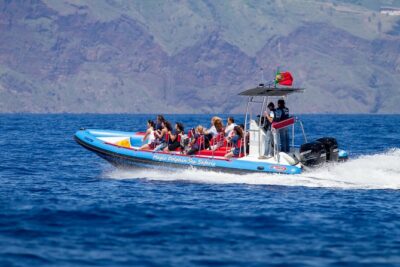
Ria Formosa Natural Park Segway Tour & Birdwatching
Read our review →
Ria Formosa Natural Park Birdwatching Segway Tour from Faro
Read our review →
Tagus Estuary Nature Reserve Birdwatching Boat Tour
Read our review →
2-hour Bird Watching Guided Boat Trip in Ria Formosa from Faro Algarve
Read our review →
Browse the lists this tour appears in