
REVIEW · PORTUGAL BIRDWATCHING TOURS
Azores: Marine Birdwatching & Islet Biologist Guided Tour
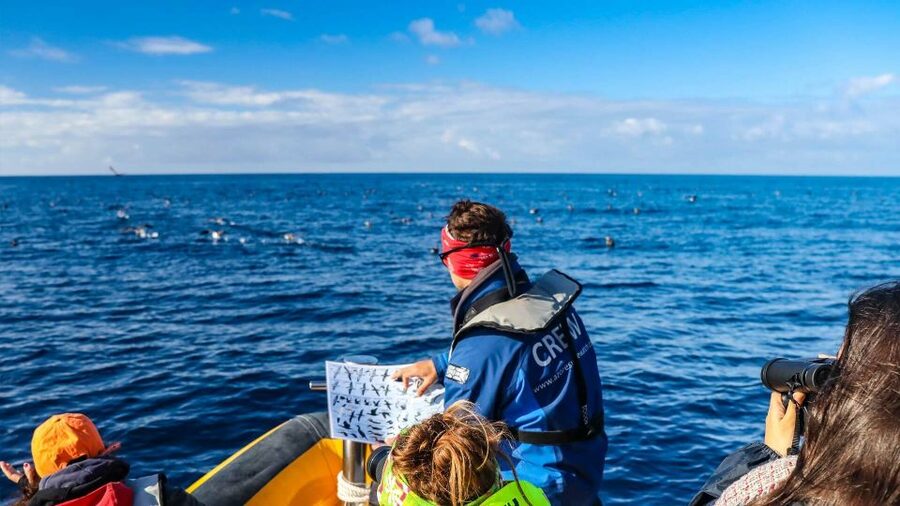
Birds rule these Atlantic cliffs. This three-hour trip from Vila Franca do Campo combines a small Zodiac RIB boat with biologists and naturalists who know where seabirds gather around São Miguel. I like the close approach to the coast and the chance to learn how researchers collect field images and data, rather than simply ticking birds off a list. I also like the small group, limited to 10 people, which leaves room for questions and quiet observation.
The main caution is the boat itself. A RIB is quick and open to the weather, so rough water can make the ride bumpy and chilly. The crew provides an impermeable suit and life vest, but you should still bring warm clothing. Wildlife is never guaranteed, though the season, patient crew, and strong local bird population give you good reasons to go.
Quick reasons to consider this trip
- A serious birding setup: You receive Opticron 8×42 binoculars, and the guides explain migration, breeding, behavior, and research methods.
- A small Zodiac boat: With room for 12 but a tour limit of 10 participants, the boat offers a more personal outing than a large sightseeing vessel.
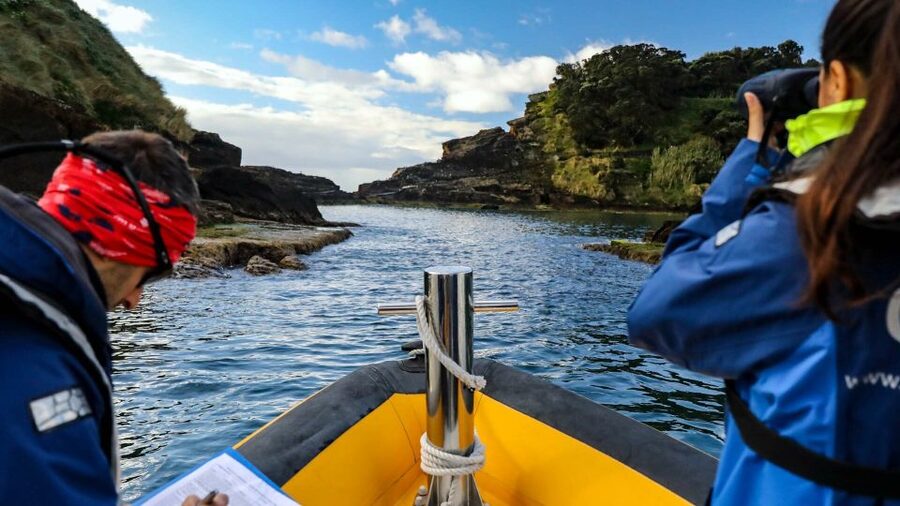
- The Islet of Vila Franca do Campo: You pass close to an important seabird area and look for colonies without landing on the protected islet.
- More than birds: Dolphins have appeared as a bonus, and the crew also watches for marine mammals and less-common ocean birds.
- Good seasonal variety: Spring and autumn bring migrants and occasional rare visitors, while many resident seabirds can be seen year-round.
- A flexible booking option: The price is $68 per person, with free cancellation up to 24 hours ahead and reserve-now, pay-later booking.
Why the Azores are good for seabird watching
The Azores sit far out in the Atlantic, making the islands useful to birds that breed here, migrate through, or pause during long ocean journeys. The offshore rocks and islets offer places to raise chicks, while the surrounding sea provides feeding grounds.
That location gives you a better chance of seeing seabirds in their natural setting. You are not walking through an aviary or watching birds brought to a set viewing point. You are looking across open water, cliffs, and rocky colonies while the crew adjusts the route to match the birds.
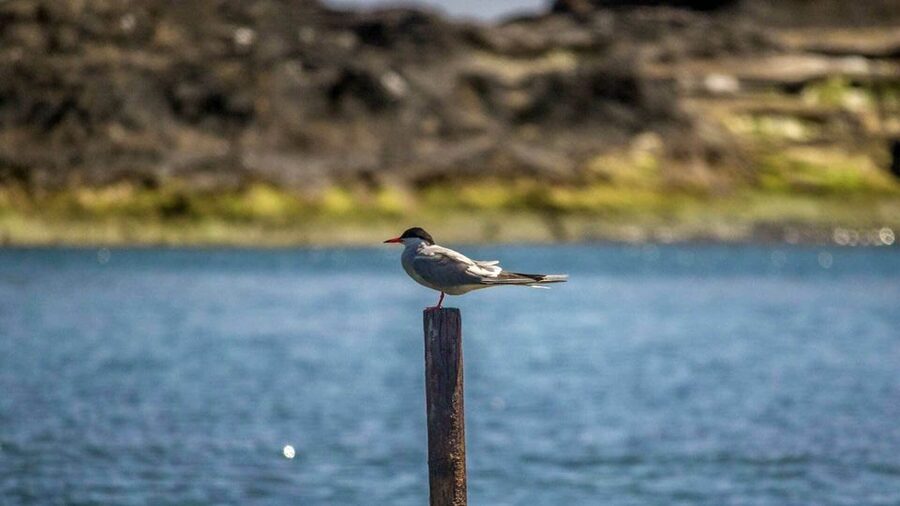
The bird list is unusually broad for a three-hour outing. Common targets include Cory’s Shearwater, Barolo Shearwater, Common Tern, Roseate Tern, Yellow-legged Gull, and Bulwer’s Petrel. Wilson’s Storm-petrel and Madeiran Storm-petrel may also appear.
The less frequent possibilities make this especially appealing to serious birdwatchers. Bridled Terns and Sooty Terns are lucky finds. You might also see Great Shearwater, Leach’s Storm-petrel, Manx Shearwater, Sooty Shearwater, Northern Gannet, Arctic Skua, Pomarine Skua, or Great Skua.
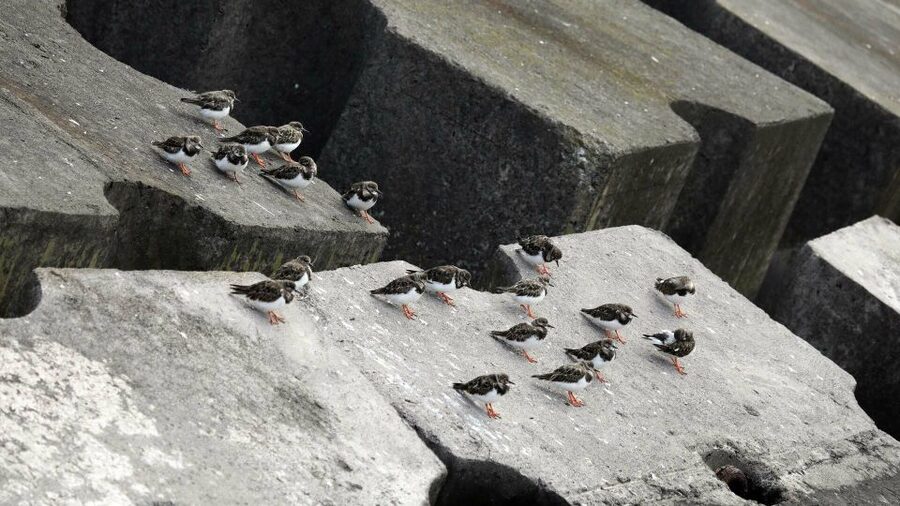
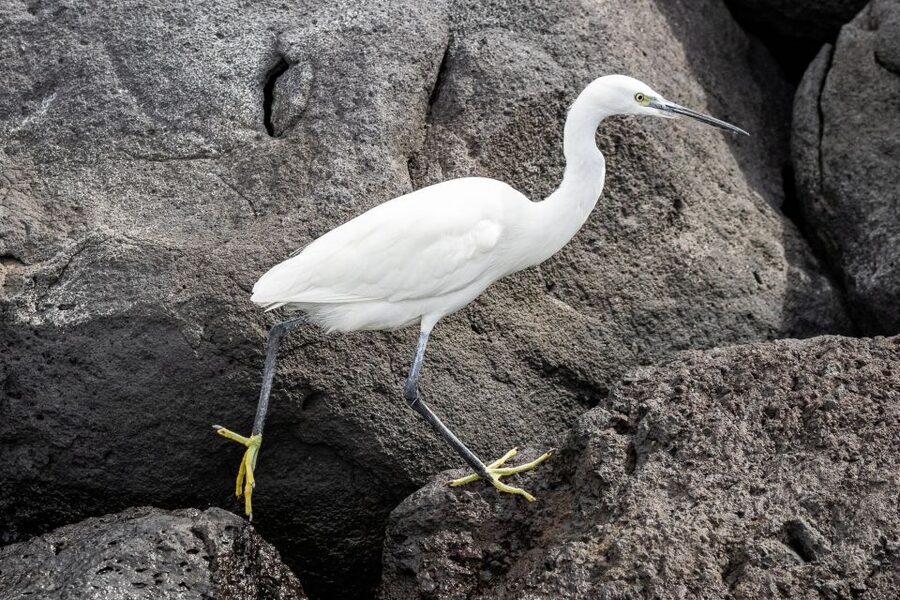
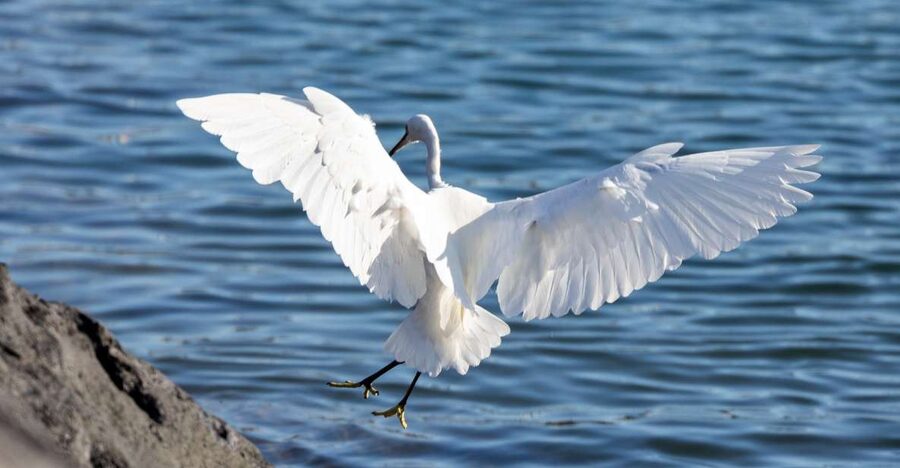
Closer to shore, the list includes Turnstones, Sanderlings, Little Egrets, Wagtails, Whimbrels, Canaries, and Buzzards. Not every species appears on every departure, but the crew has enough targets to keep the trip interesting even when one colony is quiet.
More Guided Tours in Portugal:
- 2-hour Bird Watching Guided Boat Trip in Ria Formosa from Faro Algarve
★ 4.5 · 75 reviews - From Faro: 2-Hour Guided Bird Watching Boat Trip
★ 4.6 · 71 reviews - Puffin Cruise with Expert Tour Guide from Reykjavik
★ 4.5 · 636 reviews
Meeting the boat in Vila Franca do Campo
The departure point is at the Marina de Vila Franca do Campo, on São Miguel’s south coast. If you are staying in Ponta Delgada, the drive east takes about 30 minutes by car, followed by the scenic approach into Vila Franca do Campo.
Free parking is available near the marina. The GPS location is 37.715780, -25.429745. You can also use the provider’s Google Maps location, which is useful because the marina area may be easier to identify by map than by street signs.
The base is home to the yellow boats of Azores Whale Watching TERRA AZUL. Once you arrive, expect a safety briefing before boarding. The crew explains how to sit, how to move safely, and what to expect from the Zodiac RIB boat.
A few minutes spent listening carefully matters here. This is not a slow harbor cruise. The boat is designed to reach offshore viewing areas efficiently, and the open layout means you should keep your belongings secure and follow crew instructions.
The Zodiac ride and what it feels like
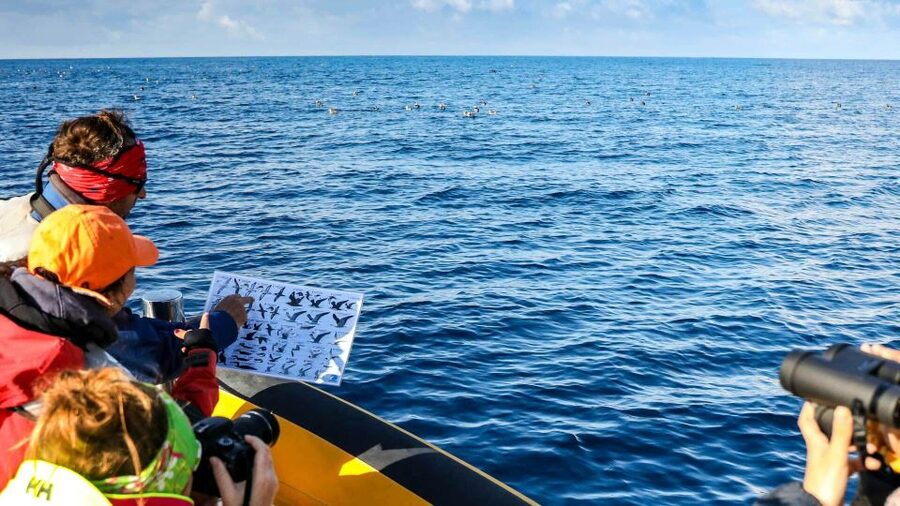
The RIB carries up to 12 people, while this experience limits the group to 10. That difference leaves a little breathing room, though you should not expect a private charter. The smaller group is one of the trip’s best features because you can hear the guide and ask questions without competing with a crowd.
The boat moves quickly along the coast, then slows when the crew approaches bird colonies. Inland lookouts communicate by VHF radio and help guide the boat toward productive areas. This allows the crew to approach carefully and avoid disturbing the birds.
You will receive an impermeable suit and life vest. Still, bring warm layers, even on a sunny day. Wind on the water can make the temperature feel much lower than it does at the marina. Sunscreen is also useful because there is little shade on the boat.
The operator allows light food onboard. Bring water and a small snack, since personal water is not included. A camera is worth packing, but keep it protected from spray and do not let photography distract you from the quick moments when a bird appears.
The boat is not suitable for children under four, pregnant women, wheelchair users, or people with back problems. Those restrictions are worth taking seriously. A rough sea can be physically demanding, and boarding a RIB requires reasonable mobility.
Learning from the biologists instead of just spotting birds
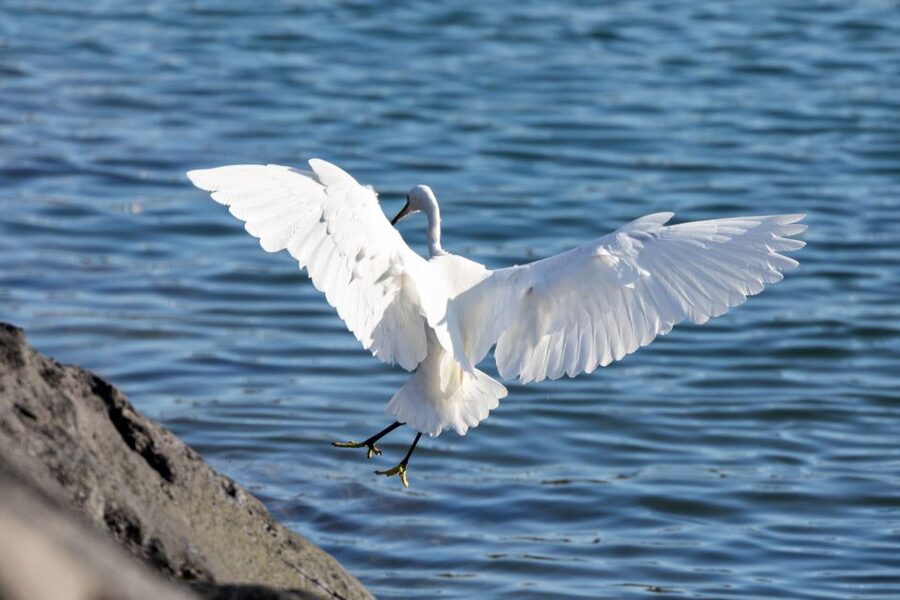
The guide’s role is more than calling out species names. Before heading into the main viewing area, you receive an introduction to the birds, their migration routes, and their behavior. That background helps you understand why a bird is present and what it is doing.
You may learn to distinguish a shearwater’s flight pattern from a tern’s sharper movement, or understand why some birds gather near cliffs while others stay low over the water. The guide also explains breeding activity, chick-rearing, and the use of the Azores as a stopover during migration.
The research side adds real value. The team can explain how field images and observations contribute to local studies. You are not simply watching wildlife for entertainment. You are seeing how careful records help build a better picture of bird populations and behavior.
Guide Alexandra received particular praise for her bird expertise and enthusiasm. Her approach appears to suit both beginners and experienced birdwatchers, since she explains a lot but also allows calm moments when the animals are active. The multinational crew speaks several languages, though English is the official language of the tour.
French, Dutch, Italian, Spanish, Portuguese, and German are also offered among the team’s languages. If you need a language other than English, mention it when booking, but understand that the tour may still operate mainly in English.
A few more birding trips around Portugal worth a look
- Faro: Eco-Friendly Ria Formosa Bird Watching in Solar Boat
★ 4.7 · 359 reviews - Dolphin – Whale – Turtle – Bird Watching
★ 5.0 · 350 reviews - Faro: Ria Formosa Natural Park Segway Tour & Birdwatching
★ 4.9 · 180 reviews - Ria Formosa Natural Park Birdwatching Segway Tour from Faro
★ 5.0 · 164 reviews
The coastline and Islet of Vila Franca do Campo
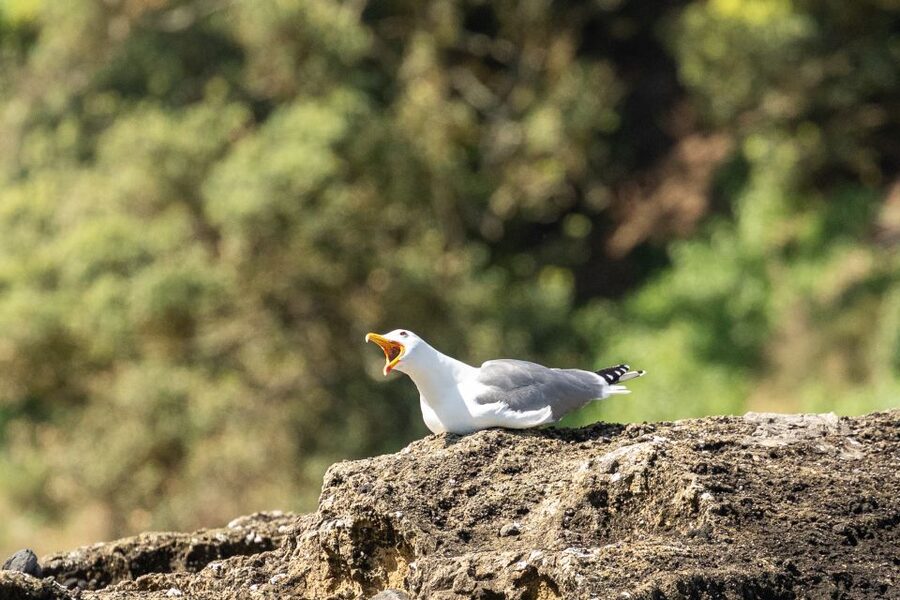
The main marine portion lasts about 2 hours and 45 minutes, with the full activity described as three hours. The route follows São Miguel’s coast and heads toward the Islet of Vila Franca do Campo, a distinctive offshore nature reserve.
The islet is best understood as both a scenic landmark and a wildlife area. You pass close enough to appreciate its shape and watch for birds using its cliffs and rocks. The boat does not turn this into a land visit, so do not book it expecting time to walk ashore.
This stop gives the trip a clear focus. Instead of spending the entire outing searching across empty ocean, you have a known seabird area where the crew can concentrate its attention. The exact route depends on sea conditions, bird activity, and the captain’s judgment.
The scenery is a major part of the appeal. You see São Miguel from the water, with the coast receding behind you and the open Atlantic ahead. The changing view gives the excursion a sense of place that you do not get from watching birds only from land.
What you might see during the outing
Cory’s Shearwaters are among the most important birds to watch for. They are strongly associated with the Azores and may be seen flying low over the water or gathering near breeding areas.
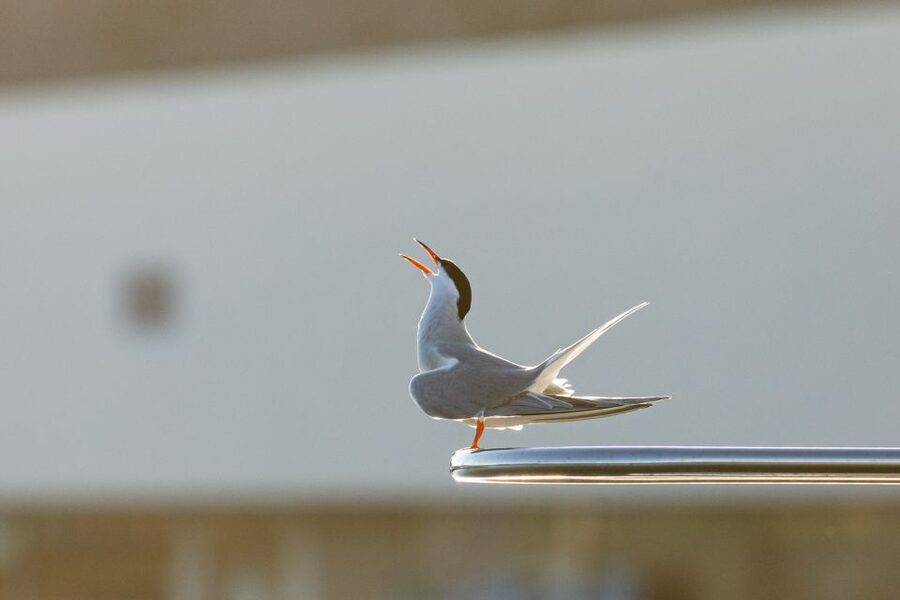
Terns offer a different experience. Common and Roseate Terns are graceful, quick, and easy to miss if you look away at the wrong moment. Roseate Terns are especially appealing for birdwatchers who want to add a less ordinary species to their day.
Storm-petrels can be challenging because of their size and flight style. Wilson’s and Madeiran Storm-petrels are listed as possible sightings, while Leach’s Storm-petrel is a less regular visitor. Good binoculars and a guide who knows the area make a real difference.
Gulls and shorebirds give beginners more frequent targets. Yellow-legged Gulls are easier to follow, while Turnstones, Sanderlings, Whimbrels, Little Egrets, and Wagtails may appear closer to shore.
Keep your eyes open for marine mammals too. Dolphins have been seen on this trip, including a large group of bottlenose dolphins. Treat that as a bonus rather than a promise. The purpose of the outing is seabird watching, and the captain cannot control what wildlife appears.
The final marina stop and return
After the offshore section, the boat returns to the Marina de Vila Franca do Campo. The schedule allows about 15 minutes of free time for shopping or a short break before the return arrangements.
The return options include drop-off at the TERRA AZUL base or in Ponta Delgada. If you are driving yourself, the marina parking makes the logistics simple. If you are using the Ponta Delgada option, confirm the selected pickup and drop-off details before departure.
The activity also includes scenic driving through Vila Franca do Campo and along São Miguel. These transfers are not a major part of the experience, but they help connect the marina with Ponta Delgada and provide attractive coastal views.
When to go for the best bird variety
Marine birds can be seen throughout the year, but spring and autumn are the strongest periods for abundance. Migrants and occasional vagrants pass through then, adding more variety to the resident species.
Summer can still be productive, especially for breeding seabirds and local colonies. Sightings of dolphins have also occurred during summer departures. September is a particularly appealing time if you want a balance of good weather and seasonal bird activity, though conditions can change quickly in the Atlantic.
No departure can promise a specific bird. The crew may know where birds usually gather, but wildlife moves freely and weather can alter the route. The right mindset is to value the expert searching, the setting, and the range of possibilities rather than demand one particular species.
If extreme weather arrives, the itinerary may change or the tour may be canceled. That is a sensible safety policy for an open boat. You can cancel up to 24 hours before departure for a full refund, and reserve-now, pay-later booking helps keep your plans flexible.
Is $68 a fair price?
At $68 per person, this is a reasonable price for a three-hour small-group boat trip with a guide, skipper, binoculars, safety equipment, insurance, and access to a specialist wildlife route.
The value is strongest if you would otherwise need to buy binoculars, arrange a boat independently, or search for the islet without knowing where birds gather. The guide’s local knowledge saves you time and gives the outing more purpose.
It is less compelling if you want a relaxed sightseeing cruise with guaranteed sunshine and calm water. The RIB is built for access and speed, not luxury. You also need to bring your own water, and the tour’s wildlife focus means some of the time may be spent waiting and scanning rather than seeing constant action.
The rating of 4.9 from 19 ratings reflects the main strengths: friendly crew, clear explanations, close wildlife viewing, and a small group. The personal experience can still depend heavily on weather and animal activity.
Who should book this Azores bird tour?
I would recommend it to birdwatchers, nature photographers, families with older children, and anyone who wants a more focused marine trip than a general sightseeing cruise. Beginners should feel comfortable because the guides explain what to look for and provide binoculars.
It also suits people who enjoy active outings and do not mind a fast, open boat. You should be comfortable with movement, wind, and the possibility of spray. A person with back problems or limited mobility should choose a different activity.
Bring warm clothing, water, snacks, sunscreen, and a camera. You can bring binoculars, but Opticron 8×42 binoculars are supplied. Arrive ready for changing conditions, and keep your schedule slightly flexible in case the sea affects the route.
Should you book it?
Book this trip if you want close coastal wildlife viewing, practical bird guidance, and a small boat that can reach the waters around Vila Franca do Campo. The mix of seabird colonies, research insight, ocean scenery, and possible dolphins gives the outing more substance than a simple boat ride.
Skip it if you need a smooth, sheltered cruise or a guaranteed sighting of a particular bird. For most nature-minded visitors who can handle the RIB and accept the uncertainty of wild animals, $68 is a fair price for a focused morning or afternoon on São Miguel’s Atlantic coast.
FAQ
How long does the marine birdwatching tour last?
The experience lasts about three hours. The boat and wildlife portion is listed as approximately 2 hours and 45 minutes, followed by a short period at the marina.
Where does the tour depart?
The boat departs from the Marina de Vila Franca do Campo on São Miguel Island. Free parking is available near the base. The GPS coordinates are 37.715780, -429.745.
Are binoculars provided?
Yes. Opticron 8×42 binoculars are included, along with an experienced skipper, wildlife guide, impermeable suit, life vest, and insurance.
What languages are available?
English is the official language. The multinational team also offers French, Dutch, Italian, Spanish, Portuguese, and German, though the crew will do its best to accommodate language preferences.
Can children join the tour?
Children under four cannot join. The activity is also not suitable for pregnant women, wheelchair users, or people with back problems.
Can the tour be canceled because of weather?
Yes. The route may change or the tour may be canceled in extreme weather. You can cancel your booking up to 24 hours in advance for a full refund.
Just added around Portugal
- Birdwatching Solar Boat Tour Aveiro Lagon★ 4.7 · 21 reviews
- Laid-back birdwatching week★ 5.0 · 4 reviews
- Birdwatching day in the Ria Formosa Natural Park★ 5.0 · 3 reviews
- Lisbon : Birdwatching Boat Tour – Tagus Estuary★ 5.0 · 20 reviews
- Birdwatching Boat Tour in the Tagus Estuary★ 5.0 · 3 reviews
- Boat Tour – Bird Observation in the Tejo Nature Reserve★ 5.0 · 34 reviews
- Afternoon birdwatching at Lagoa dos Salgados★ 5.0 · 5 reviews
- Half-day birdwatching at the Abicada marshed★ 5.0 · 8 reviews
Portugal Birdwatching Tours, compared.
Eco-Friendly Ria Formosa Bird Watching in Solar Boat
Read our review →
Ria Formosa Natural Park Segway Tour & Birdwatching
Read our review →
Ria Formosa Natural Park Birdwatching Segway Tour from Faro
Read our review →
Tagus Estuary Nature Reserve Birdwatching Boat Tour
Read our review →
2-hour Bird Watching Guided Boat Trip in Ria Formosa from Faro Algarve
Read our review →
Browse the lists this tour appears in