
REVIEW · ITALY BIRDWATCHING TOURS
Discover the fantastic world of birds of prey in the Pollino National Park.
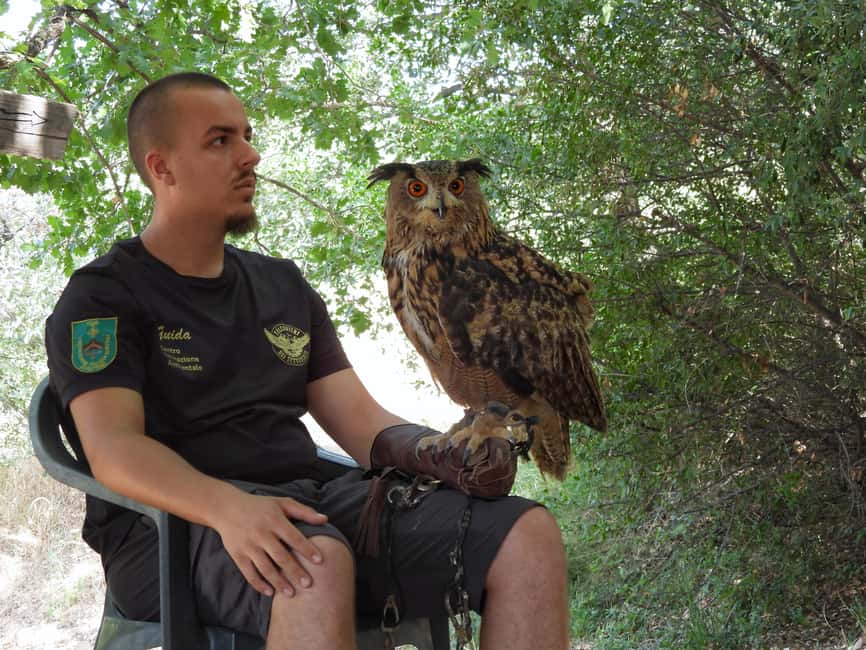
Birds can change how you see nature. In Basilicata’s Pollino National Park, Falconieri dei Setteventi offers a three-hour encounter built around education rather than entertainment. I like the clear refusal of circus tricks and zoo-style cages, and I like the chance to see magnificent birds close enough to hear their heartbeats. The setting also connects the experience to the old tradition of falconry, recognized by UNESCO.
The main consideration is language. The live guide speaks Italian, and some content is presented in its original language, so you will get the most from this visit if you understand Italian or are comfortable learning through demonstration and observation. The no-noise rule also means this is a calm, attentive activity, not a loud family show.
Key points to know before you go
- No circus performance: The visit avoids tricks, applause-driven demonstrations, and zoo displays.
- A three-hour educational visit: Plan enough time for a serious introduction to birds of prey and their relationship with people.
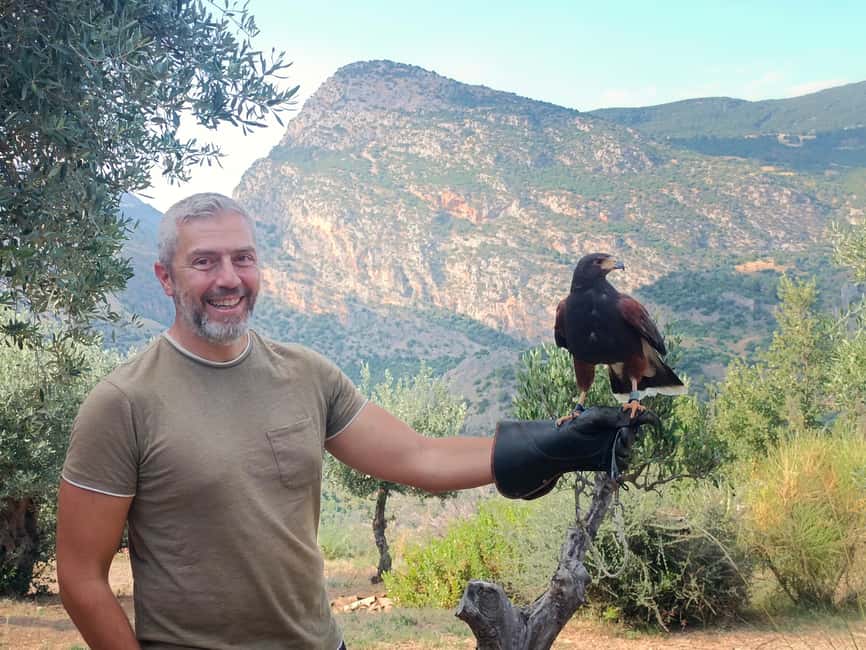
- Close, emotional contact: The birds are presented at very close range, creating a quiet and memorable encounter.
- UNESCO falconry connection: The program explains a thousand-year-old tradition based on respect between humans and birds.
- Italian-language guidance: The live tour is in Italian, with some material remaining in its original language.
- Simple rural access: Enter from a small dirt road off Provincial Road 263, about 1.4 kilometers from the Civita junction.
Why this Pollino bird-of-prey visit feels different
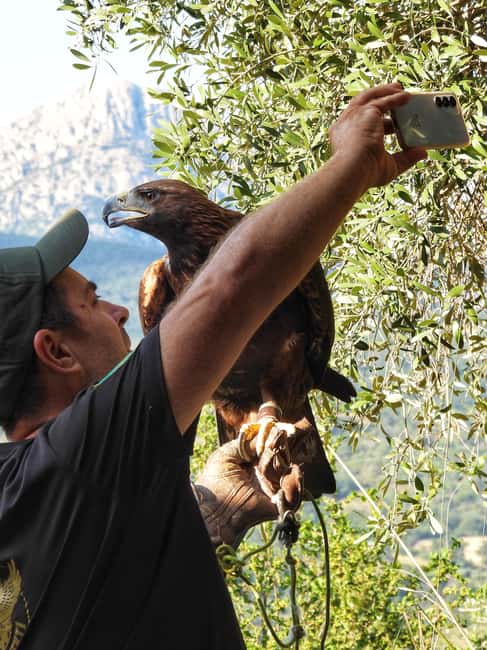
Many attractions use birds of prey as props for a show. This one takes a different route. Falconieri dei Setteventi presents the visit as an interactive educational journey, with the birds treated as living animals rather than performers waiting for applause.
That distinction matters. You are not promised a sequence of circus stunts or a theatrical demonstration. Instead, the point is to look closely, listen, ask questions if possible, and understand the birds’ place in nature and in falconry. The tone is meant to be respectful and quiet.
I especially like the center’s stated aim of creating a bridge to UNESCO falconry. Falconry is more than the image of a person holding a bird on a gloved arm. It reflects a long relationship between people and raptors, one based on patience, training, care, and mutual respect. This visit gives that tradition a more thoughtful setting than a quick photo opportunity.
The three-hour length also helps. You are not rushing past an enclosure or spending five minutes at a staged display. A longer visit gives the subject room to breathe, even though the exact sequence of activities can vary.
More Birds of Prey and Falconry in Italy:
- Interactive Educational Course on Birds of Prey
★ 5.0 · 230 reviews - Falconry experience in Tuscany
★ 5.0 · 24 reviews - Experience with birds of prey in Tuscany
★ 5.0 · 4 reviews
What happens during the three-hour experience
The supplied details do not list named stops or a fixed minute-by-minute route, so you should think of this as one continuous educational visit rather than a series of separate attractions. The center describes it as a complete introduction to the lives of birds of prey.
At the beginning, you can expect an orientation to the project and its purpose. This is where the difference between a nature center and a show becomes clear. The emphasis is on understanding the birds, not on getting them to perform for the crowd.
The educational portion should help you place the birds in a wider natural setting. You will learn through the guide’s explanations and through seeing the animals at close range. Since the tour is in Italian, the visual side of the experience becomes especially important for anyone who does not speak the language.
The close encounter is the emotional center of the visit. The birds are described as being near enough for you to hear their heartbeats. That detail gives you an idea of the intended mood: quiet, personal, and attentive. You are asked not to make noise, use flash photography, or bring professional cameras. Those restrictions are practical protections for the birds, not petty rules.
The visit then connects the animals to falconry’s long tradition. The focus is not simply on identifying impressive species. It is on the relationship between humans and birds, and on the responsibility that comes with handling and caring for them.
You should not expect a polished stage show with a dramatic finale. The reward is a better understanding of the birds and a direct emotional response to seeing them close by. If you prefer activities that explain rather than entertain, this format is a strong match.
The birds are the focus, not the visitor
The center’s rules tell you a great deal about its priorities. Smoking, littering, flash photography, loud behavior, and professional cameras are not allowed. Unaccompanied minors are also not permitted.
That list may feel strict if you are used to casual attractions, but it fits the purpose of the visit. Birds of prey are sensitive to sudden movement and noise. A quiet setting lets you watch natural behavior without turning the encounter into a spectacle.
For you, this means putting the phone away at key moments and resisting the urge to turn every close view into a photograph. You may leave with fewer pictures than from a conventional attraction, but the encounter should feel less mechanical.
This is also a place for humility. The center asks you to approach the birds as powerful wild creatures, not as oversized pets. That makes the experience more meaningful for adults and older children who can follow instructions.
Understanding the UNESCO falconry connection
The visit’s reference to UNESCO falconry gives it useful cultural context. The tradition describes a thousand-year-old bond between people and birds of prey, but the important point is the quality of that bond. It is presented as one of mutual respect, not domination.
That idea helps explain why the center avoids circus demonstrations. A bird trained to perform a trick for applause tells you little about its real nature. A carefully managed educational encounter can show you more about its character, power, and place in human culture.
I would pay attention to the connection between care and responsibility. The experience is not only about the thrill of seeing a large raptor close by. It is also about recognizing the skill and discipline required to work with such animals.
This cultural angle adds value to the $47 price. You are paying for more than a quick sighting. The visit combines environmental education, a live guide, the presence of the birds, and an introduction to a major falconry tradition. The value is strongest if you take the educational side seriously.
More National Park Trips in Italy:
- Vendicari – Sicily’s best coast nature reserve ( Birdwatching & Archeology )
★ 5.0 · 8 reviews - Lisbon: Tagus Estuary Nature Reserve Birdwatching Boat Tour
★ 4.9 · 117 reviews - King Penguin Nature Reserve – Tierra del Fuego Island
★ 4.0 · 73 reviews - Private Birding Hike in Rocky Mountain National Park
★ 5.0 · 58 reviews
Getting to the center from Provincial Road 263
The meeting point is reached from a small dirt road directly off Provincial Road 263. If you are coming from the SS106, the entrance is about 1.4 kilometers before the Civita junction. If you are coming from the motorway, it is about 1.4 kilometers after the Civita junction.
This is the sort of access detail you should save before leaving. The entrance is not described as a large urban facility, so you will want to watch for the dirt-road turn rather than rely on a prominent city-style entrance.
The rural approach fits the nature of the project, but it may require a little more attention from drivers. Use the road directions carefully and allow time to find the access point. The activity itself is wheelchair accessible, though the approach includes a small dirt road, so you may want to confirm any specific mobility needs before booking.
The meeting point places the visit within the wider Pollino area, making it a natural addition to a day focused on Basilicata and nearby Civita. The information provided does not include transport from hotels or a pickup service, so you should plan to reach the meeting point independently.
What to wear and what to leave behind
Wear comfortable shoes and comfortable clothes. That advice is simple, but it makes sense for a three-hour visit in a rural nature setting.
Do not bring professional camera equipment, and do not plan to use flash. Smoking and littering are forbidden. Most important, keep noise to a minimum. The quiet rule is part of the experience, not an afterthought.
You should also be aware that children cannot attend without an accompanying adult. The center does not permit unaccompanied minors, so families need to plan supervision from the start.
Because the guide speaks Italian, you might also prepare a few basic words related to birds and nature if you do not speak the language. Even without full fluency, the birds, gestures, and visual demonstrations may help you follow the visit, but the explanations will be easier if you understand Italian.
Is $47 a fair price?
At $47 per person, this is not the cheapest way to spend three hours in Basilicata. It can be good value if you want a focused educational activity with a rare close encounter and a clear conservation-minded purpose.
The price includes the tour. It does not list meals, transportation, or extra services, so you should budget for those separately if needed. The strongest value comes from the depth of the visit. A short photo stop would cost less, but it would also offer far less context.
The score currently sits at five out of five from two verified bookings. One specific compliment praises the staff’s competence and the project pursued by the owner. That is important because this experience depends heavily on the people running it. The birds may attract you, but careful staff make the visit safe, calm, and worthwhile.
At the same time, two ratings are a small sample. I would treat the perfect score as encouraging rather than conclusive. The clearest evidence of value is the detailed concept: no cages, no circus behavior, close contact, environmental education, and a three-hour format.
Who will enjoy this most?
I would recommend the visit to anyone who wants nature education without a staged show. It should suit adults, couples, families with supervised children, photographers who can accept strict camera limits, and visitors interested in falconry or animal welfare.
It is also a good choice if you are looking for a quieter activity in the Pollino area. The experience asks you to slow down, observe, and listen. That can be a welcome change from packed sightseeing schedules.
You may want to skip it if you expect a fast-moving spectacle, dramatic tricks, or extensive English explanations. The live guide speaks Italian, and the rules limit noise and photography. Visitors who want a casual attraction with plenty of personal freedom may find the structure too controlled.
My practical verdict
Book this experience if you value respectful animal encounters more than theatrical entertainment. The combination of close contact, environmental education, and falconry tradition gives the visit real substance.
Before booking, make three checks. Confirm that you can follow an Italian-language tour, set aside the full three hours, and arrange your own route to the dirt-road entrance on Provincial Road 263. If those details work for you, $47 buys an unusual and carefully focused look at birds of prey in the Pollino area.
FAQ
Where does the bird-of-prey experience take place?
It takes place in Basilicata, in the Pollino National Park area, at Falconieri dei Setteventi.
How long does the activity last?
The experience lasts three hours. Starting times depend on availability.
What language is the tour in?
The live tour guide speaks Italian. Some content is shown in its original language.
Is the experience wheelchair accessible?
Yes, the activity is listed as wheelchair accessible.
What should I wear?
Wear comfortable shoes and comfortable clothes.
Can I take photographs?
Flash photography and professional cameras are not allowed. You should also avoid making noise during the visit.
Can I cancel for a refund?
Yes. You can cancel up to 24 hours in advance for a full refund. You can also reserve now and pay later.
Just added around Italy
- Lio Piccolo: Flamingos & Birdwatching Bike Tour in the Lagoon★ 5.0 · 7 reviews
- Falconry experience in Tuscany★ 5.0 · 24 reviews
- Vendicari – Sicily’s best coast nature reserve ( Birdwatching & Archeology )★ 5.0 · 8 reviews
- Vendicari private visit 3 hours The Bird Hotel.★ 5.0 · 2 reviews
- Birdwatching at Saline Maria Stella in Trapani★ 5.0 · 3 reviews
- Combo: Cagliari Old Town and the Oasis of Flamingos★ 5.0 · 22 reviews
- Matera: Handmade Clay Bird Workshop★ 5.0 · 4 reviews
- Experience with birds of prey in Tuscany★ 5.0 · 4 reviews
Birds of Prey & Falconry, compared.
Colorado Springs Hands-On Falconry Class and Demonstration
Read our review →
Morning Falconry & Nature Desert Safari with Transfers from Dubai
Read our review →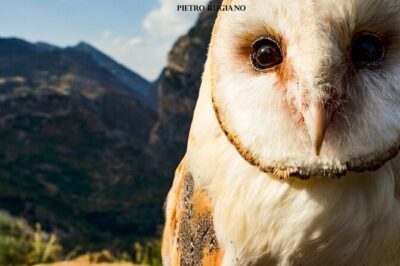
Interactive Educational Course on Birds of Prey
Read our review →Dubai Hot Air Balloon Ride with Breakfast, Falconry & Camel Ride
Read our review →

Margaret River: Birds of Prey Encounter and Forest Walk
Read our review →Browse the lists this tour appears in