
REVIEW · SINGAPORE BIRDWATCHING TOURS
Jurong Bird Park Bird Photography
Birds turn a park into a living studio. This three-hour morning class pairs a professional photographer with a small group of no more than 10 people, giving you a focused way to practice wildlife photography among flamingos, toucans, lorikeets, penguins, pelicans, and more. I especially like the one-to-one help and the chance to work in the huge Waterfall Aviary, where Jurong Falls drops 30 meters through an enormous bird enclosure.
The course also has two practical strengths: it covers several types of photography, from composition and fine detail to action shots and wildlife portraits, and it puts colorful subjects close at hand. The main caution is important: the $95 price does not include park admission, camera equipment, food, or weather protection, and a past booking problem reported that the stated Jurong meeting place had closed permanently.
Key points at a glance
- Waterfall Aviary: Photograph African birds inside a nearly five-hectare enclosure with the 30-meter Jurong Falls as a dramatic backdrop.
- Small-group coaching: A maximum of 10 participants gives you a better chance of receiving personal advice than a large photo walk.
- Colorful subjects: Flamingos, toucans, lorikeets, parrots, fruit doves, penguins, pelicans, ostriches, and emus provide varied practice.
- Four useful skills: The session focuses on composition, action photography, wildlife portraits, and capturing small details.
- Extra costs matter: Park entry, equipment, food, hats, raincoats, and other weather protection are all your responsibility.
- Check the meeting point: The listed starting location is written as Bef Jurong HillSingapore, and one past booking reported that Jurong Park had closed permanently.
What this three-hour photography class is really for
This is not simply a guided walk through a bird park. It is a practical class built around a particular setting, with a professional photographer helping you make better use of the birds and exhibits in front of you.
That distinction matters. If you already own a camera and often return home with soft, poorly timed, or cluttered wildlife pictures, the course gives you a chance to work on those problems as they happen. You can ask for help with framing a flamingo reflection, freezing a bird in motion, or finding a clean background behind a toucan.
The class is also suitable for a keen beginner. You do not need to be an expert birder to benefit from it. The bird collection supplies the subjects, while the facilitator helps you think about what makes a photograph work.
The scheduled start is 8:30 am, and the session lasts about three hours. That morning timing should help you make the most of the half-day format, though the exact order of exhibits and amount of time at each stop is not specified. Plan for a moving lesson rather than a fixed classroom with a long lecture.
More Bird Sanctuaries and Parks in the world:
- Maleny Botanic Gardens Bird Aviary Experience Ticket
★ 4.5 · 579 reviews - Puerto Iguazu: Iguaza Falls Brazilian Side & Bird Park Tour
★ 4.0 · 260 reviews - Niagara Falls, Canada: Bird Kingdom Entry Ticket
★ 4.3 · 243 reviews
Meeting the birds at the park entrance
The experience begins at a meeting point listed as Bef Jurong HillSingapore. The wording is unusual, so I would confirm the exact location before booking and again before the morning of the class. This is not a minor detail. One past booking problem involved the stated Jurong Park meeting place being permanently closed, followed by unanswered calls and messages.
Because the experience is non-refundable and cannot be changed after booking, checking the location is especially important. If the minimum number of participants is not reached and the provider cancels, you are offered another date or experience, or a full refund. That protection does not cover a personal cancellation or an incorrect assumption about the meeting point.
The park is near public transportation, according to the supplied details. Even so, allow enough time to locate the meeting point. An 8:30 am start leaves little room for wandering around after arrival, particularly if the address needs clarification.
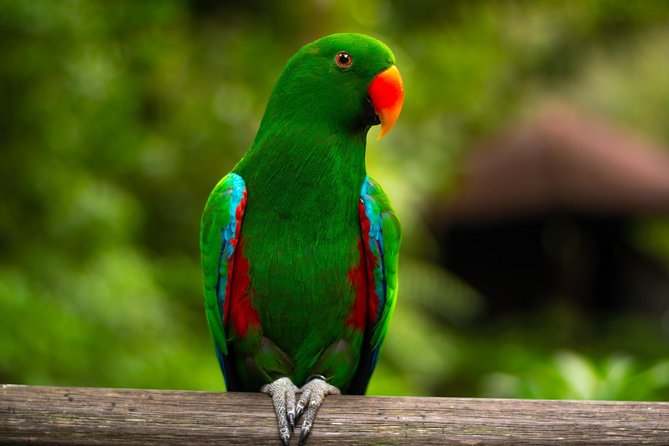
Once inside, expect a busy first phase as you and the group find suitable subjects. The collection includes flamingos, lorikeets, parrots, ostriches, emus, fruit doves, penguins, pelicans, and toucans. That range is useful because each bird calls for a different approach.
Flamingos, reflections, and wildlife portraits
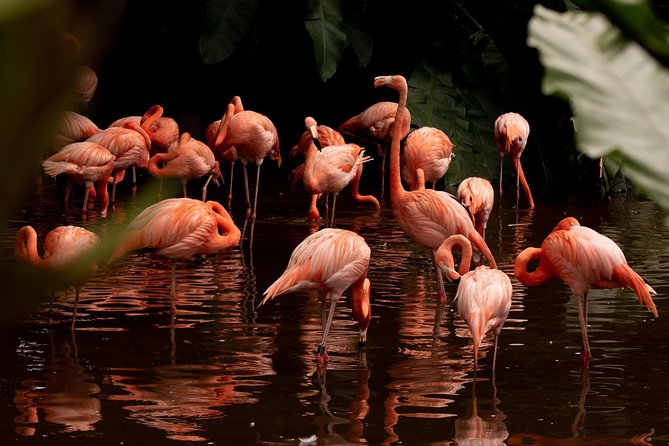
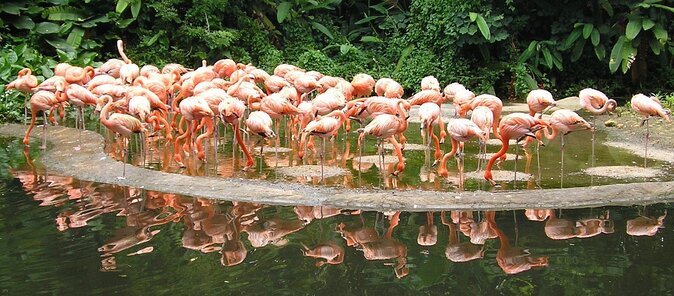
Flamingos offer an easy introduction to composition. Their long necks, pink coloring, and group formations give you clear shapes to work with. The course specifically highlights reflected flamingos, so look for the relationship between the bird and the water rather than pointing only at the animal itself.
A reflection can make a simple image feel more carefully arranged, but it also requires patience. Ripples, bright light, and other birds can break the shape. This is where a facilitator can help you decide how much of the water to include and where to place the bird in the frame.
The class also covers wildlife portraiture. Here, the aim is to show the bird clearly while keeping the image from becoming a simple record shot. You may work on the eye, feather pattern, posture, or the bird’s relationship with its surroundings. The available information does not specify which camera settings the facilitator teaches, so expect advice tailored to the scene rather than a guaranteed technical syllabus.
Toucans provide a different challenge. Their large bills and strong color blocks can dominate a frame, while darker areas may lose detail. This makes them useful subjects for thinking about balance, focus, and how much background to retain.
Inside the five-hectare Waterfall Aviary
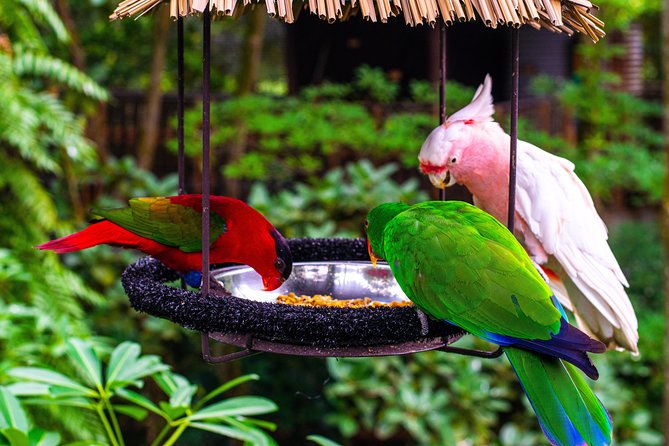
The main visual prize is the Waterfall Aviary, described as the second-largest aviary in the world and close to five hectares in size. It houses mainly African birds and includes the 30-meter Jurong Falls, one of the tallest man-made indoor waterfalls in the world.
The scale changes the type of photograph you can make. Instead of shooting only a single bird against a plain enclosure, you can work with height, foliage, water, open space, and groups of birds. The falls can provide a strong vertical element, but it may also compete with your subject. Good instruction is valuable here because the scene can easily become crowded.
The aviary also gives you a chance to practice detail. African birds may offer unusual beaks, feathers, colors, and poses, while the waterfall adds movement and texture. You can try a broad environmental image, then move closer for a portrait or feather study.
The park’s enclosures are a major part of its appeal. The birds are kept in large spaces, and the design can make you feel close to them rather than viewing every subject from a distant barrier. That setting is excellent for photography, but it does not guarantee a perfect shot. Birds move when they please, and a large enclosure gives them plenty of room to disappear from view.
More Bird Photography Tours in the world:
- Jaco Birdwatching and Photography with Sergio
★ 5.0 · 65 reviews - Birding & Photography Day Trip to Doñana from Seville
★ 5.0 · 61 reviews - Guided Birding Photography Experience
★ 5.0 · 47 reviews - Skadar Lake National Park: Birdwatching & Photography Tour
★ 4.8 · 39 reviews
Lorikeets, penguins, and action shots
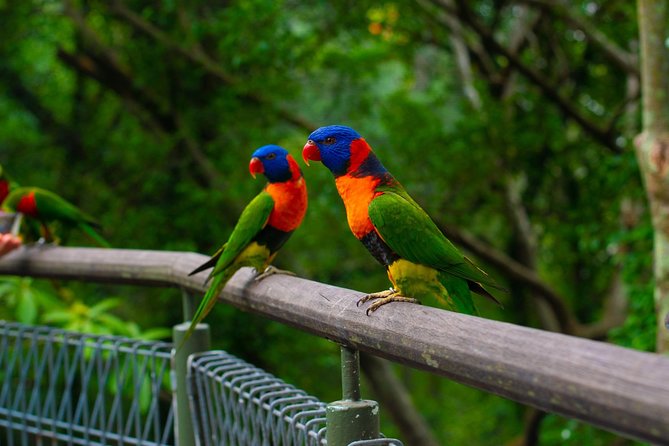
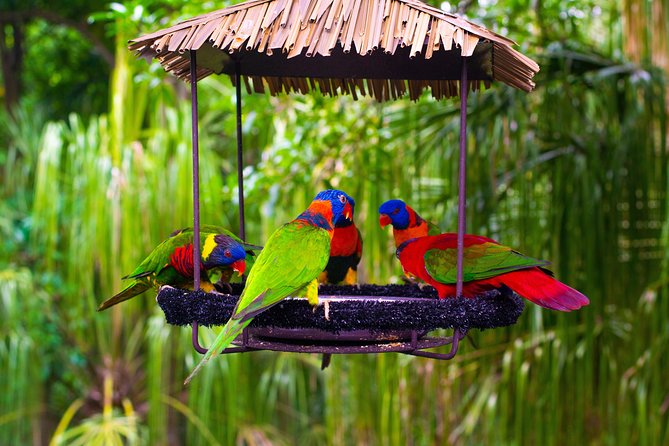
The free-range lorikeets may be the most unpredictable subjects of the morning. They are known to land on willing participants, creating a chance for a close, lively image. This is also the kind of moment that cannot be scheduled, so treat it as a bonus rather than a promised part of the class.
Lorikeets can help you practice action photography because a landing bird gives you only a short window. The facilitator can help you think about timing, focus, and composition before the moment arrives. If you are using a phone or basic camera, the group may also help you understand what is realistic with your equipment.
Penguins, pelicans, ostriches, and emus add variety. A penguin can produce a strong portrait through posture and expression, while pelicans offer a study in shape and texture. Ostriches and emus are much larger subjects, making you consider the frame differently and pay attention to the setting around them.
These different birds are one of the best reasons to take the class instead of spending the morning photographing only one exhibit. You are constantly adjusting your approach. A static portrait, a flying or landing bird, a group arrangement, and a small feather detail all call for different decisions.
What you learn during the one-to-one coaching
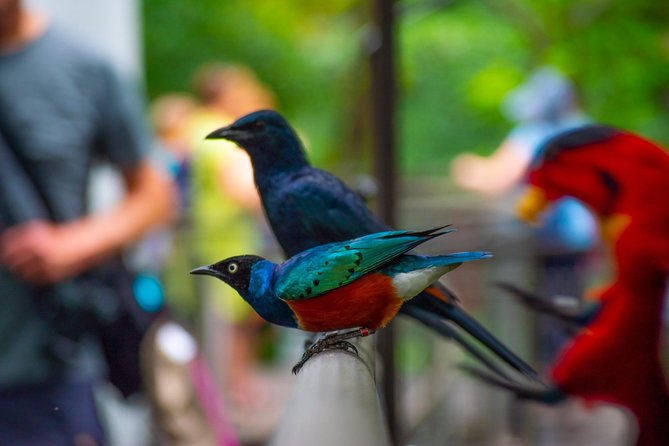
The four stated teaching areas are composition, action photography, wildlife portraiture, and detail. Together, they cover the main problems that affect nature photographs.
Composition is the foundation. You learn to notice distracting backgrounds, empty space, repeated shapes, reflections, and the position of the bird in the frame. In a setting packed with color, restraint can be as useful as technical skill.
Action photography is less forgiving. Birds move suddenly, and the best pose may last only a second. A professional facilitator can help you prepare for that moment instead of reacting after it has passed.
Wildlife portraits ask for patience and attention. You may work on the bird’s eye, the angle of its head, or a clean view of its feathers. Detail work takes the opposite approach from a wide aviary scene. It asks you to find one small feature and make it carry the picture.
The group size is capped at 10. That is small enough for individual questions, but it is not a private lesson. If every participant wants help at the same time, you may need to wait your turn. Still, the ratio is far better than a large workshop, and the site-specific setting means the advice should relate directly to the bird in front of you.
Walking, weather, and equipment planning
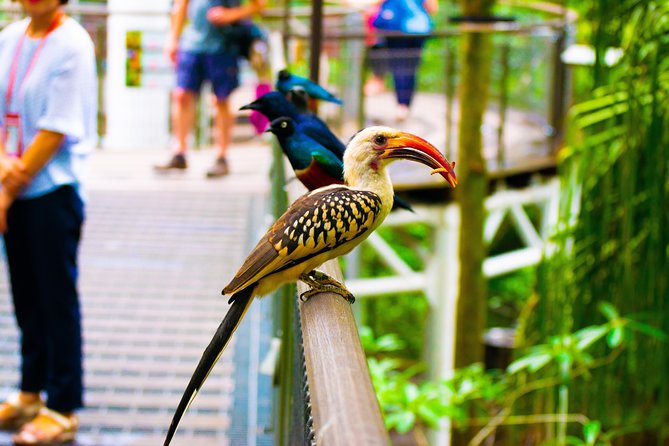
You should have a moderate level of physical fitness. The activity involves walking through the park and also refers to walking on Singapore streets while learning photography skills. The exact amount of walking is not given, so prepare for a mobile morning rather than a short, seated lesson.
Bring your own camera equipment. The price covers the professional photographer as facilitator, not a camera, lens, or other gear. The available information does not state whether phone photography is supported, so ask the provider if you plan to use only a phone.
Food and drinks are not included. Neither are weather items such as a hat or raincoat. Singapore weather can make those omissions important, so pack suitable protection before setting out. You should also be comfortable carrying your equipment while walking.
The park entry ticket is an additional cost. This changes the value calculation. At $95 per person before admission and other personal expenses, the class is aimed at people who want instruction, not people seeking the cheapest way to see the birds.
Is $95 a fair price?
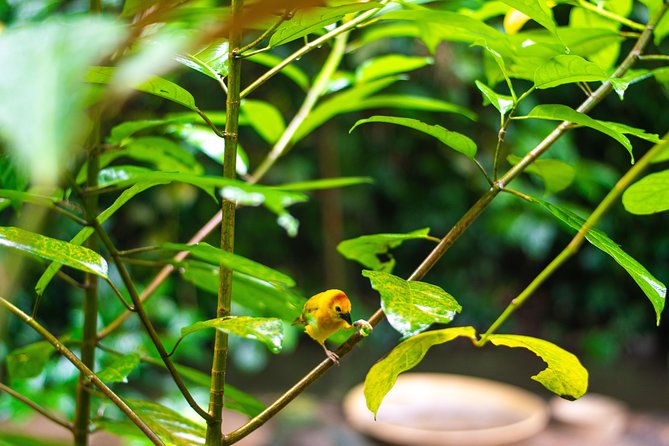
The price is reasonable if you place a high value on direct coaching and plan to use the skills beyond this one morning. A professional facilitator, a maximum group size of 10, and a setting filled with varied subjects give the session real teaching potential.
The value is weaker if you mainly want entry to the park. Admission is not included, and neither is equipment. You are paying for the photography guidance, not a complete sightseeing package.
I would also factor in the non-refundable policy. You cannot cancel or amend the booking for a refund, so confirm the meeting point, date, physical demands, and extra costs before paying. The provider is Goblin Photography, and confirmation is issued at booking, but the past communication problem makes direct confirmation sensible.
The bird collection itself may justify the added cost for a serious enthusiast. The park has such a broad range of subjects that you can work on several skills in one visit. A casual visitor may prefer a regular park visit, while a keen photographer can gain more from having someone correct technique on the spot.
Who should book this experience?
I would recommend it most to:
- Beginning photographers who want help beyond basic camera controls
- Bird lovers who already enjoy watching species and want better images
- Visitors carrying their own camera who value feedback during the shoot
- People who prefer a small group to a large photo walk
- Photographers interested in both portraits and moving subjects
It is less suitable for someone who wants a private lesson, since the group can include up to 10 people. It may also disappoint anyone expecting camera rental, park admission, meals, or a guaranteed encounter with free-range lorikeets.
The park’s bird collection is the strongest reason to consider it. The large enclosures and wide range of species give you more than one kind of subject, and the Waterfall Aviary offers a memorable setting for wide and close images alike.
My booking advice
I would book only after confirming the current meeting place directly with Goblin Photography. The reported closure problem is too serious to ignore, especially with a non-refundable booking and no stated amendment option.
If the location is confirmed and you already have park entry and camera plans sorted, the course could be a useful morning of focused practice. The small group, professional guidance, and strong selection of birds give it genuine value for someone who wants to improve.
If you are mainly sightseeing, skip the class and spend the money on a normal visit instead. If you want help making stronger bird photographs and accept the extra costs, the experience is worth considering.
FAQ
What time does the bird photography class start?
The class starts at 8:30 am.
How long does the experience last?
The photography session lasts approximately three hours.
Is the Jurong Bird Park entry ticket included?
No. Park entry is at your own expense.
Is camera equipment provided?
No. You must bring your own camera equipment.
How large is the group?
The activity has a maximum of 10 participants.
What does the professional photographer teach?
The session covers composition, action photography, wildlife portraiture, and capturing detail.
Just added around the world
- Walvis Bay Shore Excursion: Flamingos, Dune 7, Swakopmund★ 5.0 · 3 reviews
- York: Entry to York bird of prey centre★ 5.0 · 7 reviews
- Visit to Madeira Bird Island★ 4.6 · 22 reviews
- Vestmannaeyjar: Puffin, Island, and Volcano Boat Tour★ 4.4 · 7 reviews
- Vila Franca do Campo: Marine Life & Bird Watching & Islet Tour★ 4.4 · 9 reviews
- VIP falconry taster session★ 5.0 · 2 reviews
- Ushuaia: Gable Island and Penguin Colony with Lunch★ 4.8 · 2 reviews
- Ushuaia: Sailing Beagle Channel to the Penguin Colony★ 4.6 · 14 reviews
Bird Photography Tours, compared.
Birding & Photography Day Trip to Doñana from Seville
Read our review →
Skadar Lake National Park: Birdwatching & Photography Tour
Read our review →
Everglades: Birding, Wildlife, and Photography Expedition
Read our review →
Kos Wildlife Walks: birdwatching and animal photography
Read our review →
Browse the lists this tour appears in